acting performance
P1
Product 1: Bouchra
4.8
Natural, emotionally open voice work gives the animal characters vivid humanity. Hesitations, cracks, laughter, and conversational rhythms carry scenes that the facial animation cannot always express.
P2
Product 2: Stop! That! Train!
4.3
The ensemble’s commitment gives the movie most of its momentum, with performers treating even the silliest material seriously enough to make it work.
age appropriateness
P1
Product 1: Bouchra
3.5
The film is clearly aimed at adults and older mature viewers. Explicit sex scenes and complex queer family themes make it unsuitable for children despite the animated-animal presentation.
P2
Product 2: Stop! That! Train!
1.5
This is an adult-oriented spoof rather than a children’s comedy, with an R rating, sexual jokes, language, drug material, and brief nudity.
animation quality
P1
Product 1: Bouchra
4.1
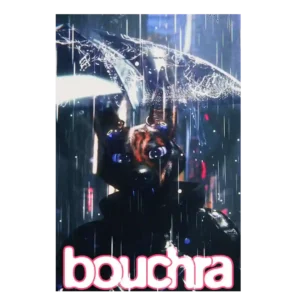
The hybrid animation is bold, intimate, and unlike mainstream studio work, with striking cityscapes and expressive details. Character motion can look stiff, blocky, or unfinished, which either strengthens the handmade feel or becomes distracting.
P2
Product 2: Stop! That! Train!
1.5
The exterior imagery and animated-looking environments were criticized as visually crude and lacking artistic polish.
audience appeal
P1
Product 1: Bouchra
4.0
Its emotional honesty can be deeply rewarding, especially for queer young adults and viewers open to experimental cinema. The unconventional visuals, adult content, and wandering structure will be off-putting to some.
P2
Product 2: Stop! That! Train!
3.6
Drag Race fans and viewers who enjoy broad camp are the strongest match, though several nonfans still found the humor accessible and fun.
CGI quality
P1
Product 1: Bouchra
3.3
The retro 3D rendering gives the film a distinctive, deliberately uncanny identity, but stiff movement, sparse backgrounds, and uneven blending with live-action settings can expose its low-budget limitations.
P2
Product 2: Stop! That! Train!
1.5
The digital train and landscape shots are the clearest technical weakness, often looking cheap enough to pull attention away from the comedy.
character development
P1
Product 1: Bouchra
4.1
Bouchra’s creative block, romantic uncertainty, and need for honest family dialogue give her a compelling inner journey. Some side characters and relationship strands remain fragmentary rather than fully developed.
P2
Product 2: Stop! That! Train!
3.0
Tess and DeeDee receive a workable friendship arc, but most characters remain broad comic types and the emotional throughline can feel thin.
chemistry between characters
P1
Product 1: Bouchra
4.5
The mother-daughter exchanges feel intimate and lived-in, while Bouchra’s banter with Yani and tense reunion with Nikki bring warmth, humor, and sexual charge.
P2
Product 2: Stop! That! Train!
4.9
Ginger Minj and Jujubee’s affectionate, synchronized rapport is widely regarded as the movie’s heart and helps the absurdity feel warm.
cinematography
P1
Product 1: Bouchra
4.4
Noirish New York, sunlit Casablanca, expressive close-ups, and neon nighttime compositions create a memorable visual atmosphere. The live-action environments often give the animated figures a tactile sense of place.
P2
Product 2: Stop! That! Train!
1.8
The bright interiors occasionally pop, but flat digital photography, washed-out lighting, and uninspired framing make the movie look less cinematic than its premise deserves.
costume design
P1
Product 1: Bouchra
4.3
Bouchra’s stylish Prada-inflected wardrobe and the carefully chosen outfits help define the characters’ creative, urban worlds without feeling like generic fashion decoration.
P2
Product 2: Stop! That! Train!
4.4
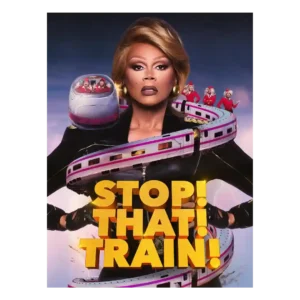
Colorful uniforms, polished drag looks, and theatrical styling are among the movie’s most consistently praised visual strengths.
critic appeal
P1
Product 1: Bouchra
4.8
The film’s formal ambition, emotional authenticity, and visual experimentation make it a strong critical and festival title, even if its avant-garde sensibility limits mainstream awards prospects.
P2
Product 2: Stop! That! Train!
4.0
Critical response leaned positive overall, but enthusiasm varies sharply depending on tolerance for camp, Drag Race references, and rapid-fire silliness.
cultural representation
P1
Product 1: Bouchra
4.7
The film handles Moroccan, diasporic, multilingual, and queer identity with specificity and sensitivity. It avoids reducing the conflict to simple tradition-versus-modernity binaries.
P2
Product 2: Stop! That! Train!
4.7
The movie’s proud queer perspective is a major strength, centering drag performers as heroes and celebrating queer joy without making them the joke.
dialogue quality
P1
Product 1: Bouchra
4.5
The conversations sound unusually natural, with pauses, unfinished thoughts, teasing, and emotional restraint. Some everyday chatter can feel flat or banal, but that awkwardness often strengthens the realism.
P2
Product 2: Stop! That! Train!
4.8
The strongest lines use queer wordplay, double meanings, and conversational rhythm rather than relying only on familiar references.
directing quality
P1
Product 1: Bouchra
4.5
The directors turn private family material into formally daring, emotionally intimate cinema. Their ambition and sensitivity are widely admired, though the layered construction sometimes overwhelms the story’s clarity.
P2
Product 2: Stop! That! Train!
4.1
Adam Shankman generally keeps the sprawling cast and relentless gag flow under control, though the rushed production limits visual invention and polish.
drama quality
P1
Product 1: Bouchra
4.8
The mother-daughter conflict is tender, painful, and emotionally substantial. Its strongest moments arrive when the film slows down and lets difficult conversations carry the drama.
P2
Product 2: Stop! That! Train!
4.0
The tested friendship adds a few sincere and touching beats, but the drama stays light and secondary to the spoof machinery.
editing quality
P1
Product 1: Bouchra
2.5
The shifting timelines and metafictional layers can feel rushed or disjointed. Transitions occasionally make the passage of time and relationship between the film’s realities harder to follow than necessary.
P2
Product 2: Stop! That! Train!
3.0
Some cutaways and visual punchlines are sharply timed, while the competing subplots and repeated gags make other stretches feel jumbled.
emotional impact
P1
Product 1: Bouchra
4.8
The film’s vulnerability, family pain, and gradual movement toward understanding can be deeply affecting. Quiet phone calls and small gestures often land more powerfully than its larger stylistic flourishes.
P2
Product 2: Stop! That! Train!
4.5
The friendship between Tess and DeeDee creates unexpected warmth, especially when hurt, loyalty, and reconciliation briefly cut through the chaos.
ending satisfaction
P1
Product 1: Bouchra
4.1
The closing movement offers warmth, catharsis, and a hopeful sense of reconciliation. A few critics found the resolution abrupt or too neat after such a fragmented journey.
P2
Product 2: Stop! That! Train!
3.5
The finale keeps enough laughs flowing to remain enjoyable for many viewers, but several critics found the third act rote, prolonged, or unable to stick the landing.
entertainment value
P1
Product 1: Bouchra
4.4
Witty banter, sensuality, imaginative visuals, and emotional sincerity make the film absorbing for viewers on its wavelength. Others may struggle with the scattered pacing and abrasive animation style.
P2
Product 2: Stop! That! Train!
3.3
For viewers receptive to proudly stupid camp, the film is an energetic good time; others found the same nonstop approach exhausting or disposable.
family friendliness
P1
Product 1: Bouchra
1.5
This is not a family-friendly animated movie. Explicit sexual material and adult relationship themes make it best reserved for mature audiences.
P2
Product 2: Stop! That! Train!
1.5
Parents should expect an adult comedy rather than family viewing because of sexual material, language, drug references, and brief nudity.
genre satisfaction
P1
Product 1: Bouchra
4.8
As queer animated docufiction, the film feels singular, heartfelt, and formally adventurous. Its blend of memoir, family drama, and experimental animation gives it lasting genre significance.
P2
Product 2: Stop! That! Train!
4.0
As a modern disaster spoof, it captures the throw-everything-at-the-wall spirit of Airplane!-style comedy without matching the classics’ consistency.
humor
P1
Product 1: Bouchra
4.2
Dry banter, absurd ideas, and playful animal-world details provide welcome comic relief. The humor is understated and woven into natural conversations rather than built around conventional jokes.
P2
Product 2: Stop! That! Train!
3.5
The joke volume is enormous and the best bits are genuinely hilarious, but the hit rate ranges from strong to painfully low depending on the viewer.
language level
P1
Product 1: Bouchra
4.5
Arabic, French, and English intermingle in ways that reflect migration and divided identity. Hesitations, translations, and imperfect phrasing feel authentic rather than polished for convenience.
P2
Product 2: Stop! That! Train!
4.3
The comedy mixes bawdy dialogue with cleaner wordplay, and several critics appreciated that some of its biggest laughs do not depend on explicit language.
lead performance
P1
Product 1: Bouchra
4.8
Meriem Bennani gives Bouchra a captivating, endearing voice presence. Her emotional openness and conversational naturalism make the character easy to sympathize with despite limited facial animation.
P2
Product 2: Stop! That! Train!
4.1
Ginger Minj and Jujubee carry the picture with comic confidence, sincerity, and enough emotional grounding to hold the sketch-like material together.
message quality
P1
Product 1: Bouchra
4.9
The film argues that honest communication and creative expression can help families confront long silences. Its hopeful message values empathy without pretending that every cultural or emotional fracture disappears.
P2
Product 2: Stop! That! Train!
3.7
Beneath the silliness, the film champions friendship, cooperation, resilience, and queer joy during a politically difficult moment.
originality
P1
Product 1: Bouchra
4.8
Anthropomorphic animals, documentary audio, live-action backgrounds, and a film-within-a-film structure create a remarkably distinctive work. Even critics who disliked parts of it recognized its formal ambition.
P2
Product 2: Stop! That! Train!
2.2
The queer drag-centered perspective feels fresh, but the plot structure and many gags borrow heavily from established disaster spoofs.
pacing
P1
Product 1: Bouchra
2.9
The reflective stretches can feel meditative and intimate, especially during family conversations. Elsewhere the film wanders, rushes between scenes, or loses momentum in its fragmented structure.
P2
Product 2: Stop! That! Train!
3.2
The opening half usually moves at an effective joke-a-minute clip, while repeated bits, side plots, and the final stretch can make the movie feel longer than it is.
plot clarity
P1
Product 1: Bouchra
3.0
The split between present life, memory, and Bouchra’s developing film is intentionally porous but frequently confusing. The emotional throughline remains understandable even when the timeline does not.
P2
Product 2: Stop! That! Train!
2.8
A simple runaway-train setup gives the comedy useful structure, though some critics found the multiple subplots unnecessarily convoluted.
plot originality
P1
Product 1: Bouchra
5.0
The metafictional story turns real conversations, memories, and storyboards into overlapping versions of the same life. That unusual structure gives the familiar family-reconciliation premise a fresh shape.
P2
Product 2: Stop! That! Train!
2.0
The train setting adds a playful variation, but the story remains an openly familiar patchwork of Airplane!, disaster-movie, and Mean Girls conventions.
production design
P1
Product 1: Bouchra
3.6
Real city footage, recreated interiors, textured architecture, and surreal set pieces create a rich hybrid world. Sparse or overly dark backgrounds sometimes flatten scenes and reduce emotional immediacy.
P2
Product 2: Stop! That! Train!
3.4
The colorful train interiors and class contrasts are appealing, although the rushed, low-budget production becomes obvious outside the main sets.
realism
P1
Product 1: Bouchra
4.3
Real voices, culturally specific details, and natural conversation make the stylized animal world feel emotionally true. The animation can create distance, but it also protects and clarifies the personal material.
P2
Product 2: Stop! That! Train!
4.5
The movie wisely abandons realism and embraces cartoon logic, which suits the camp tone even when it weakens suspense.
rewatch value
P1
Product 1: Bouchra
4.7
Its layered realities, visual details, and cultural nuances reward another viewing, especially for audiences initially confused by the structure. Several responses also see it as a film with lasting queer-cinema value.
P2
Product 2: Stop! That! Train!
2.3
Fans may enjoy repeat communal screenings and quote-alongs, but inconsistent jokes, dated references, and rough effects limit broader replay value.
romance quality
P1
Product 1: Bouchra
3.9
Bouchra’s encounters capture attraction, awkwardness, ex-partner tension, and the complications of dating across languages and cultures. Some romantic strands are vivid but brief rather than fully developed.
P2
Product 2: Stop! That! Train!
4.0
DeeDee and Cal’s romance is intentionally goofy and lightweight, with enough sweetness to complement the central friendship.
score quality
P1
Product 1: Bouchra
5.0
Flavien Berger’s music deepens the film’s dreamy, nocturnal, and sensual atmosphere, making quiet scenes feel more emotionally charged.
P2
Product 2: Stop! That! Train!
4.5
The disaster-movie musical cues and retro callbacks help establish the spoof tone, with the Poseidon Adventure-style opening music receiving particular praise.
screenplay quality
P1
Product 1: Bouchra
3.8
The writing is strongest in intimate dialogue and culturally specific relationship details. Its layered metafiction is ambitious, though repetitive scenes and excess artifice sometimes weaken narrative momentum.
P2
Product 2: Stop! That! Train!
3.1
The script delivers clever queer wordplay and a dense supply of gags, but repetition, weak runners, and thin character work keep it uneven.
sexual content level
P1
Product 1: Bouchra
3.9
The explicit lesbian scenes are adult, unusual, and likely polarizing, but they are generally treated as emotionally and artistically purposeful. They add sensuality and queer freedom rather than functioning only as provocation.
P2
Product 2: Stop! That! Train!
3.8
The R-rated humor includes innuendo, sexual props, and raunchy jokes, though some viewers found it less explicit than expected.
soundtrack quality
P1
Product 1: Bouchra
4.5
Free jazz, Arabic music, radio, and DJ textures give the film an eclectic pulse and reinforce its movement between New York and Casablanca.
P2
Product 2: Stop! That! Train!
3.3
The musical numbers are lively and fun for some viewers, while others found the disco songs forgettable or visually constrained.
story quality
P1
Product 1: Bouchra
4.3
The intimate story of a queer filmmaker confronting years of family silence is heartfelt and culturally specific. Its emotional core is strong, though the episodic, self-referential construction can feel scattered.
P2
Product 2: Stop! That! Train!
3.0
The friendship and runaway-train objective provide a functional spine, but the movie can still feel like loosely connected sketches and cameos.
supporting cast performance
P1
Product 1: Bouchra
4.5
The supporting voices bring tenderness, vulnerability, humor, and believable conversational texture. Their natural delivery helps relationships feel human even when the animation is rigid.
P2
Product 2: Stop! That! Train!
3.9
Latrice Royale, Rachel Bloom, Chris Parnell, Matt Rogers, and several cameo players repeatedly steal scenes, although a few guest bits fall flat.
suspense
P1
Product 1: Bouchra
3.0
Suspense remains deliberately low-key, centered on emotional confrontation and the search for a coming-out letter rather than conventional danger or action.
P2
Product 2: Stop! That! Train!
1.7
Constant jokes and weak effects undercut the danger, making the disaster plot more of a comic framework than a genuinely tense ride.
theme depth
P1
Product 1: Bouchra
4.6
The film thoughtfully connects queerness, diaspora, artistic creation, family expectation, memory, and the identities people construct for one another. Its ideas are richer than its modest plot suggests.
P2
Product 2: Stop! That! Train!
2.0
The film is deliberately lightweight and offers little thematic complexity beyond friendship, cooperation, and queer celebration.
visual style
P1
Product 1: Bouchra
4.5
The mix of photorealistic locations, anthropomorphic CG animals, neon shadow, and rough digital texture is bold and unforgettable. Its darkness and deliberate jankiness can be either mesmerizing or alienating.
P2
Product 2: Stop! That! Train!
3.0
The costumes, saturated interiors, and retro camp attitude are appealing, but cheap exteriors and flat photography create a visibly uneven presentation.
world-building
P1
Product 1: Bouchra
4.2
The adult animal world creates useful distance from autobiography and complicates familiar markers of identity and attraction. Some practical logic remains unexplained, but the dissonance is central to the film’s character.
P2
Product 2: Stop! That! Train!
4.0
The Glamazonian Express is a fun exaggerated setting, with luxury, coach, disco, and meditation spaces that support the movie’s cartoon logic.