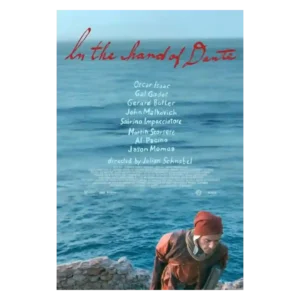
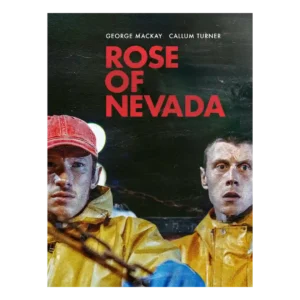
In the Hand of Dante
Where It Has the Edge
No clear scored advantage over the other product.
No clear scored advantage over the other product.
The all-star ensemble is wildly uneven. Several supporting players add force and humor, but the mismatched styles, accents, and flat performances often make the drama feel unintentionally comic.
The cast embraces the deliberately restrained, post-synced performance style, and the leads make the strange premise emotionally credible. Occasional wooden stiffness feels intentional and often strengthens the uncanny design.
The action is limited and rarely becomes a strength. The few bursts of violence and confrontation are weakened by awkward staging and uneven performances.
This is best suited to viewers who enjoy audacious, divisive auteur projects and can tolerate confusion. Most will find the length and self-importance hard to endure.
This is Mark Jenkin’s most approachable film for many viewers, thanks to a clearer time-travel premise and recognizable leads. Its slow rhythm, fractured logic, and abrasive sound still make it best suited to adventurous art-house audiences.
Key motivations are vague, supporting figures arrive late, and several women function more as symbols than fully formed characters. The film's scale leaves too little room for believable growth.
Nick’s fear, guilt, and devotion to his family give the film a strong emotional center, while Liam’s willingness to accept a borrowed life creates an effective contrast. Some viewers found Liam and the supporting characters less fully developed.
Oscar Isaac and Gal Gadot rarely create the passion needed for the cross-century love story. A small minority found their pairing effective, but the dominant impression is emotional distance.
Nick and Liam share a restrained, almost cosmic bond shaped by hard labor and displacement. Their opposing reactions to the past create tension even when they rarely speak openly.
The crisp black-and-white modern sequences and vivid color period scenes are the film's most consistent achievement. Painterly compositions, roaming camera work, and striking locations give it a grand visual identity.
The hand-cranked 16mm photography is the film’s most celebrated feature, turning rust, seawater, skin, and weathered buildings into tactile, saturated images. Its scratches, light leaks, and tight framing make the movie feel both newly alive and unearthed from another era.
The period clothing divides opinion. Some find it sumptuous and memorable, while others see cheap, theatrical costumes that make the medieval sections feel like historical cosplay.
The clothing helps distinguish the two timelines without calling attention to itself, and the period details are carefully integrated into the village setting. The costumes support the film’s immersive 1990s atmosphere.
The film's ambition earns scattered admiration, but its indulgence, incoherence, and length have produced overwhelmingly negative critical reactions.
Its tactile craft, emotional ambition, and singular style give it strong art-house critical appeal. The pacing and narrative opacity remain the main reasons for sharp dissent.
The Italian setting and Dante material are visually prominent, yet the accents, casting, and limited use of Italian performers often feel inauthentic or caricatured.
Cornwall is presented as a lived-in working community rather than a scenic backdrop. The film connects fishing traditions, economic decline, local identity, and the erosion of communal life with unusual specificity.
The dialogue is frequently florid, repetitive, and self-consciously poetic. Period speeches, odd accents, and grand declarations often become confusing or accidentally funny.
The sparse dialogue is recorded after filming and often feels detached from the image, which adds to the uncanny atmosphere. Its blunt, economical exchanges fit the characters, though viewers seeking fuller explanation may find it withholding.
Julian Schnabel takes a fearless, highly personal swing, but the freedom becomes self-indulgence. His visual confidence is clear, while narrative control, tone, and restraint are much less reliable.
Mark Jenkin’s control of image, sound, rhythm, and regional detail gives the film a singular identity. The uncompromising vision is a major strength, though the expanded time-travel plot occasionally feels unfocused.
The dramatic material is overextended and pompous rather than emotionally persuasive. Large conflicts and spiritual stakes are presented with weight, but seldom earn it.
The supernatural premise remains grounded in a family man’s desperation, a drifter’s longing for belonging, and a community’s dependence on dangerous work. That human tension gives the film more emotional force than a conventional puzzle movie.
The film badly needs a tighter cut. Jolting timeline transitions, repetitive stops, wandering subplots, and scenes that run too long drain momentum from the stronger crime material.
Rapid inserts, match cuts, flash frames, and repeated images make past and present bleed together with hypnotic force. The same method can feel overextended when the film lingers on fishing routines or withholds a conventional resolution.
The film reaches for love, grief, faith, and artistic transcendence but remains emotionally remote. Its intellectual ambitions rarely turn into a moving human experience.
Nick’s separation from his wife and daughter gives the film a deep current of grief, panic, and longing. Its quietest moments can feel heartbreaking and leave a lasting, quietly devastating impression.
The final act is one of the weakest sections. Melodrama, an awkward showdown, and an unearned philosophical resolution replace the energy of the earlier manuscript plot.
The open ending is one of the film’s sharpest dividing points. Some found it haunting, poignant, and endlessly suggestive, while others felt the abrupt lack of answers denied the story a needed payoff.
The experience is highly divisive. Some enjoy the strange cast, violent pulp, and trainwreck fascination, but most find the film exhausting, dull, and difficult to recommend.
The film can be mesmerizing when its sound, imagery, and mystery take hold, but it offers little conventional momentum or easy pleasure. Patient viewers may find it absorbing; others may simply feel bored or stranded.
The adaptation preserves the novel's dual structure and excess, yet its interpretation of Dante's beliefs is sharply disputed. The film often feels more loyal to its own mythology than to the historical poet.
The black-and-white gangster and authentication material is usually the most satisfying part. The medieval biopic and spiritual romance are slower, thinner, and less coherent.
Ghost story, time-travel drama, folk tale, social realism, and experimental cinema merge into an eerie experience that resists a single label. The blend feels fresh and emotionally grounded rather than like a standard science-fiction adventure.
The portrayal of Dante's faith, worldview, and medieval context is frequently criticized as revisionist or superficial. Its historical world works better as stylized fantasy than persuasive biography.
Gerard Butler's outrageous gangster provides much of the intentional humor, while other laughs come from campy casting, accents, and solemn scenes that land unintentionally.
Dry humor occasionally slips through the dread, especially in Liam’s casual acceptance of impossible circumstances and the captain’s blunt sea lore. These moments lighten the film without breaking its spell.
The film's profanity and vulgar speeches contribute to an abrasive, hostile atmosphere. The coarse language is more likely to repel than enhance the experience.
Oscar Isaac is usually the film's strongest anchor, differentiating Nick Tosches and Dante with commitment and charisma. Even favorable assessments note that the sprawling script makes his task unnecessarily difficult.
George MacKay and Callum Turner give the film emotional clarity by playing opposite responses to the same impossible event. Their restrained performances keep the high-concept story rooted in recognizable fear, need, and desire.
The oversized beards, wigs, and conspicuous hair choices are memorable but often distracting. Several looks invite laughter instead of supporting the historical illusion.
Mary Woodvine’s aging makeup is convincing enough to make her difficult to recognize at first. The transformation supports the time-slip structure without feeling showy.
The spiritual message is muddled and heavy-handed, mixing reincarnation, anti-institutional religion, art, and romantic salvation. Its conclusions can feel simplistic or hostile rather than profound.
The film’s central message about community, sacrifice, labor, and the cost of preserving a way of life is emotionally resonant. It refuses to romanticize the past even while showing what has been lost.
Few films combine literary scholarship, medieval mysticism, organized crime, reincarnation, and romantic melodrama this boldly. The result is unmistakably original even when it fails.
The movie feels unlike most contemporary releases, combining handmade 16mm technique with a fishing-boat time loop and a distinctly Cornish social perspective. Its unusual voice remains clear even when the story frustrates.
The first act and manuscript investigation can move well, but the film increasingly meanders. Long philosophical passages, repeated detours, and a sluggish second half make the journey feel punishing.
The deliberate rhythm can feel hypnotic and more propulsive than Jenkin’s earlier work. The 114-minute running time, repeated voyages, and prolonged observational passages can also make the film drag.
The two timelines, dual casting, side plots, and metaphysical links are difficult to track. Their connection remains tenuous until a late explanation that does little to unify the story.
The central time-slip is understandable, but its rules, identities, and causal loops remain intentionally unresolved. That ambiguity rewards interpretation for some viewers and creates confusion or frustration for others.
The lost-manuscript caper and reincarnated-writer structure create a genuinely unusual plot. Its singularity is a major asset, even though the execution is unwieldy.
Using an ordinary fishing trawler and the sea itself as a time machine gives the familiar time-travel idea a fresh, grounded form. The paradoxes grow directly from work, family, and community rather than technological spectacle.
The modest, lo-fi effects create convincing storms, temporal ruptures, and physical danger without breaking the handmade aesthetic. Their simplicity becomes part of the film’s tactile spectacle.
The locations and historical spaces can look grand, but the physical world is inconsistent. Some sets feel painterly and immersive, while others appear cheap or sloppy.
The decaying present and busier 1993 village are built through rigorously detailed homes, pubs, docks, tools, and storefronts. The environments feel inhabited and help communicate social change without exposition.
The criminal plan, character behavior, romance, and handling of priceless documents often strain credibility. The film favors heightened myth and pulp over believable detail.
Fishing labor is shown as repetitive, dangerous, exhausting, and physically specific. Nets, engines, gutted fish, wet clothing, and communal unloading make the work feel immediate despite the supernatural story.
The repeated images, causal loops, and unresolved ending invite viewers to revisit the film and form new interpretations. Several admirers found that it lingered for weeks or became richer on a second viewing.
The cross-century romance is the most repeated weakness. It is underwritten, rushed, and emotionally cold, leaving the declarations of timeless love unconvincing.
Two love stories give the time-travel premise much of its heartbreak: one man is torn from the family he loves, while another steps into a family he never had. Their emotional imbalance deepens the film’s moral tension.
At roughly two and a half hours, the film is consistently described as bloated. Its length magnifies the repetition, tonal drift, and weak second half.
At 114 minutes, the film gives its atmosphere and labor routines room to accumulate, but the length is a recurring complaint. Viewers less absorbed by the style may feel that a substantial portion could have been cut.
The film creates dread through sound, repetition, warnings, disorientation, and the fear of permanent separation rather than jump scares. Its horror is psychological, mournful, and quietly oppressive.
Jenkin’s eerie electronic and organ-like score reinforces the sense of temporal dislocation and grief. It shifts between low menace and mournful abstraction without overwhelming the handmade soundscape.
The screenplay contains an intriguing premise and ambitious ideas but lacks discipline. Absurd turns, unclear motives, disconnected threads, and self-important writing keep it from cohering.
The script provides a stronger narrative spine than Jenkin’s previous experiments while preserving ambiguity and thematic depth. Dissenting viewers found it unfocused, underexplained, or too conventional compared with the bold visual form.
The mature sexual imagery is brief but deliberately provocative. It fits the film's adult tone, though the surrounding vulgarity and symbolism may feel gratuitous.
The post-produced clanks, engines, gulls, waves, voices, and distorted tones are as important as the images. The mix is masterful and immersive, but it can become physically harsh or uncomfortably loud.
The soundtrack includes conspicuous choices that can feel more like a filmmaker's indulgence than an organic part of the story.
The music complements the film’s analog texture and nostalgic unease, with associations that evoke warped memory rather than comforting period nostalgia. It supports the mood more than it functions as a conventional song-driven soundtrack.
The film’s restrained effects create credible spectacle while preserving the rough, handmade look. The storm and temporal imagery feel uncanny without becoming polished or generic.
The story is an audacious literary-gangster epic with flashes of fascination, suspense, and beauty. Its dominant impression, however, is of an overstuffed, confusing mess that collapses under its scope.
The fishing-boat time-slip offers a clear emotional hook while leaving its metaphysics unresolved. The story is compelling and moving at its best, though repetition and underdeveloped ideas weaken it for some audiences.
Gerard Butler is the most frequent standout, with John Malkovich, Al Pacino, and Martin Scorsese also earning praise. The ensemble remains uneven because several prominent performances feel miscast or tonally disconnected.
The supporting ensemble fits naturally into the heightened Cornish world, balancing grounded behavior with ghost-story strangeness. Francis Magee, Mary Woodvine, Rosalind Eleazar, Edward Rowe, and Yana Penrose are especially effective.
The theft, manuscript authentication, and early criminal pursuit create the film's best suspense. That tension fades as romance and metaphysical reflection take over.
Warnings carved into the boat, shifting identities, recurring images, and the possibility of permanent entrapment keep tension simmering. The suspense is atmospheric and existential rather than plot-driven.
Ideas about art, commerce, faith, violence, redemption, and artistic obsession are abundant. They are often compelling in isolation but rarely developed into a coherent or emotionally grounded argument.
The film layers grief, memory, identity, labor, community, nostalgia, class decline, sacrifice, and free will into its time-travel premise. Its refusal to settle on one interpretation is a strength for engaged viewers and a barrier for others.
The film jumps between gangster pulp, solemn historical drama, black comedy, romance, and spiritual reverie. Those modes frequently clash instead of enriching one another.
Character drama, eerie dread, dry humor, social realism, and supernatural mystery coexist with unusual control. The tonal mixture remains coherent because every element shares the same handmade, mournful texture.
The violence is graphic, sudden, and often mean-spirited. It can add shock and danger to the crime story, but many find it excessive or emotionally unpleasant.
The contrast between widescreen monochrome and boxier color imagery gives the film a distinctive look. Even harsh critics often admire its painterly frames, textures, and locations.
Saturated primary colors, grain, scratches, cropped close-ups, rust, moss, rain, and weathered surfaces create a dense visual world. The style is beautiful, abrasive, and instantly recognizable.
Medieval Italy and the black-and-white criminal world have vivid, contrasting identities. The settings are imaginative and visually rich even when the narrative connection between them is weak.
The film makes the supernatural and the everyday feel inseparable, with the village’s labor, family roles, objects, and rituals forming the rules of its temporal world. The setting feels both concrete and mythic.