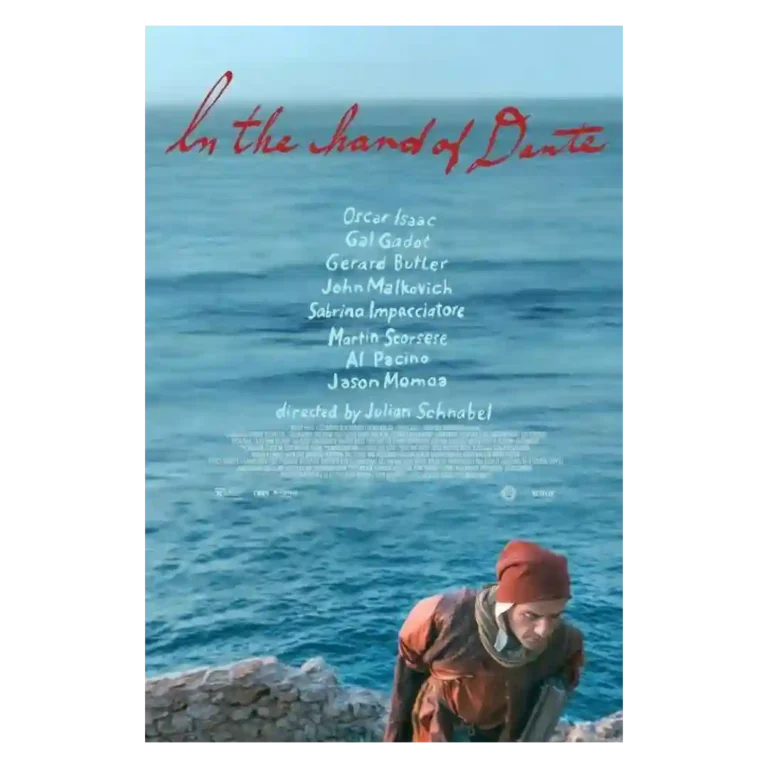
Choose it if you want a visually extravagant, aggressively strange literary crime epic and can tolerate confusion. Skip it if you need tight pacing, coherent timelines, convincing romance, or consistently strong performances.
Best for
Adventurous viewers who enjoy visually ambitious auteur swings, literary mysteries, eccentric casting, and films that invite debate even when they fail.
Not for
Anyone seeking a fast, coherent thriller, a persuasive historical drama, a moving romance, or an efficient use of two and a half hours should skip it.
Verdict
In the Hand of Dante is an audacious collision of gangster pulp, medieval biography, spiritual reverie, and romantic melodrama. Roman Vasyanov’s contrasting monochrome and color photography gives the film a striking visual identity, while Oscar Isaac usually provides the necessary center and Gerard Butler supplies its liveliest comic menace. The strengths are overwhelmed by a two-and-a-half-hour structure that meanders through disconnected ideas, underdeveloped characters, florid dialogue, and a romance that rarely feels credible. The manuscript theft and authentication passages generate genuine intrigue, but the period storyline and metaphysical links repeatedly stall the momentum. Its singular ambition may fascinate adventurous viewers, yet the dominant experience is an exhausting, tonally unstable epic whose beauty and boldness cannot compensate for weak narrative control.
The crisp black-and-white modern sequences and vivid color period scenes are the film's most consistent achievement. Painterly compositions, roaming camera work, and striking locations give it a grand visual identity.
Gerard Butler is the most frequent standout, with John Malkovich, Al Pacino, and Martin Scorsese also earning praise. The ensemble remains uneven because several prominent performances feel miscast or tonally disconnected.
Oscar Isaac is usually the film's strongest anchor, differentiating Nick Tosches and Dante with commitment and charisma. Even favorable assessments note that the sprawling script makes his task unnecessarily difficult.
Few films combine literary scholarship, medieval mysticism, organized crime, reincarnation, and romantic melodrama this boldly. The result is unmistakably original even when it fails.
The contrast between widescreen monochrome and boxier color imagery gives the film a distinctive look. Even harsh critics often admire its painterly frames, textures, and locations.
The theft, manuscript authentication, and early criminal pursuit create the film's best suspense. That tension fades as romance and metaphysical reflection take over.
The lost-manuscript caper and reincarnated-writer structure create a genuinely unusual plot. Its singularity is a major asset, even though the execution is unwieldy.
Medieval Italy and the black-and-white criminal world have vivid, contrasting identities. The settings are imaginative and visually rich even when the narrative connection between them is weak.
At roughly two and a half hours, the film is consistently described as bloated. Its length magnifies the repetition, tonal drift, and weak second half.
The two timelines, dual casting, side plots, and metaphysical links are difficult to track. Their connection remains tenuous until a late explanation that does little to unify the story.
The dialogue is frequently florid, repetitive, and self-consciously poetic. Period speeches, odd accents, and grand declarations often become confusing or accidentally funny.
The cross-century romance is the most repeated weakness. It is underwritten, rushed, and emotionally cold, leaving the declarations of timeless love unconvincing.
The final act is one of the weakest sections. Melodrama, an awkward showdown, and an unearned philosophical resolution replace the energy of the earlier manuscript plot.
The film reaches for love, grief, faith, and artistic transcendence but remains emotionally remote. Its intellectual ambitions rarely turn into a moving human experience.
The screenplay contains an intriguing premise and ambitious ideas but lacks discipline. Absurd turns, unclear motives, disconnected threads, and self-important writing keep it from cohering.
chemistry between characters: 1.6, 7 reviews, low consensus
Oscar Isaac and Gal Gadot rarely create the passion needed for the cross-century love story. A small minority found their pairing effective, but the dominant impression is emotional distance.
The first act and manuscript investigation can move well, but the film increasingly meanders. Long philosophical passages, repeated detours, and a sluggish second half make the journey feel punishing.
The portrayal of Dante's faith, worldview, and medieval context is frequently criticized as revisionist or superficial. Its historical world works better as stylized fantasy than persuasive biography.
The film jumps between gangster pulp, solemn historical drama, black comedy, romance, and spiritual reverie. Those modes frequently clash instead of enriching one another.
The film badly needs a tighter cut. Jolting timeline transitions, repetitive stops, wandering subplots, and scenes that run too long drain momentum from the stronger crime material.
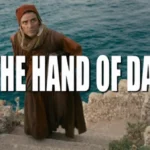
The period clothing divides opinion. Some find it sumptuous and memorable, while others see cheap, theatrical costumes that make the medieval sections feel like historical cosplay.
faithfulness to source material: 1.5, 2 reviews, limited evidence
The adaptation preserves the novel's dual structure and excess, yet its interpretation of Dante's beliefs is sharply disputed. The film often feels more loyal to its own mythology than to the historical poet.
The oversized beards, wigs, and conspicuous hair choices are memorable but often distracting. Several looks invite laughter instead of supporting the historical illusion.
The spiritual message is muddled and heavy-handed, mixing reincarnation, anti-institutional religion, art, and romantic salvation. Its conclusions can feel simplistic or hostile rather than profound.
The criminal plan, character behavior, romance, and handling of priceless documents often strain credibility. The film favors heightened myth and pulp over believable detail.
The all-star ensemble is wildly uneven. Several supporting players add force and humor, but the mismatched styles, accents, and flat performances often make the drama feel unintentionally comic.
The story is an audacious literary-gangster epic with flashes of fascination, suspense, and beauty. Its dominant impression, however, is of an overstuffed, confusing mess that collapses under its scope.
The action is limited and rarely becomes a strength. The few bursts of violence and confrontation are weakened by awkward staging and uneven performances.
The Italian setting and Dante material are visually prominent, yet the accents, casting, and limited use of Italian performers often feel inauthentic or caricatured.
The dramatic material is overextended and pompous rather than emotionally persuasive. Large conflicts and spiritual stakes are presented with weight, but seldom earn it.
The film's profanity and vulgar speeches contribute to an abrasive, hostile atmosphere. The coarse language is more likely to repel than enhance the experience.
The mature sexual imagery is brief but deliberately provocative. It fits the film's adult tone, though the surrounding vulgarity and symbolism may feel gratuitous.
entertainment value: 2.1, 16 reviews, low consensus
The experience is highly divisive. Some enjoy the strange cast, violent pulp, and trainwreck fascination, but most find the film exhausting, dull, and difficult to recommend.
The violence is graphic, sudden, and often mean-spirited. It can add shock and danger to the crime story, but many find it excessive or emotionally unpleasant.
This is best suited to viewers who enjoy audacious, divisive auteur projects and can tolerate confusion. Most will find the length and self-importance hard to endure.
character development: 2.0, 2 reviews, limited evidence
Key motivations are vague, supporting figures arrive late, and several women function more as symbols than fully formed characters. The film's scale leaves too little room for believable growth.
production design: 2.5, 2 reviews, limited evidence
The locations and historical spaces can look grand, but the physical world is inconsistent. Some sets feel painterly and immersive, while others appear cheap or sloppy.
Julian Schnabel takes a fearless, highly personal swing, but the freedom becomes self-indulgence. His visual confidence is clear, while narrative control, tone, and restraint are much less reliable.
Ideas about art, commerce, faith, violence, redemption, and artistic obsession are abundant. They are often compelling in isolation but rarely developed into a coherent or emotionally grounded argument.
The black-and-white gangster and authentication material is usually the most satisfying part. The medieval biopic and spiritual romance are slower, thinner, and less coherent.
Gerard Butler's outrageous gangster provides much of the intentional humor, while other laughs come from campy casting, accents, and solemn scenes that land unintentionally.
Benjamin Clementine brings an electrifying presence and also contributes the music. His brief appearance stands out within the film's crowded collection of cameos.
Roman Vasyanov's cinematography is the most consistently praised contribution. The luminous color, crisp monochrome, unusual framing, and painterly movement give the film beauty even when the story fails.
Al Pacino makes a strong impression in a very small role. His understated, gravelly presence gives the opening moral lesson more weight than most of the later drama.
John Malkovich gives the mob storyline eccentric menace and dry humor. He is often praised as compelling, though one account felt he was simply coasting on familiar mannerisms.
Gerard Butler is the film's most frequent scene-stealer, attacking Louie with comic menace and full commitment. Some find the work overplayed or miscast, but many consider it the movie's liveliest performance.
Oscar Isaac is the consensus anchor, bringing charisma, commitment, and contrast to the dual lead. Even severe detractors usually recognize the difficulty of his task, though a few consider the material one of his weaker showcases.
Martin Scorsese's bearded mentor is memorable and often warmly received, with several calling him a highlight. Others find the costume, dialogue, and solemn delivery unintentionally comic or embarrassing.
Sabrina Impacciatore receives sharply mixed reactions. One critic attacks her line readings, while another finds her excellent and able to do more than the role deserves.
Julian Schnabel's uncompromised ambition is both the attraction and the problem. His visual imagination and willingness to take risks are clear, but self-indulgence, tonal confusion, and weak narrative control dominate the response.
Jason Momoa is usually judged miscast, with his accent and late-arriving gangster role drawing ridicule. A few find his flamboyant presence briefly entertaining.
Gal Gadot is the most consistently criticized major performer. Her dual roles are described as flat, stiff, and emotionally unconvincing, with little chemistry opposite Oscar Isaac, though a few viewers found the pairing effective.
Compared With Category Average
Compared with other Movies, this product is above average in plot originality, originality, suspense, near average in supporting cast performance, cinematography, below average in emotional impact, costume design, chemistry between characters.
Comparison summary
43 compared features
Above average0.4+ pts higher
3(7%)
Same as averagewithin 0.3 pts
5(12%)
Below average0.4+ pts lower
35(81%)
Largest category differences
Attribute
This product
Category average
Difference
emotional impact
1.2
3.9
-2.7
costume design
1.5
4.2
-2.7
chemistry between characters
1.6
4.2
-2.6
faithfulness to source material
1.5
4.1
-2.6
critic appeal
1.0
3.6
-2.6
cultural representation
1.5
4.0
-2.5
realism
1.0
3.5
-2.5
romance quality
1.6
3.5
-2.0
Consider This Instead
If you want better plot clarity
Choose Girls Like Girls. It scores 5.0 vs 1.4 for plot clarity, with a 4.0 overall score.
No. The film jumps between centuries, genres, and dual roles, and the connection between its timelines remains unclear until a late explanation.
Are the performances good?
Oscar Isaac is usually the strongest anchor, and Gerard Butler is frequently the standout. The rest of the ensemble is uneven, with Gal Gadot and Jason Momoa drawing the most criticism.
Is the movie visually impressive?
Yes. The crisp monochrome crime scenes, vivid color period sequences, painterly compositions, and Italian locations are the most consistently praised elements.
Who is most likely to enjoy it?
Viewers who appreciate audacious, strange, divisive films may enjoy the spectacle and ambition. Those sensitive to slow pacing, confusion, or self-serious dialogue are unlikely to find it worthwhile.
Sample Expert Reviews We Analyzed
These are a few of the reviews included in our analysis.
Best for a profound, formally inventive meditation on grief, memory, and the ethics of filming family. Skip it if intensely personal addiction material, a 114-minute runtime, or occasional repetition will...
Best for joyful music, rare footage, candid interviews, and a layered Maurice White portrait. Skip it if you want a tightly focused, unconventional reappraisal that lingers on performances instead of...
Best for a tender, accessible portrait that lets Oliver’s poetry, friends, and archival voice carry the experience. Skip it if you want a brisk, deeply investigative biography; the calm rhythm...
Pros: romance quality, faithfulness to source material
Best for razor-sharp adult comedy, exceptional ensemble work, and a surprisingly moving marriage story. Skip it if talk-heavy chamber pieces, explicit relationship discussions, or an occasionally intrusive string score wear...