8BitDo Pro 3

8BitDo Pro 3 Review

Brand: 8BitDo
Released: August 12, 2025
Updated: 10 hours ago
3.6
Overall review score Expert score: 3.5 Customer score: 3.6
1,543
Review evidence points
87
Scored features
285
Total reviews
32 expert / 253 customer

Bottom Line

Choose it for comfortable retro-first control, a superb dock, swappable buttons, and flexible PC/Switch use. Skip it if you need quiet face buttons, foolproof software, replaceable batteries, or top-tier competitive polling and thumbstick grip.

Best for

Best for PC and Switch players who prefer symmetrical sticks, play plenty of retro or 2D games, and want a docked, deeply customizable controller without premium-brand pricing.

Not for

Skip it for Xbox or PlayStation console use, quiet shared-room gaming, serious esports play, or if a removable battery and proven long-term durability are essential.

Verdict

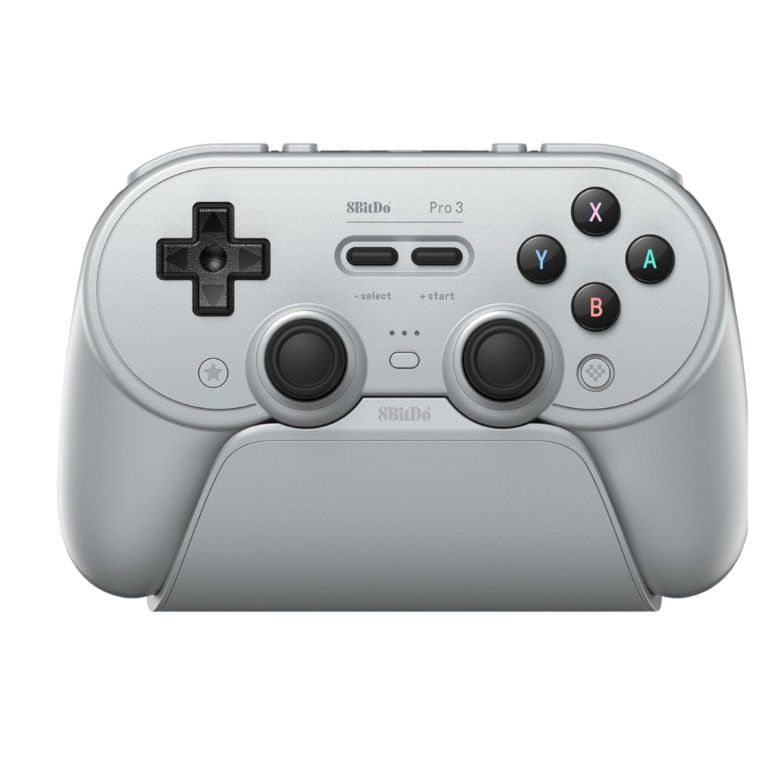
The 8BitDo Pro 3 succeeds by combining a genuinely good retro-first shape with modern features that are usually scattered across pricier controllers. The tactile D-pad, smooth TMR sticks, switchable triggers, four programmable inputs, magnetic face buttons, and excellent charging dock make it especially compelling for PC, Switch, emulation, and mixed-genre play. It is not flawless: the face buttons are loud, the stock stick tops can feel slippery, Ultimate Software remains rough, and the 250Hz polling rate limits its competitive credentials. More concerning are repeated customer reports of cracked buttons, broken triggers, charging failures, and inaccurate D-pad diagonals. For most casual and retro-focused players it is a feature-rich, comfortable value, but buyers who prioritize silence, esports performance, or long-term repairability should weigh those caveats carefully.

Feature Scorecards

Summary

87 reviewed features
  • Very positive 4.5-5.0
    1 (1%)
  • Positive 3.5-4.4
    53 (61%)
  • Neutral 2.5-3.4
    23 (26%)
  • Negative 1.5-2.4
    9 (10%)
  • Very negative below 1.5
    1 (1%)

Pros

  • 5.0
    based on 1 review
    Hall effect stick performance: 5.0, based on 1 review
    The magnetic stick system is praised for smooth, drift-resistant control, although the Pro 3's actual stick modules are TMR rather than Hall effect. Hall effect technology is used in the triggers.
  • 4.3
    based on 14 reviews
    analog stick smoothness: 4.3, based on 14 reviews
    Stick movement is one of the clearest strengths, with a smooth glide and very little friction across the range. Even critical reviews generally liked the mechanical smoothness.
  • 4.2
    based on 18 reviews
    design and aesthetics: 4.2, based on 18 reviews
    The retro-inspired color schemes and matching dock are widely admired, especially the GameCube, PlayStation, and Game Boy themes. The controller looks distinctive without sacrificing modern functionality.
  • 4.1
    based on 6 reviews
    back button usefulness: 4.1, based on 6 reviews
    Rear buttons are useful for sprinting, skills, emulator shortcuts, and other actions that would otherwise require leaving the sticks. They are one of the controller's strongest modern additions.
  • 4.1
    based on 5 reviews
    competitive gaming suitability: 4.1, based on 5 reviews
    Trigger stops, precise sticks, and extra buttons provide useful competitive tools. The 250Hz polling ceiling, slippery caps, and occasional latency concerns keep it below dedicated esports controllers.
  • 4.0
    based on 31 reviews
    retro gaming suitability: 4.0, based on 31 reviews
    Retro games are the controller's natural strength, thanks to its D-pad-first layout, turbo support, and classic shape. It remains modern enough to handle newer games without feeling like a specialty pad.
  • 4.0
    based on 26 reviews
    included accessories: 4.0, based on 26 reviews
    The package is generous, with a matching dock, USB-C dongle, cable, spare magnetic buttons, removal tool, and ball-top caps. The arcade-style caps are fun but niche, and their storage is poorly solved.
  • 4.0
    based on 22 reviews
    ergonomics: 4.0, based on 22 reviews
    The rounded grips and retro-modern shape feel natural to many users and support long sessions well. The symmetrical layout and narrower body remain preference-dependent.
  • 4.0
    based on 12 reviews
    FPS performance: 4.0, based on 12 reviews
    The precise sticks, trigger locks, and extra buttons can work well in shooters, especially for casual play. Slippery thumbstick tops and the modest polling rate make it less convincing for highly competitive FPS use.
  • 4.0
    based on 2 reviews
    back button placement: 4.0, based on 2 reviews
    The rear buttons generally sit where fingers naturally rest and can be used without changing grip. Placement of the additional top L4/R4 buttons is more divisive, especially for shorter fingers.
  • 4.0
    based on 2 reviews
    motion control accuracy: 4.0, based on 2 reviews
    Motion controls are accurate and responsive when the correct Switch or Steam Input mode is available. Some connection methods disable them, so platform setup matters.
  • 4.0
    based on 1 review
    accessibility features: 4.0, based on 1 review
    Axis inversion and controller-level remapping add useful flexibility for players who need alternate control behavior. Accessibility is not a major focus, but the available adjustments are welcome.
  • 4.0
    based on 1 review
    analog trigger precision: 4.0, based on 1 review
    The analog triggers provide adjustable range and useful control for games that need graduated input. The short overall travel can make fine racing adjustments feel more demanding for some players.
  • 4.0
    based on 1 review
    charging speed: 4.0, based on 1 review
    Charging is described as quick enough to keep the controller ready between sessions. The dock encourages frequent top-ups, so charging time rarely becomes a practical complaint.
  • 4.0
    based on 1 review
    face button travel: 4.0, based on 1 review
    The face buttons provide a decent amount of travel with a firm bottom-out. The action is clear and tactile rather than soft, though it contributes to the controller's audible character.
  • 3.9
    based on 201 reviews
    overall satisfaction: 3.9, based on 201 reviews
    The controller is broadly liked for comfort, customization, retro control, and its excellent dock. Loud buttons, software friction, D-pad inconsistency, and scattered durability failures keep the praise from being universal.
  • 3.9
    based on 59 reviews
    overall comfort: 3.9, based on 59 reviews
    Comfort is a major strength: the rounded grips, moderate weight, and retro shape suit long sessions for many players. Larger hands and users who dislike symmetrical sticks are more likely to feel cramped.
  • 3.9
    based on 55 reviews
    d-pad feel: 3.9, based on 55 reviews
    The raised tactile D-pad earns strong praise for its crisp, solid feedback and retro-game focus. Its clickiness, firmness, and sound are personal tastes, and some prefer the softer Pro 2 style.
  • 3.9
    based on 17 reviews
    macro support: 3.9, based on 17 reviews
    Macros are especially popular for automation, turbo tasks, and Pokémon shiny hunting, and they work well once configured. Software bugs and unintuitive editing make setup harder than the feature deserves.
  • 3.9
    based on 15 reviews
    trigger stop effectiveness: 3.9, based on 15 reviews
    The physical trigger locks create a convincing click-style action with little wasted travel. They are widely praised, though occasional looseness or partial movement keeps them from feeling perfect.
  • 3.9
    based on 12 reviews
    weight balance: 3.9, based on 12 reviews
    The controller has enough heft to feel substantial without becoming tiring, and the weight is generally distributed evenly. Users who prefer very light pads may still notice its density.
  • 3.9
    based on 9 reviews
    casual gaming suitability: 3.9, based on 9 reviews
    For everyday single-player, couch, and mixed-genre gaming, the controller is easy to live with and highly versatile. Its competitive limitations matter far less in casual use.
  • 3.9
    based on 7 reviews
    bumper quality: 3.9, based on 7 reviews
    The main bumpers are generally praised for a cushioned, quiet, satisfying press. Their membrane feel contrasts with the sharper microswitch action of the adjacent programmable buttons.
  • 3.9
    based on 7 reviews
    material quality: 3.9, based on 7 reviews
    The shell plastic usually feels pleasant, sturdy, and suitably premium for the price. Reports of brittle removable buttons create a notable exception.
  • 3.9
    based on 4 reviews
    face button responsiveness: 3.9, based on 4 reviews
    Face buttons respond quickly and are easy to hit during action-heavy games. Their responsiveness is stronger than their sound and material consistency.
  • 3.8
    based on 38 reviews
    build quality: 3.8, based on 38 reviews
    The controller usually feels dense, sturdy, and more refined than its predecessor, with a reassuring weight in hand. A minority report rattles, cracked removable buttons, or early failures that weaken confidence.
  • 3.8
    based on 29 reviews
    TMR stick performance: 3.8, based on 29 reviews
    The TMR modules are consistently praised for smoothness, precision, low power use, and drift resistance. Their benefits are partly wasted when the small stock caps feel slippery.
  • 3.8
    based on 17 reviews
    trigger responsiveness: 3.8, based on 17 reviews
    Both analog and microswitch modes respond quickly, and the short mode gives immediate actuation for shooters and Switch games. A few users report missed inputs or awkward initial feel.
  • 3.8
    based on 16 reviews
    trigger smoothness: 3.8, based on 16 reviews
    The analog triggers generally move smoothly with even spring resistance and a clean range. Some reviewers consider the full travel too short for delicate analog control.
  • 3.8
    based on 13 reviews
    gyro aiming performance: 3.8, based on 13 reviews
    Gyro works accurately on supported Switch and Steam Input configurations and compares well with first-party motion controls. Access to it depends heavily on connection mode and platform setup.
  • 3.7
    based on 61 reviews
    charging dock support: 3.7, based on 61 reviews
    The weighted dock is a standout feature, combining charging, display, accessory storage, and a pass-through home for the 2.4GHz dongle. It makes the controller consistently convenient to grab and use.
  • 3.7
    based on 55 reviews
    connection reliability: 3.7, based on 55 reviews
    Connections are usually fast and dependable on PC and Switch, especially through the docked dongle. A smaller group reports random disconnections, driver duplication, or confusing mode behavior.
  • 3.7
    based on 55 reviews
    value for money: 3.7, based on 55 reviews
    At roughly $60–$70, the controller delivers an unusually complete mix of premium hardware, dock, and customization. Buyers focused on 1000Hz polling or proven durability may find stronger value elsewhere.
  • 3.7
    based on 27 reviews
    battery life: 3.7, based on 27 reviews
    Most users report roughly a full day of intermittent play, commonly around 12–25 hours depending on mode and settings. The charging dock makes the merely good runtime feel less burdensome.
  • 3.7
    based on 26 reviews
    analog stick precision: 3.7, based on 26 reviews
    The sticks are widely described as accurate and responsive, with adjustable dead zones and good centering. Their precision is sometimes undermined by slippery caps or mode-specific latency.
  • 3.7
    based on 17 reviews
    ease of setup: 3.7, based on 17 reviews
    Basic PC and Switch setup is usually quick, especially with the physical mode switch and docked dongle. Advanced profiles, Android, Apple, Linux, and firmware workflows can become confusing.
  • 3.7
    based on 14 reviews
    portability: 3.7, based on 14 reviews
    The controller can travel across PC, handhelds, Switch, and mobile devices, reducing the need to pack multiple pads. Its full dock-and-accessory setup is less compact than a simple travel controller.
  • 3.7
    based on 14 reviews
    travel friendliness: 3.7, based on 14 reviews
    Broad platform support makes it a useful single controller for travel, particularly with handheld PCs and mobile devices. Carrying the dock, dongle, loose caps, and adapters adds bulk.
  • 3.7
    based on 12 reviews
    USB-C convenience: 3.7, based on 12 reviews
    USB-C handles wired play, charging, and the dock connection cleanly, and the color-matched cable is a thoughtful touch. The USB-C dongle may require an adapter on devices limited to USB-A.
  • 3.7
    based on 7 reviews
    paddle quality: 3.7, based on 7 reviews
    The rear paddles feel useful and unobtrusive, with a placement that many users can ignore when unneeded. They are less premium than replaceable metal paddles and cannot always be disabled or assigned freely.
  • 3.7
    based on 6 reviews
    hand fatigue over long sessions: 3.7, based on 6 reviews
    Most users can play for hours without meaningful fatigue thanks to the rounded grips and balanced weight. Large hands, intense vibration, or awkward reach to the top buttons can reduce comfort.
  • 3.7
    based on 3 reviews
    grip texture: 3.7, based on 3 reviews
    The textured rear shell usually keeps the controller secure without abrasive rubber. Complaints about slipperiness mostly concern the thumbstick tops rather than the handles.
  • 3.6
    based on 38 reviews
    compatibility with Nintendo Switch: 3.6, based on 38 reviews
    Switch and Switch 2 support is generally strong, with working gyro, flexible connection choices, and convenient dock use. Wake behavior, rumble quality, NFC, and mode-specific features vary by firmware and connection method.
  • 3.6
    based on 30 reviews
    upgrade value: 3.6, based on 30 reviews
    Compared with the Pro 2, the dock, 2.4GHz support, TMR sticks, extra buttons, and trigger locks are meaningful upgrades. Losing the removable battery and changing the D-pad make the upgrade less automatic for every owner.
  • 3.6
    based on 15 reviews
    platformer control precision: 3.6, based on 15 reviews
    Platformers and 2D games benefit from the prominent D-pad and crisp directional changes. Unwanted diagonal reports mean demanding players should test their unit carefully.
  • 3.6
    based on 11 reviews
    fighting game suitability: 3.6, based on 11 reviews
    The prominent D-pad, trigger locks, and remappable controls suit many fighting games and arcade titles. Players who struggle with its firmer diagonals or clicky action may prefer another pad.
  • 3.6
    based on 5 reviews
    stick drift resistance: 3.6, based on 5 reviews
    TMR sensing avoids the contact wear associated with traditional potentiometer sticks and is expected to resist drift well. This is a major long-term appeal, though it does not protect against every mechanical failure.
  • 3.6
    based on 4 reviews
    premium feel: 3.6, based on 4 reviews
    The weight, textured shell, precise controls, and matching dock give the controller a convincingly premium presentation. Small rattles, loud buttons, or brittle parts can break that impression.
  • 3.5
    based on 55 reviews
    customization depth: 3.5, based on 55 reviews
    Swappable magnetic face buttons, replaceable stick caps, four extra inputs, profiles, macros, sensitivity, trigger, and vibration controls create unusually broad customization. Platform and software restrictions prevent every option from working everywhere.
  • 3.5
    based on 6 reviews
    racing game suitability: 3.5, based on 6 reviews
    Analog triggers work for racing games and can be switched back from the short digital mode. Their relatively short travel and the controller's stick layout may limit fine throttle and steering control.
  • 3.5
    based on 4 reviews
    wired performance: 3.5, based on 4 reviews
    Wired play is dependable and useful when the battery is low or minimal latency is preferred. It also exposes certain modes unavailable through the dongle, though cable length can be limiting.
  • 3.5
    based on 4 reviews
    wireless stability: 3.5, based on 4 reviews
    Wireless play is usually stable across normal room distances, particularly with the 2.4GHz receiver. Random disconnects and platform-specific driver issues appear in a minority of reports.
  • 3.5
    based on 2 reviews
    cable length and quality: 3.5, based on 2 reviews
    The included USB-C cable looks coordinated and feels adequate, but some users consider it too short for comfortable wired play. It is better suited to charging or nearby desktop setups.
  • 3.5
    based on 2 reviews
    customer support: 3.5, based on 2 reviews
    Support experiences are mixed, with some users receiving limited troubleshooting or being directed toward paid replacement parts. Unanswered messages and weak help with early failures are the main complaints.

Cons

  • 3.4
    based on 37 reviews
    compatibility with PC: 3.4, based on 37 reviews
    PC is one of the controller's best platforms, particularly through wired or 2.4GHz XInput. Steam Input, Linux, Bluetooth layouts, and driver behavior can require extra setup or compromise advanced features.
  • 3.4
    based on 16 reviews
    vibration quality: 3.4, based on 16 reviews
    Standard rumble adds useful feedback and can be adjusted, but it lacks refined HD haptics. Some Switch users find it harsh or excessively strong, while others consider it perfectly adequate.
  • 3.4
    based on 5 reviews
    software customization: 3.4, based on 5 reviews
    Dead zones, stick curves, trigger ranges, macros, profiles, and vibration can be adjusted in detail. The breadth is excellent, but the interface and platform limitations make it less polished than the hardware.
  • 3.4
    based on 4 reviews
    analog stick tension: 3.4, based on 4 reviews
    Stick tension feels controlled and returns cleanly to center, though preferences vary between users accustomed to softer or firmer first-party pads. A few found the small caps or tension less confidence-inspiring.
  • 3.3
    based on 40 reviews
    2.4GHz dongle performance: 3.3, based on 40 reviews
    The dock-mounted 2.4GHz receiver makes PC and Switch use quick and convenient, with fast reconnection when the controller is lifted from the stand. Some mode and platform limitations keep it from being universally seamless.
  • 3.3
    based on 22 reviews
    companion app quality: 3.3, based on 22 reviews
    Ultimate Software V2 offers deep control over profiles, macros, dead zones, triggers, and vibration. Its rough interface, bugs, connection problems, and confusing workflow are among the most consistent complaints.
  • 3.3
    based on 10 reviews
    button remapping options: 3.3, based on 10 reviews
    Buttons can be reassigned through onboard shortcuts, Steam Input, or Ultimate Software profiles. The flexibility is strong, although certain modes and extra-button combinations impose frustrating limits.
  • 3.3
    based on 10 reviews
    firmware update support: 3.3, based on 10 reviews
    Firmware updates have added or improved features such as Switch 2 wake behavior and compatibility. Updating can still be unreliable, and some users needed troubleshooting before the controller was recognized.
  • 3.3
    based on 5 reviews
    wireless latency: 3.3, based on 5 reviews
    Wireless response is good enough for most games over 2.4GHz, but Bluetooth and DInput can add noticeable delay. Competitive players are more likely to notice the difference.
  • 3.2
    based on 20 reviews
    d-pad accuracy: 3.2, based on 20 reviews
    Many users find the D-pad precise, stable, and excellent for deliberate cardinal inputs. Others report frequent unwanted diagonals, making accuracy the most sharply divided aspect of the controller.
  • 3.2
    based on 5 reviews
    mobile compatibility: 3.2, based on 5 reviews
    Android, iOS, iPad, Mac, and Apple TV can work, but button layouts and analog-trigger behavior vary by mode. Apple and Android users report more configuration friction than PC or Switch owners.
  • 3.1
    based on 27 reviews
    Bluetooth performance: 3.1, based on 27 reviews
    Bluetooth works well for straightforward Switch and mobile pairing, but it is generally less consistent and more mode-dependent than the 2.4GHz connection. Several users encountered layout, trigger, or latency compromises on non-Switch devices.
  • 3.0
    based on 37 reviews
    button quality: 3.0, based on 37 reviews
    Most controls feel tactile and solid, but the face buttons are polarizing because they are loud and sometimes feel hollow or inconsistent. Mushy Start and Select buttons are another recurring weak point.
  • 3.0
    based on 20 reviews
    programmable button support: 3.0, based on 20 reviews
    Four additional inputs provide useful shortcuts without requiring a full pro-controller price. The rear pair are well liked, while L4/R4 reach and assignment restrictions draw more criticism.
  • 3.0
    based on 12 reviews
    size suitability for different hand sizes: 3.0, based on 12 reviews
    Medium and smaller hands often find the shape immediately comfortable, while some large-handed users feel the body is narrow or the sticks too close together. Reach to L4/R4 varies noticeably by hand size.
  • 3.0
    based on 5 reviews
    onboard profile storage: 3.0, based on 5 reviews
    Multiple onboard profiles make it practical to keep separate layouts for games and platforms. Profile assignment and persistence can be confusing or unreliable in the software.
  • 3.0
    based on 3 reviews
    bumper responsiveness: 3.0, based on 3 reviews
    Bumper inputs register quickly and feel distinct from the extra shoulder buttons. A few users need more force than expected, but responsiveness is usually dependable.
  • 2.9
    based on 7 reviews
    battery replaceability: 2.9, based on 7 reviews
    The internal battery is a clear step backward from the Pro 2's removable pack and AA option. The dock reduces day-to-day inconvenience, but long-term replacement remains a concern.
  • 2.9
    based on 5 reviews
    polling rate: 2.9, based on 5 reviews
    The 250Hz ceiling is acceptable for ordinary play but disappointing for a controller carrying a Pro label. Cheaper and similarly priced rivals offer 1000Hz modes.
  • 2.8
    based on 43 reviews
    button noise: 2.8, based on 43 reviews
    The face buttons are noticeably loud and clacky, a trait some users enjoy for its crisp feedback and many others find distracting. Quiet-room and shared-couch players are the most likely to object.
  • 2.7
    based on 21 reviews
    input lag: 2.7, based on 21 reviews
    Wired and 2.4GHz response is generally adequate for normal play, while Bluetooth and DInput can be noticeably slower in certain modes. Measurements and experiences vary enough to discourage latency-sensitive buyers.
  • 2.7
    based on 9 reviews
    Switch wake support: 2.7, based on 9 reviews
    Switch 2 wake support improved through shake-to-wake firmware, but experiences vary by firmware and setup. Earlier reviews and some users still report unreliable or inconvenient wake behavior.
  • 2.5
    based on 13 reviews
    learning curve: 2.5, based on 13 reviews
    Core play is simple, but modes, profiles, button layouts, macros, and platform differences take time to understand. The physical selector helps, yet the full feature set can overwhelm new users.
  • 2.4
    based on 22 reviews
    durability: 2.4, based on 22 reviews
    Long-term feedback is the controller's biggest warning sign: some face buttons crack, triggers break, caps snap, or charging fails unusually early. Many units remain solid, but the repeated failures are difficult to dismiss.
  • 2.3
    based on 5 reviews
    Start and Select button design: 2.3, based on 5 reviews
    Start and Select preserve the soft retro feel, but many users find them mushy, cramped together, or awkwardly centered. They stand out as less immediate than the surrounding controls.
  • 2.1
    based on 7 reviews
    thumbstick grip: 2.1, based on 7 reviews
    The stock stick tops are a recurring weakness for some players because they feel small, slick, and difficult to hold during rapid aiming. Others find the rubber texture acceptable, making this strongly preference-dependent.
  • 2.0
    based on 2 reviews
    brand software support: 2.0, based on 2 reviews
    Linux users criticize the lack of full software support and feel the brand prioritizes Windows configuration. The hardware can still function, but advanced setup is less accessible outside supported platforms.
  • 2.0
    based on 2 reviews
    consistency across sessions: 2.0, based on 2 reviews
    A few reviewers encountered phantom presses or inconsistent readings after otherwise normal use. These reports are uncommon but concerning because they interrupt games unpredictably.
  • 1.8
    based on 3 reviews
    compatibility with PlayStation: 1.8, based on 3 reviews
    The PlayStation-style layout does not translate into native PlayStation console support. Buyers needing a PS4 or PS5 controller must choose another model.
  • 1.8
    based on 3 reviews
    compatibility with Xbox: 1.8, based on 3 reviews
    The controller can mimic an Xbox button layout on PC, but it does not natively work with Xbox consoles. That distinction is easy to miss because of the swappable ABXY arrangement.
  • 1.6
    based on 5 reviews
    delivery condition: 1.6, based on 5 reviews
    A few buyers received used, damaged, or incomplete packages despite ordering new units. These complaints concern fulfillment rather than the controller's normal performance.
  • 1.5
    based on 2 reviews
    audio jack quality: 1.5, based on 2 reviews
    The controller has no 3.5mm headset jack, a frequently noted omission for wired-headset users. This is especially inconvenient on Switch, where Bluetooth audio can add its own compromises.
  • 1.0
    based on 1 review
    cloud gaming compatibility: 1.0, based on 1 review
    GeForce Now use can be problematic because saved button layouts may not be respected on some Mac setups. Cloud-gaming support is therefore less dependable than direct PC or Switch play.

Compared With Category Average

Compared with other Video Game Controller, this product is above average in gyro aiming performance, upgrade value, platformer control precision, near average in battery life, d-pad feel, below average in audio jack quality, input lag, durability.

Summary

77 compared features
  • Above average 0.4+ pts higher
    7 (9%)
  • Same as average within 0.3 pts
    24 (31%)
  • Below average 0.4+ pts lower
    46 (60%)

Largest category differences

Attribute This product Category average Difference
audio jack quality 1.5 4.1 -2.6
input lag 2.7 4.6 -1.9
durability 2.4 4.1 -1.8
consistency across sessions 2.0 3.8 -1.8
programmable button support 3.0 4.3 -1.3
bumper responsiveness 3.0 4.5 -1.5
compatibility with PlayStation 1.8 3.4 -1.5
polling rate 2.9 4.4 -1.5

Consider This Instead

If you want better durability

Choose GameSir G8 Plus MFi. It scores 4.5 vs 2.4 for durability, with a 4.2 overall score.

Compare

If you want better 2.4GHz dongle performance

Choose GameSir G7 Pro 8K. It scores 4.5 vs 3.3 for 2.4GHz dongle performance, with a 4.2 overall score.

Compare

Compared in Reviews

Products reviewers directly compared with this model, grouped into quick takeaways.

  • Better: polling rate and competitive specifications The Gamesir offers a 1000Hz rate and comparable hardware for only slightly more money.

8BitDo Ultimate 2

  • Better: modern all-purpose alternative The Ultimate 2 is recommended as the better modern-layout choice for most buyers.
  • Similar: slippery thumbstick texture The Pro 3 repeats the Ultimate 2's disliked slick thumbstick texture.
  • Worse: battery life The Pro 3 lasted longer than the pricier Ultimate 2 in the reviewer's testing.

Fantech EOS Pro 2

  • Alternative: symmetrical-layout alternatives The Fantech EOS Pro 2 is suggested as another symmetrical-controller option.

FAQ

Does it work with Nintendo Switch 2 and PC?

Yes. Reviews generally found Switch, Switch 2, and PC support strong, especially through Bluetooth on Switch and wired or 2.4GHz XInput on PC.

Does it work on Xbox or PlayStation consoles?

No. The controller can use an Xbox-style button layout on PC, but it does not natively support Xbox or PlayStation consoles.

How good is the D-pad?

Most reviewers praise its crisp, tactile feel and retro-game precision. A meaningful minority report unwanted diagonal inputs, so demanding D-pad users should test their unit carefully.

How long does the battery last?

Reported runtime ranges from roughly 12 to 25 hours, with many experiences clustering around the advertised 20 hours. The battery is internal and not easily replaceable.

Is it good for competitive shooters?

It is usable thanks to accurate sticks, trigger locks, and extra buttons, but the 250Hz polling rate and sometimes slippery stick tops make it less ideal than dedicated esports pads.

Are the face buttons and sticks replaceable?

The magnetic ABXY caps and thumbstick tops can be swapped, and extra colored buttons plus arcade-style ball caps are included. Some owners report fragile caps, so repeated swapping should be done carefully.

How good is the configuration software?

Ultimate Software V2 offers profiles, macros, remapping, dead-zone, trigger, and vibration controls. It is powerful but frequently described as buggy, rough, or confusing.

Can it wake the Switch 2?

Some reviews say later beta firmware added shake-to-wake, while earlier tests and some users still found wake support unreliable. Firmware version and setup matter.

Sample Expert Reviews We Analyzed

These are a few of the reviews included in our analysis.
Video Reviews

Article Reviews

hlplanet.com

8BitDo Ultimate Pro 3 Bluetooth gamepad tested and reviewed after a month of use - a completely different approach to the symmetrical...

Review score
3.3
smashpad.com

If you are looking for a great all-purpose controller at a reasonable price, given all the features it brings to bear, this is it.
Review score
3.5

Top Video Game Controller to Consider

#1 GameSir Cyclone 2 Wireless Controller
4.2

Choose the GameSir Cyclone 2 if you want a low-cost PC/Switch/mobile controller with precise sticks, deep customization, and a dock. Skip it if Xbox/PS5 support, premium buttons, or flawless dock/battery...

Pros: hand fatigue over long sessions, macro support

Cons: compatibility with Xbox, compatibility with PlayStation
#2 GameSir G8 Plus MFi
4.2

Best for console-like comfort, precise Hall controls, reliable wired play, and iPhone or iPad mini support. Skip it if you need pocketable hardware, Switch compatibility, polished software, or dependable mobile...

Pros: d-pad accuracy, analog stick precision

Cons: gyro aiming performance, brand software support
#3 GameSir G7 Pro 8K
4.2

Best for competitive PC play, precise sticks, low latency, and exceptional sub-$100 value. Skip it for Xbox or PlayStation, dependable gyro, all-day battery life, or if early-unit quality-control risk is...

Pros: hand fatigue over long sessions, charging speed

Cons: compatibility with Xbox, compatibility with PlayStation

#4 Logitech G29
4.1

Best for an affordable, durable first sim-racing setup with broad PC and PlayStation support. Skip it if you want quiet, smooth direct-drive feedback or pedals that stay planted without mounting.

Pros: ergonomics, programmable button support

Cons: hand fatigue over long sessions, wheel noise