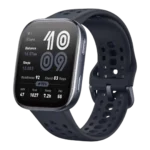
Amazfit Bip 6 Feature Scores
Explore all 54 feature scores for Amazfit Bip 6, organized into pros and cons.
Scores by Feature
Summary
54 reviewed features-
Very positive 4.5-5.06 (11%)
-
Positive 3.5-4.430 (56%)
-
Neutral 2.5-3.413 (24%)
-
Negative 1.5-2.44 (7%)
-
Very negative below 1.51 (2%)
Pros
Sort
-
Value for money was the strongest overall finding, with every review treating the Bip 6 as unusually capable for its sub-$100 price.
-
Battery life was the strongest consensus point, with reviewers commonly getting roughly a week or more and several calling the result impressive for an AMOLED smartwatch.
-
Display quality was one of the Bip 6's biggest strengths, with reviewers praising the AMOLED panel's color, contrast, sharpness, and overall look.
-
Brightness was widely praised, with reviewers repeatedly pointing to the 2,000-nit AMOLED screen and easy readability in most conditions.
-
Workout variety was excellent, with reviewers repeatedly highlighting 140-plus modes as far beyond typical budget-watch expectations.
-
Offline maps and navigation were a standout for the price, though reviewers noted setup, storage, and refinement limitations.
-
Cross-platform compatibility was a major advantage, with reviewers appreciating support for both Android and iOS even when some reply features differed.
-
Comfort was a consistent strength, with reviewers calling the watch light and wearable day, night, and during workouts.
-
GPS accuracy was mostly positive for a budget watch, with quick locks and usable routes, but several reviewers noted drift or weaker performance than dual-frequency sports watches.
-
Smartwatch features were strong for the price, with calls, notifications, maps, music controls, and utility tools, though not as complete as premium watches.
-
Outdoor visibility was usually praised thanks to the bright AMOLED screen, although a couple reviewers struggled in direct sun or with sunglasses.
-
Build quality exceeded expectations for the price, with reviewers calling the watch durable, sturdy, and not cheap-feeling.
-
Fitness tracking accuracy was generally good for casual workouts, though a few reviewers noted treadmill, GPS, or exercise-type limitations.
-
Water resistance was viewed positively for showering, swimming, rain, and pool use, though not for serious diving or intense water sports.
-
Materials quality impressed reviewers for the price, especially the aluminum frame and higher-quality strap/display materials.
-
Heart-rate accuracy was generally solid for running and steady workouts, but reviewers reported inconsistency during spikes, strength work, or cycling.
-
Style and design were generally praised as sleek and premium-looking for the price, though one reviewer found the design/navigation clunky.
-
Watch faces were a plus overall, with many options and some strong implementations, though one reviewer hit a storage bug and another found customization limited.
-
Band impressions were mostly positive for security and breathability, but a few reviewers found the strap awkward or irritating enough to replace.
-
Button controls were generally useful and customizable, although one reviewer missed a crown-style control for long lists.
-
Coaching features were generally viewed as useful, especially Zepp Coach workout plans and actionable training feedback.
-
Reviewers who evaluated auto-detection liked that the Bip 6 starts common activity or strength tracking quickly, though coverage was not treated as a premium-level feature.
-
Call handling was useful and often clear enough, but speaker loudness, wrist-call awkwardness, and Bluetooth range kept it from feeling premium.
-
Health tracking accuracy was mostly good as a baseline, though reviewers cautioned that some health data and explanations were not premium-grade.
-
Notifications were useful and often reliable, but reply support was limited on iPhone and some notification features were uneven.
-
Touchscreen responsiveness was mixed-to-positive: some reviewers called it responsive, while others saw lag or sluggishness.
-
Zepp OS was usually serviceable and sometimes smooth, but several reviewers described rough edges or a less mature ecosystem.
-
Music controls were useful when controlling phone playback, but support varied by service and reviewer setup.
-
Recovery insights were useful when tied to plans or Readiness, but some reviewers questioned the algorithm or noted premium/subscription limits.
-
Customization was mixed: reviewers liked designing faces and changing controls, but some found watch-face customization limited.
-
Step counting was mostly acceptable against other trackers, but Wareable saw day-to-day variation.
-
Safety-feature evidence was limited but positive, with one reviewer praising the night safety light concept for visibility in the dark.
-
Food and calorie tools were split: one reviewer found the calorie count wrong, while others found photo/barcode calorie logging accurate or convenient.
-
Software smoothness was mixed: some reviewers found the interface snappy, while others noticed lag or less-than-perfect fluidity.
-
Blood oxygen readings received limited direct evaluation, but TechAdvisor found the data aligned well with other devices.
-
Fit had limited scored evidence, but TechRadar liked how flush and light the watch felt on the wrist.
Cons
Sort
-
Contactless payment support was consistently treated as absent, making it a clear smartwatch-feature gap.
-
Onboard music storage was a limitation because local music requires preloading and the watch has limited storage or no streaming-app support.
-
The ecosystem is one of the clearest limitations: reviewers repeatedly described the app store and broader platform as sparse or less robust than Wear OS/watchOS.
-
Third-party app support was limited overall, with missing Spotify and sparse app-store options offset by some fitness-platform syncing.
-
Charging convenience was a common weakness because the watch uses a puck/proprietary dock and often requires the user to supply a USB-C cable.
-
Stress tracking had only limited opinionated evidence, with CNET's hands-on review criticizing the lack of context around one-tap vitals.
-
Size options were a drawback because reviewers repeatedly noted the large square case and lack of alternate sizes.
-
Pairing reliability was mixed, with one reviewer reporting lost pairing but quick re-pairing and another losing connection from one room away.
-
Charging speed was acceptable but not special, with several reviewers describing roughly 90 to 120 minutes and no fast-charge advantage.
-
Wellness insights were useful when they explained trends, sleep, readiness, or recovery, but reviewers often wanted more context or disliked subscription limits.
-
Menu navigation was polarized: some found it easy once learned, while others described settings and menus as clunky or tedious.
-
The UI divided reviewers, from easy and snappy to clunky, confusing, or requiring practice.
-
Bluetooth was mixed: external sensor support earned praise, while phone range and dropped connection complaints lowered confidence for everyday connectivity.
-
Durability was mixed: the frame felt sturdy, but reviewers noted scuffing, limited ruggedness, and potential vulnerability from the glass/bezels.
-
Reliability was mixed: the watch worked well overall, but reviewers reported storage bugs, app spam, UI hiccups, or unfinished-feeling features.
-
Voice assistant quality was highly inconsistent: TechRadar and some video reviewers praised Zepp Flow, while CNET and others found it laggy, limited, or unfinished.
-
Sleep tracking accuracy was the most divided tracking area, ranging from close alignment with Oura/Samsung to major overestimates and weak sleep-stage accuracy.
-
The Zepp app drew mixed reactions: some praised its detail and control, while others found it cluttered, confusing, or poorly explained.