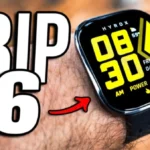
- More expensive: price The review notes the Bip 6 costs less than the Amazfit Active 2.
Amazfit Bip 6 Review
Bottom Line
Choose the Amazfit Bip 6 for a bright budget smartwatch with long battery life, lots of workouts, calls and offline maps. Skip it if you need premium apps, contactless payments, LTE, or highly dependable sleep and training accuracy.
Best for budget shoppers who want a capable fitness-first smartwatch with a bright screen, long battery life, phone notifications, calls, and offline maps. It especially suits casual runners, walkers, gym users, and first-time smartwatch buyers.
Not for users who need a premium app ecosystem, contactless payments, LTE, advanced smartwatch integrations, or highly dependable sleep-stage and high-intensity training accuracy. It is also less ideal for very small wrists.
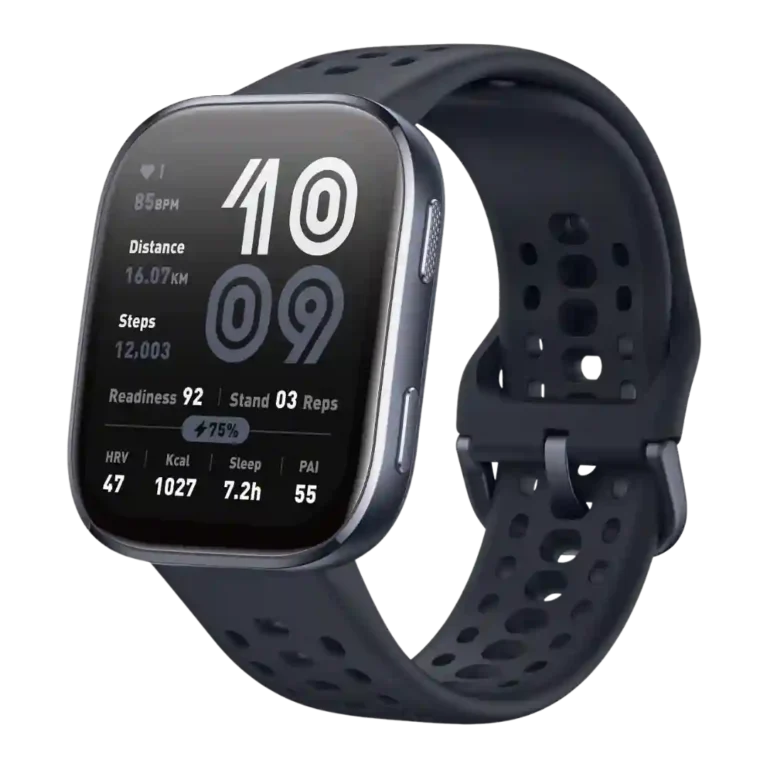
The Amazfit Bip 6 earns unusually broad praise for an $80 smartwatch because reviewers repeatedly found its AMOLED display, battery life, workout modes, Bluetooth calling, offline maps, and general health tracking stronger than the price suggests. Its biggest tradeoff is polish: several reviewers describe clunky menus, a busy Zepp app, limited third-party apps, no payments or LTE, and inconsistent voice-assistant behavior. Tracking accuracy is also context-dependent, with heart rate and GPS often good enough for casual training but sleep, recovery, and high-intensity exercise metrics drawing more skepticism. Overall, the evidence points to a capable budget wearable that prioritizes core fitness and battery value over premium smartwatch refinement.
Compared in Reviews
Products reviewers directly compared with this model, grouped into quick takeaways.
- Worse: battery life The review says the Bip 6 lasts much longer per charge than higher-end Apple Watch models.
- More expensive: price and design The review compares the Bip 6’s sleek look and price favorably against the Apple Watch Series 10.
Feature Scorecards
Pros
-
Workout variety is a clear strength, with reviewers repeatedly citing 140-plus modes and niche sport support.
-
Brightness is widely praised, especially the 2,000-nit claim and real-world readability, with only isolated concerns about outdoor glare or dim auto-brightness.
-
Value for money is the strongest consensus point, with every scored review framing the Bip 6 as unusually capable for around $80.
-
The AMOLED display is a standout, repeatedly described as bright, crisp, colorful, and unusually good for the price.
-
Battery life is one of the strongest areas, with most reviewers reporting roughly a week to two weeks depending on settings and GPS use.
-
Cross-platform compatibility is a clear advantage, with reviewers repeatedly noting Android and iPhone support, though iOS loses some reply features.
-
Outdoor visibility is mostly strong thanks to the bright AMOLED screen, with a few reviewers noting glare, sunlight, or sunglasses limitations.
-
Comfort is mostly positive, with many reviewers saying the watch is light and wearable day and night.
-
Build quality is generally praised for feeling better than its low price, with aluminum and polymer construction frequently mentioned.
-
Smartwatch features are broad for the price, including calls, notifications, maps, controls, and general utilities, though not premium-level.
-
Customization is strong for workout data pages and watch faces, though some deeper shortcut or face customization remains limited.
-
Coaching features are a meaningful extra, with Zepp Coach offering plans and recovery-based guidance, especially for running or cardio goals.
-
Watch face quality is strong overall, with many faces and personalization options, though some paid faces or limited editing appear.
-
Style and design are generally praised as premium-looking or Apple-like, though one review felt the design and navigation were clunky.
-
Materials quality is widely praised, especially the aluminum frame and fiber-reinforced polymer case for a budget watch.
-
Offline maps and navigation are major differentiators at this price, though setup, storage limits, and map polish vary by reviewer.
-
Reviewers found useful auto-detection for workouts or strength training, though the evidence centers on specific activities rather than full automatic coverage.
-
Reliability is mostly positive for notifications and everyday performance, though some reviews mention bugs, glitches, or inconsistent sensors.
-
Health tracking accuracy received positive evidence in one review, but broader evidence is more mixed across individual health metrics.
-
Water resistance is consistently supported at 5ATM or swim-safe levels, with reviewers treating it as solid for the price.
-
Software smoothness is mixed: some reviewers call it responsive and snappy, while others noticed lag or rough edges.
-
The two physical buttons are useful and customizable, though some reviewers wished for a crown or more premium control scheme.
-
Blood oxygen tracking is consistently listed as part of the health suite, usually alongside heart rate, stress, and breathing-rate measurements.
-
Stress tracking is part of the built-in health feature set and is often bundled with heart rate, SpO2, and breathing metrics.
-
Safety features include alerts or a night safety light, but the review evidence is narrower than for core fitness functions.
-
Fitness tracking accuracy is generally good for casual use, but reviewers found limitations in treadmill, strength, and some higher-intensity contexts.
-
Heart rate accuracy is often good for running or steady activities, but scientific and workout-focused reviews show it can struggle in some cycling or strength sessions.
-
Call handling is a legitimate strength for the price, but range, speaker loudness, and platform differences keep it from feeling premium.
-
Touchscreen responsiveness is generally acceptable to good, with reviewers calling it responsive even if some software lag remains.
-
Band feedback is mostly positive for comfort, ventilation, and adjustability, with a few caveats about awkward fastening or irritation.
-
GPS accuracy is mostly solid for the price, with quick locks and acceptable distance, but several reviewers reported drift or non-dual-frequency limits.
-
Menu navigation ranges from easy after practice to unintuitive or clunky, so the learning curve is a repeated caveat.
-
Recovery and readiness insights are useful and sometimes comparable to premium tools, but several reviewers question the algorithm or caution level.
-
Smartphone notifications are reliable and useful, but message replies are limited, especially for iPhone users.
-
Calorie and food logging is useful in concept and sometimes accurate, but reviewers also found incorrect or limited results.
-
Fit is helped by 22mm band compatibility and many strap holes, but the one-size case may not suit every wrist.
-
Pairing reliability is mostly fine but not flawless, with one reviewer reporting lost pairing that reconnected quickly.
Cons
-
Bluetooth enables calls, external sensors, and phone connectivity, but reviewers are split because some experienced limited range or call dropouts.
-
Wellness insights are plentiful, but reviewers disagree on how actionable they are without extra context or subscription features.
-
The Zepp companion app provides a lot of data and controls, but reviewers are split between calling it useful or intuitive and finding it cluttered or confusing.
-
Step counting can be close to other trackers, but reviewers also noted variation and missing flights-of-stairs tracking.
-
Music controls are useful when controlling phone playback, but streaming support and convenience are inconsistent across reviews.
-
Sleep tracking is the most divided major metric: some reviewers found it close to Oura or Samsung, while others found overestimates or poor stage accuracy.
-
Zepp OS is capable and sometimes responsive, but reviewers also describe rough edges and a limited ecosystem.
-
Durability evidence is mixed: materials feel sturdy, but reviewers noted scuffing or a potentially exposed screen edge.
-
The user interface is divided between easy/snappy impressions and complaints about clunky, unintuitive, or confusing navigation.
-
Voice assistant quality is highly mixed, from powerful and well-implemented to slow, unreliable, or limited depending on reviewer and platform.
-
Charging speed is acceptable but not fast, with several reviewers citing roughly 90 to 120 minutes and no known fast-charging option.
-
Charging is functional through a magnetic puck or proprietary dock, but reviewers often disliked the lack of included cable or the dock design.
-
Third-party app support is limited: fitness-platform sync is useful, but popular watch apps and richer ecosystems are missing.
-
Onboard music storage exists in some form, but reviewers describe it as limited or absent for practical streaming-style use.
-
The on-watch app ecosystem is present but thin, with reviewers noting a sparse or extremely limited store rather than a rich catalog.
-
Size options are a weakness because reviewers repeatedly note the watch comes in one large case size.
-
Contactless payment support is effectively absent, with multiple reviewers calling out no mobile payments or NFC.
-
LTE connectivity is absent, which reviewers frame as understandable for the price.
-
ECG functionality is not available according to the review evidence.
Compared With Category Average
Compared with other Smart Watch, this product is above average in value for money, call handling, below average in contactless payments, charging speed, app ecosystem.
| Attribute | This product | Category average | Difference |
|---|---|---|---|
| contactless payments | 1.1 | 2.9 | -1.8 |
| charging speed | 2.8 | 4.1 | -1.3 |
| app ecosystem | 2.3 | 3.6 | -1.3 |
| ECG functionality | 1.0 | 2.3 | -1.3 |
| value for money | 4.6 | 3.8 | +0.8 |
| size options | 2.1 | 3.2 | -1.1 |
| charging convenience | 2.6 | 3.5 | -0.8 |
| call handling | 4.0 | 3.1 | +0.9 |
FAQ
Is the Amazfit Bip 6 good value?
Yes. Reviewers consistently frame it as unusually capable for about $80, especially because it combines an AMOLED display, long battery life, workouts, calls, and offline maps.
How long does the battery last?
Most reviewers saw strong battery life, ranging from about six days with heavy use or always-on display to roughly 10-14 days with lighter settings.
Is the sleep tracking accurate?
Sleep tracking is mixed. Some reviewers found it close to Oura, Samsung, or other trackers, while others saw overestimates, missed awake time, or weak sleep-stage accuracy.
Does it work with both iPhone and Android?
Yes, reviewers repeatedly confirmed iPhone and Android compatibility. Android users generally get more reply features, while iPhone users can view notifications but have fewer response options.
Can it use offline maps?
Yes. Offline maps and navigation are a major value feature, though reviewers note that map downloads, storage limits, and navigation polish are not on Garmin-level outdoor watches.
What smartwatch features are missing?
The most repeated gaps are limited third-party apps, no contactless payments, no LTE, mixed voice-assistant performance, and limited music-streaming convenience.
Consider This Instead
If you want better contactless payments
Choose Apple Watch SE 3. It scores 4.8 vs 1.1 for contactless payments, with a 4.1 overall score.
If you want better ECG functionality
Choose Apple Watch Series 11. It scores 4.5 vs 1.0 for ECG functionality, with a 4.2 overall score.
If you want better size options
Choose Garmin Approach S70. It scores 4.7 vs 2.1 for size options, with a 4.3 overall score.
If you want better app ecosystem
Choose Apple Watch Ultra 3. It scores 4.9 vs 2.3 for app ecosystem, with a 4.2 overall score.
Overall Top Smart Watch Alternatives
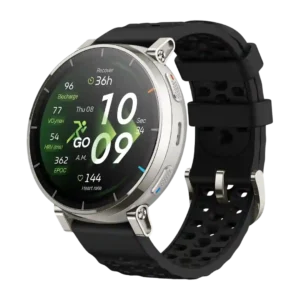
Good if you want the most rugged Apple Watch, brighter outdoor screen, better battery, LTE, and top apps. Skip it if you need Garmin-like mapping, recovery analytics, smaller sizing, or...
Pros: display quality, heart rate accuracy
Cons: cross-platform compatibility, recovery insights
Choose the Galaxy Watch 6 for a polished Android smartwatch with a bright screen, strong apps, and broad health tracking. Skip it if battery life, iPhone support, or full non-Samsung...
Pros: outdoor visibility, workout tracking variety
Cons: cross-platform compatibility, battery life
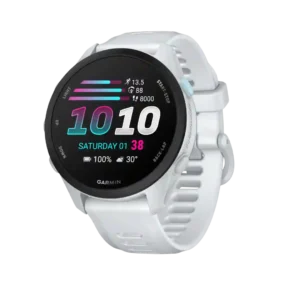
Good if you need a rugged Garmin with deep outdoor, tactical, GPS, training, and battery features. Skip it if you want a cheaper lifestyle watch or do not need the...
Pros: materials quality, durability
Cons: LTE connectivity, value for money
Good if you want premium golf maps, virtual caddie tools, health metrics, music, notifications, and long battery life in one watch. Skip it if you only need basic yardages or...
Pros: pairing reliability, brightness
Cons: software smoothness, user interface