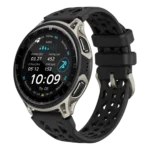
Amazfit Cheetah 2 Pro Feature Scores
Explore all 54 feature scores for Amazfit Cheetah 2 Pro, organized into pros and cons.
Scores by Feature
Summary
54 reviewed features-
Very positive 4.5-5.07 (13%)
-
Positive 3.5-4.432 (59%)
-
Neutral 2.5-3.414 (26%)
-
Negative 1.5-2.41 (2%)
Pros
Sort
-
GPS accuracy was one of the strongest consensus areas, with many reviewers finding it solid, fast, close to Garmin, or excellent, though a few noted corner-cutting or distance errors.
-
Battery life was one of the strongest areas, with repeated praise for week-plus use and long GPS endurance, though one reviewer found it inconsistent and another compared it unfavorably to a T-Rex model.
-
Brightness was consistently praised, with reviewers calling the 3,000-nit display highly readable in sun and a major visibility advantage.
-
Build quality was widely praised thanks to the titanium and sapphire construction, with reviewers repeatedly describing the hardware as premium or impressive for the price.
-
Outdoor visibility was excellent across reviews, with the display repeatedly judged easy to read in bright sunlight.
-
The flashlight was repeatedly praised as useful, with reviewers liking the real LED torch, red mode and practical running or nighttime use.
-
Style and design were generally liked, with reviewers calling it premium, sleek or good-looking, though not everyone found it amazing or loved its size.
-
The physical buttons were a clear strength for running use, wet hands, gloves and avoiding accidental presses, though one reviewer still missed a fifth button/crown-style setup.
-
Workout variety was a consistent strength, with reviewers praising deep workout handling, extensive sport modes and broad activity coverage.
-
Coaching features were broadly useful, especially Zepp Coach and structured plans, though some reviewers wanted deeper or more polished training analysis.
-
Heart rate accuracy was good for steady efforts and often close to straps or Garmin, but several reviewers still recommended a chest strap for intervals, cycling or precision work.
-
Fitness tracking accuracy was generally good for recreational training and racing, though reviewers noted GPS distance quirks and not-class-leading precision.
-
Durability evidence was positive, with one fall leaving the watch unmarked and another review saying the case stayed immaculate after hard training.
-
Score tracking was useful when it summarized readiness, fatigue or race predictions into easy-to-read numbers, with one review praising accurate race-time prediction.
-
Materials quality was a major strength, with reviewers praising titanium, sapphire glass and premium exterior hardware, though one first-look review flagged a polymer bezel.
-
Safety features were praised mainly through the blinking flashlight/red light, which reviewers saw as useful for visibility in the dark.
-
Recovery insights were useful and practical, especially BioCharge, fatigue and sleep-related suggestions, though one reviewer found recovery time less conservative than Garmin.
-
Value for money was mostly favorable versus premium Garmin pricing, but reviewers disagreed on whether the upgrade over cheaper Amazfit models justified the launch price.
-
The companion app was useful and often clear for training data, nutrition, routes and analysis, but reviewers also described it as overwhelming or initially hard to learn.
-
Nutrition and calorie logging in Zepp received unusually strong praise because reviewers found automatic calorie and macro calculations easier than other apps.
-
Customization was praised across brightness, data pages and watch setup, with reviewers noting the watch can be tailored heavily to training needs.
-
Wellness insights were useful because they tied sleep, stress, fatigue and activity into practical training feedback or recovery suggestions.
-
Display quality was strong overall because it is sharp and bright, but several reviewers disliked the smaller usable display or large bezel relative to the case.
-
Mapping and navigation were useful and feature-rich, but map smoothness, readability, rerouting and polish were repeated limitations.
-
Third-party support was strong for fitness platforms like TrainingPeaks, Runna, Intervals.icu and Strava, but weaker for streaming services and app breadth.
-
Comfort was polarized: some found the watch light and wearable on long runs, while others criticized its bulk, weight, thickness or tempo-run nuisance.
-
Health tracking accuracy was positive but not flawless; heart-rate-based health metrics were useful, while scientific testing rated broader heart tracking as only okay.
-
Contactless payments were positively described as practical for errands, coffee or post-workout stops without carrying a phone.
-
Charging convenience was mixed: the magnetic puck was liked, but reviewers disliked the proprietary charger and need to carry another accessory.
-
Sleep tracking opinions were mixed: some liked the depth and comparable sleep duration, while others found missed awake time and only okay sleep-stage accuracy.
-
Voice notes were positively received as a fun and useful way to capture run context, especially when geotagged to an activity.
-
Stress tracking was useful where it offered practical suggestions and fed into readiness-style guidance, but evidence was limited.
-
Touchscreen responsiveness was split: several reviewers called it responsive, while others said sensitivity caused accidental inputs during running or wet use.
-
Menu navigation was serviceable but not effortless; reviewers liked straightforward navigation yet noted a learning curve and some complexity.
-
Call handling had limited but positive evidence, with the watch speaker and microphone judged loud and good enough for calls.
-
Fit depended heavily on wrist size: one reviewer found it too large on a smaller wrist, while others found it lightweight or nicely fitting.
-
Pool testing gave the only clear auto-detection judgment, with the watch correctly identifying the reviewer’s freestyle swim style.
-
Watch face quality had limited but positive evidence, with one reviewer noting decent watch faces as part of the strong specification.
-
Wi-Fi connectivity had limited mixed evidence: map downloads over Wi-Fi worked but were described as mildly annoying.
Cons
Sort
-
ECG functionality was a weakness because reviewers noted the feature is absent and that Garmin offers superior ECG-related capability.
-
Size options were a concern because reviewers repeatedly said smaller-wristed users could benefit from a smaller or more compact model.
-
Reliability evidence was limited and mixed, mainly around inconsistent heart-rate/GPS moments and one wrong first GPS run.
-
Voice assistant quality was mixed to weak: short commands could work, but reviewers often found Zepp Flow less useful, less smooth or unnecessary during runs.
-
Smartphone notifications were usable for reading texts, but iPhone reply limits and texting restrictions reduced the score.
-
Cross-platform compatibility was a weak spot in the available evidence because iPhone users lose direct SMS replies and some smartwatch integration.
-
Blood oxygen evidence was limited to one first-look concern where an unexpected SpO2 reading made the reviewer question the result.
-
The operating system experience was mixed: Zepp OS and Zepp app features worked, but reviewers called parts of the interface overloaded or bloated.
-
Running power support was useful for one reviewer, but others questioned related metric reliability or found the calculation too different to evaluate.
-
Onboard music storage was useful because there is room for music, but reviewers criticized the MP3-only approach and lack of streaming integration.
-
Software smoothness was mixed, with map lag and polish concerns offset by one review’s praise for firmware improvements and updates.
-
Reviewers generally found Zepp improving into a usable ecosystem, but several said it still feels overloaded or less clean than Garmin/Coros ecosystems.
-
Band reactions were split: some reviewers found it comfortable or even a favorite, while others called it cheap, not premium, or irritating.
-
The user interface was approachable for basics and liked by some reviewers, but others found it cluttered, unintuitive in places or frustrating.
-
Smartwatch features were useful but not full flagship-smartwatch quality, with reviewers praising everyday utility while noting slimmed-down features and unclear positioning.