- Better: smartwatch experience The Apple Watch Ultra 3 is judged the better smartwatch overall.
- Alternative: smartwatch features Apple Watch Ultra 3 is named as a stronger smartwatch-focused alternative.
Amazfit Cheetah 2 Pro Review
Bottom Line
Choose the Cheetah 2 Pro if you want long battery life, strong GPS, premium materials and rich running tools for less than top Garmin pricing. Skip it if you need a slimmer watch, smoother maps, deeper training analysis or full smartwatch polish.
Best for runners who want strong GPS, long battery life, structured training, recovery feedback and premium materials without paying top Garmin prices. It suits users who are willing to learn Zeppβs deeper menus and value sport features more than full smartwatch polish.
Not for smaller-wristed users, data-first marathoners who demand the most reliable advanced metrics, or anyone deeply invested in Garmin/Coros/Apple ecosystems. It is also a weaker fit if map smoothness, streaming music, iPhone replies or a minimalist interface matter most.
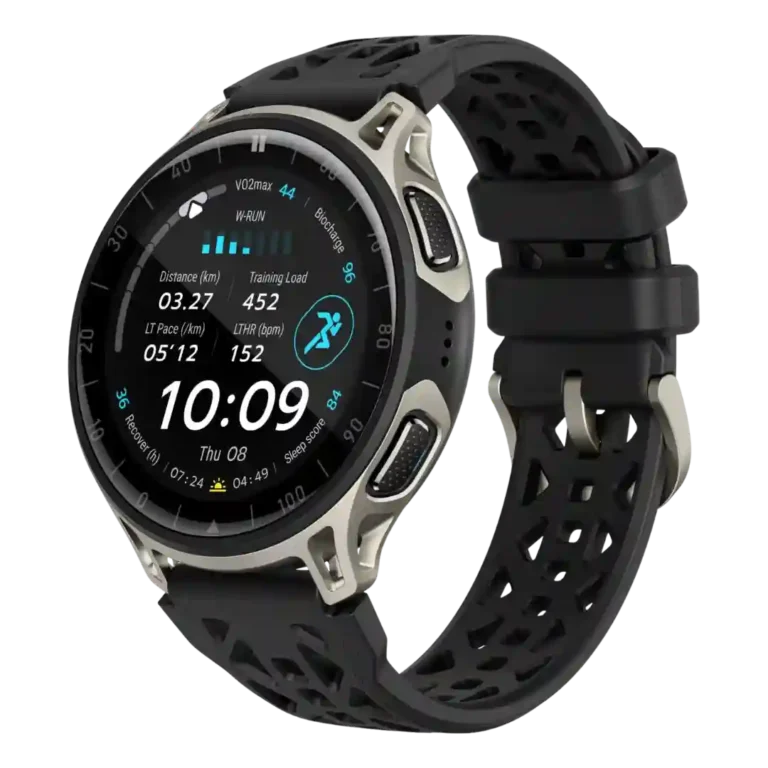
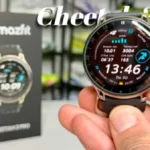
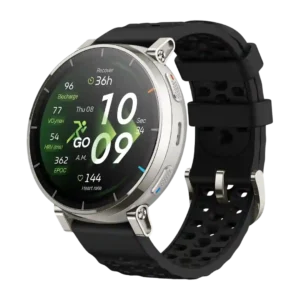
Reviewers portray the Amazfit Cheetah 2 Pro as a serious running watch with standout GPS, long battery life, a bright AMOLED display and premium titanium-sapphire hardware. Its best evidence comes from road-running use, where tracking, structured plans, recovery tools and third-party platform support generally held up well. The tradeoff is refinement: several reviewers found the watch bulky, the strap uneven, maps less smooth or readable than Garmin, and the Zepp software/app ecosystem more cluttered than elite rivals. It lands as a capable value play for runners who want many flagship-style tools, but not as a fully polished Garmin, Apple or Coros replacement.
Compared in Reviews
Products reviewers directly compared with this model, grouped into quick takeaways.
- Alternative: premium running watch category The Cheetah 2 Pro is framed as taking on the Garmin Forerunner 970 at a lower price.
- Compared: materials and display TechRadar frames the Cheetah 2 Pro against Garmin's flagship running watch on premium materials and AMOLED display.
- Alternative: value within Amazfit range The Amazfit Active Max is presented as the biggest lower-cost alternative inside Amazfit's lineup.
Feature Scorecards
Summary
54 reviewed features- Very positive 4.5-5.0 13% 7 features
- Positive 3.5-4.4 59% 32 features
- Neutral 2.5-3.4 26% 14 features
- Negative 1.5-2.4 2% 1 feature
- Very negative below 1.5 0% 0 features
Pros
-
Nutrition and calorie logging in Zepp received unusually strong praise because reviewers found automatic calorie and macro calculations easier than other apps.
-
Durability evidence was positive, with one fall leaving the watch unmarked and another review saying the case stayed immaculate after hard training.
-
Outdoor visibility was excellent across reviews, with the display repeatedly judged easy to read in bright sunlight.
-
Brightness was consistently praised, with reviewers calling the 3,000-nit display highly readable in sun and a major visibility advantage.
-
Build quality was widely praised thanks to the titanium and sapphire construction, with reviewers repeatedly describing the hardware as premium or impressive for the price.
-
Safety features were praised mainly through the blinking flashlight/red light, which reviewers saw as useful for visibility in the dark.
-
The flashlight was repeatedly praised as useful, with reviewers liking the real LED torch, red mode and practical running or nighttime use.
-
Score tracking was useful when it summarized readiness, fatigue or race predictions into easy-to-read numbers, with one review praising accurate race-time prediction.
-
Materials quality was a major strength, with reviewers praising titanium, sapphire glass and premium exterior hardware, though one first-look review flagged a polymer bezel.
-
GPS accuracy was one of the strongest consensus areas, with many reviewers finding it solid, fast, close to Garmin, or excellent, though a few noted corner-cutting or distance errors.
-
Battery life was one of the strongest areas, with repeated praise for week-plus use and long GPS endurance, though one reviewer found it inconsistent and another compared it unfavorably to a T-Rex model.
-
Workout variety was a consistent strength, with reviewers praising deep workout handling, extensive sport modes and broad activity coverage.
-
Customization was praised across brightness, data pages and watch setup, with reviewers noting the watch can be tailored heavily to training needs.
-
Wellness insights were useful because they tied sleep, stress, fatigue and activity into practical training feedback or recovery suggestions.
-
Style and design were generally liked, with reviewers calling it premium, sleek or good-looking, though not everyone found it amazing or loved its size.
-
Contactless payments were positively described as practical for errands, coffee or post-workout stops without carrying a phone.
-
Call handling had limited but positive evidence, with the watch speaker and microphone judged loud and good enough for calls.
-
Recovery insights were useful and practical, especially BioCharge, fatigue and sleep-related suggestions, though one reviewer found recovery time less conservative than Garmin.
-
The physical buttons were a clear strength for running use, wet hands, gloves and avoiding accidental presses, though one reviewer still missed a fifth button/crown-style setup.
-
Fitness tracking accuracy was generally good for recreational training and racing, though reviewers noted GPS distance quirks and not-class-leading precision.
-
Voice notes were positively received as a fun and useful way to capture run context, especially when geotagged to an activity.
-
Coaching features were broadly useful, especially Zepp Coach and structured plans, though some reviewers wanted deeper or more polished training analysis.
-
The companion app was useful and often clear for training data, nutrition, routes and analysis, but reviewers also described it as overwhelming or initially hard to learn.
-
Heart rate accuracy was good for steady efforts and often close to straps or Garmin, but several reviewers still recommended a chest strap for intervals, cycling or precision work.
-
Stress tracking was useful where it offered practical suggestions and fed into readiness-style guidance, but evidence was limited.
-
Pool testing gave the only clear auto-detection judgment, with the watch correctly identifying the reviewerβs freestyle swim style.
-
Watch face quality had limited but positive evidence, with one reviewer noting decent watch faces as part of the strong specification.
-
Health tracking accuracy was positive but not flawless; heart-rate-based health metrics were useful, while scientific testing rated broader heart tracking as only okay.
-
Third-party support was strong for fitness platforms like TrainingPeaks, Runna, Intervals.icu and Strava, but weaker for streaming services and app breadth.
-
Value for money was mostly favorable versus premium Garmin pricing, but reviewers disagreed on whether the upgrade over cheaper Amazfit models justified the launch price.
-
Display quality was strong overall because it is sharp and bright, but several reviewers disliked the smaller usable display or large bezel relative to the case.
-
Charging convenience was mixed: the magnetic puck was liked, but reviewers disliked the proprietary charger and need to carry another accessory.
-
Menu navigation was serviceable but not effortless; reviewers liked straightforward navigation yet noted a learning curve and some complexity.
-
Mapping and navigation were useful and feature-rich, but map smoothness, readability, rerouting and polish were repeated limitations.
-
Comfort was polarized: some found the watch light and wearable on long runs, while others criticized its bulk, weight, thickness or tempo-run nuisance.
-
Sleep tracking opinions were mixed: some liked the depth and comparable sleep duration, while others found missed awake time and only okay sleep-stage accuracy.
-
Touchscreen responsiveness was split: several reviewers called it responsive, while others said sensitivity caused accidental inputs during running or wet use.
-
Wi-Fi connectivity had limited mixed evidence: map downloads over Wi-Fi worked but were described as mildly annoying.
-
Fit depended heavily on wrist size: one reviewer found it too large on a smaller wrist, while others found it lightweight or nicely fitting.
Cons
-
Smartwatch features were useful but not full flagship-smartwatch quality, with reviewers praising everyday utility while noting slimmed-down features and unclear positioning.
-
The user interface was approachable for basics and liked by some reviewers, but others found it cluttered, unintuitive in places or frustrating.
-
Software smoothness was mixed, with map lag and polish concerns offset by one reviewβs praise for firmware improvements and updates.
-
Reviewers generally found Zepp improving into a usable ecosystem, but several said it still feels overloaded or less clean than Garmin/Coros ecosystems.
-
Band reactions were split: some reviewers found it comfortable or even a favorite, while others called it cheap, not premium, or irritating.
-
Onboard music storage was useful because there is room for music, but reviewers criticized the MP3-only approach and lack of streaming integration.
-
Running power support was useful for one reviewer, but others questioned related metric reliability or found the calculation too different to evaluate.
-
The operating system experience was mixed: Zepp OS and Zepp app features worked, but reviewers called parts of the interface overloaded or bloated.
-
Blood oxygen evidence was limited to one first-look concern where an unexpected SpO2 reading made the reviewer question the result.
-
Voice assistant quality was mixed to weak: short commands could work, but reviewers often found Zepp Flow less useful, less smooth or unnecessary during runs.
-
Smartphone notifications were usable for reading texts, but iPhone reply limits and texting restrictions reduced the score.
-
Cross-platform compatibility was a weak spot in the available evidence because iPhone users lose direct SMS replies and some smartwatch integration.
-
Reliability evidence was limited and mixed, mainly around inconsistent heart-rate/GPS moments and one wrong first GPS run.
-
Size options were a concern because reviewers repeatedly said smaller-wristed users could benefit from a smaller or more compact model.
-
ECG functionality was a weakness because reviewers noted the feature is absent and that Garmin offers superior ECG-related capability.
Compared With Category Average
Compared with other Smartwatches, this product is above average in calorie tracking usefulness, contactless payments, call handling, below average in reliability.
Summary
8 compared features- Above average 0.4+ pts higher 88% 7 features
- Same as average within 0.3 pts 0% 0 features
- Below average 0.4+ pts lower 13% 1 feature
| Attribute | This product | Category average | Difference |
|---|---|---|---|
| calorie tracking usefulness | 5.0 | 3.2 | +1.8 |
| contactless payments | 4.2 | 2.7 | +1.5 |
| reliability | 2.8 | 3.8 | -1.0 |
| call handling | 4.2 | 3.3 | +0.9 |
| third-party app support | 3.9 | 3.1 | +0.8 |
| flashlight usefulness | 4.6 | 3.8 | +0.7 |
| safety features | 4.6 | 3.9 | +0.7 |
| Wi-Fi connectivity | 3.5 | 2.7 | +0.8 |
FAQ
Is the Amazfit Cheetah 2 Pro accurate for running?
Most reviewers found GPS accuracy solid to excellent for everyday running, with several close Garmin comparisons. A few noted corner-cutting, short distance readings or non-class-leading precision in tougher conditions.
How good is the battery life?
Battery life is one of the strongest review themes. Multiple reviewers got about a week or more in real use, though one found drain inconsistent depending on settings and accidental activity triggers.
Is it comfortable?
Comfort is mixed. Some reviewers found it lightweight and wearable on long runs, while others criticized the bulk, thickness, weight or strap feel, especially for smaller wrists.
Are the maps and navigation good?
The feature set is strong, with offline maps, routing and turn guidance, but reviewers repeatedly said the map experience is less polished than Garmin, with small details, lag or rerouting issues.
How does the Zepp app compare?
Reviewers liked Zepp for training data, nutrition, recovery and route tools, but several found it overwhelming, cluttered or less refined than Garminβs ecosystem.
Is it a full smartwatch replacement?
Not quite. Reviews praise useful everyday features such as calls, payments and notifications, but iPhone replies, streaming music, app breadth and smartwatch polish remain limited.
Sample Expert Reviews We Analyzed
These are a few of the reviews included in our analysis.
Video Reviews
- Review score
- 4.0/5
- Review score
- 4.1/5
- Review score
- 3.1/5
- Review score
- 4.4/5
Article Reviews
- Review score
- 3.4/5
- Review score
- 4.1/5
- Review score
- 4.1/5
Consider This Instead
If you want better ECG functionality
Choose Apple Watch Series 11. It scores 4.8 vs 2.3 for ECG functionality, with a 4.3 overall score.
If you want better size options
Choose Garmin Venu 3. It scores 4.8 vs 2.5 for size options, with a 4.0 overall score.
If you want better reliability
Choose Garmin Enduro 3. It scores 5.0 vs 2.8 for reliability, with a 3.9 overall score.
If you want better voice assistant quality
Choose Samsung Galaxy Watch 6. It scores 5.0 vs 2.8 for voice assistant quality, with a 4.1 overall score.
Overall Top Smartwatches Alternatives
Best for rugged outdoor training, long battery life, accurate GPS, maps, calls, and a genuinely useful flashlight. Skip it if the high price, tactical extras, proprietary charging cable, or mixed...
Pros: wellness insights, build quality
Cons: LTE connectivity, band quality
Good if you want the best balanced Apple Watch for an older upgrade, stronger battery, comfort, and health tools. Skip it if you own Series 10, need week-long battery, or...
Pros: ECG functionality, app ecosystem
Cons: cross-platform compatibility, recovery insights
Choose it if you want a rugged Garmin hybrid with real hands, a sharp AMOLED display, strong tracking, and a genuinely useful flashlight. Skip it if price, full maps, onboard...
Pros: heart rate accuracy, GPS accuracy
Cons: onboard music storage, mapping and navigation
Best for bright AMOLED visuals, strong battery life, accurate GPS, maps, and standout value. Skip it if you need rich apps, reliable payments, LTE, ECG, or the cleanest companion app.
Pros: step counting accuracy, menu navigation
Cons: voice assistant quality, contactless payments