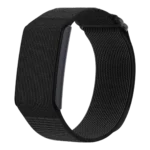
Amazfit Helio Strap Feature Scores
Explore all 52 feature scores for Amazfit Helio Strap, organized into pros and cons.
Scores by Feature
Summary
52 reviewed features-
Very positive 4.5-5.06 (12%)
-
Positive 3.5-4.428 (54%)
-
Neutral 2.5-3.412 (23%)
-
Negative 1.5-2.46 (12%)
Pros
Sort
-
Battery life is one of the strongest consensus positives, with many reviewers reporting about a week to ten days and often calling it impressive or fantastic.
-
Value for money is the strongest overall selling point, repeatedly praised because the strap delivers useful tracking at a low one-time price.
-
Subscription value is a clear strength; reviewers repeatedly emphasize the one-time price, free core features, and lack of required subscription.
-
Comfort is a major strength thanks to the light, screenless design, though a few reviewers noted strap texture, height, or long-wear comfort caveats.
-
Heart rate accuracy is the product’s most consistently praised tracking area, especially for workouts and bicep use, though a few reviews still found wrist or high-intensity errors.
-
Sleep tracking accuracy is widely positive for duration and core sleep stats, though some reviews noted generous scoring or missed brief wake periods.
-
The strap’s very low weight is consistently praised and directly contributes to comfort.
-
Manual workout tracking is usually reliable and useful, especially for heart-rate-zone capture, but the system remains basic compared with richer sports-watch or Whoop-style tools.
-
Customization is a notable strength because the 22mm attachment and bicep-band options open up wearing choices, although not every strap fits cleanly.
-
The companion app earns mixed-to-positive marks: several reviewers liked its layout and data richness, while others said it lacked polish or was not useful enough during workouts.
-
Bluetooth reliability is positive across scored reviews, including reliable app/device connection and heart-rate broadcasting to external equipment.
-
Readiness-style scoring is considered understandable and sometimes useful, but several reviewers said it lacks Whoop-like depth or should be treated as guidance rather than a definitive prescription.
-
Sleep apnea monitoring is viewed as useful for concerned users, though the evidence frames it as risk or non-medical tracking rather than diagnosis.
-
Workout variety is viewed as a plus, with reviewers pointing to numerous profiles and useful strength-training options, though the screenless format keeps interaction app-based.
-
Health trend insights are generally useful, with reviewers saying the app’s messages and broader insights matched their data, feelings, or wellness patterns.
-
The user interface is usually praised as clear, easy to navigate, and well laid out, though one review still wanted less clutter.
-
Step counts are generally treated as solid: one review found slightly lower totals than a Garmin, while another called step counting very accurate after it caught up.
-
Resting heart rate tracking generally aligned with other wearables in the supporting reviews, making it one of the more trusted passive metrics.
-
Third-party app compatibility is a strength because the app can share data with outside training platforms, though individual integrations vary.
-
Water resistance is generally adequate for everyday water exposure, with reviewers citing 5ATM protection, but swim workout support remains a caveat.
-
Calorie usefulness is supported mainly through the app’s food intake system, which one reviewer found unusually accurate and practically helpful.
-
Pace tracking is treated as useful when outdoor workouts are manually started with phone GPS, especially for runners and hikers.
-
Strava compatibility is mixed: reviews cite Strava syncing as useful, but one reviewer complained that indoor workouts did not sync.
-
Build quality is mixed: some reviewers praised the hardware and basic execution, while others noted cheaper components or lower quality than premium rivals.
-
Stress tracking evidence is positive but limited, with one review grouping it among reliably monitored metrics and another finding it better when worn on the bicep.
-
Goal tracking is praised through PAI-style feedback that gives the user a manageable activity target rather than vague workout pressure.
-
Fit is mixed: the strap often stays put, but smaller size, clothing snags, and occasional movement drew caveats.
-
Design and appearance have limited positive support, with one reviewer liking that the strap is comfortable and looks nice.
-
Pairing reliability is supported by a review that said the app connected to the Helio Strap and Amazfit watches reliably.
-
Review evidence describes the Helio Strap as giving useful day-to-day activity data, but the strongest tracking praise is tied to wellness use rather than elite training precision.
-
Blood oxygen tracking has limited scored evidence, but one review explicitly said the strap reliably monitored blood oxygen along with other wellness metrics.
-
Cadence tracking has limited positive support as part of the outdoor metrics reviewers considered useful for runners and serious hikers.
-
Durability has limited positive support from one review that said the strap held up well through hikes and daily use.
-
Distance tracking received limited but positive manual-workout evidence, with the hike itself tracked well before the reviewer had to edit an overlong workout.
Cons
Sort
-
Automatic workout detection is the most repeated weakness: many reviews found false positives, missed or misclassified workouts, and bad start or end handling, though one later update review found it much improved.
-
App alerts received negative evidence because false activity detection could flood the app and notification center with unwanted alerts.
-
Apple Health compatibility is scored negatively because one reviewer repeatedly saw blank workouts until a manual resync fixed the data.
-
Button controls are a weakness because reviewers wanted a physical button or tap control to start or stop workouts without returning to the app.
-
Data syncing reliability has a clear negative data point from Apple Health blank workout exports, making this a notable but not universally reported issue.
-
Guided workout support is weak because one review specifically found nothing comparable to Whoop’s strength trainer or guided strength system.
-
Habit tracking is weak compared with Whoop’s journal; the supporting review describes Amazfit’s version as basic and not close to Whoop’s implementation.
-
Route tracking evidence is limited and mixed, with one reviewer noting a hike route became polluted by a drive home until the workout was edited.
-
Size options are limited, with one scored review calling out the lack of color choice as a drawback.
-
The alarm and vibration function works, but reviewers repeatedly describe the haptics as weak or gentler than preferred.
-
Fitness coaching is mixed: some guidance and training feedback felt accurate, but recommendation quality and overall polish drew criticism.
-
Charging speed has limited evidence and is only middling because one review found a full charge surprisingly not the speediest.
-
Charging convenience is mixed: the magnetic puck works and charging can be quick, but many reviewers disliked the tiny, easy-to-lose proprietary puck or missing cable.
-
Band quality is mixed, with praise for improved materials and secure use offset by stiffness, drying time, Velcro concerns, and clasp complaints.
-
Sleep stage tracking is mixed: some reviewers found improved or impressively precise stage data, while others said REM or stage accuracy still lagged stronger competitors.
-
Connected GPS can provide maps and outdoor workout context through the phone, but reviewers repeatedly note the need to carry a phone and the absence of onboard GPS.
-
Reliability is mixed, with early app beta concerns balanced by later firmware updates that made the data more trustworthy.
-
Recovery and BioCharge insights divide reviewers: several found them useful or reflective of how they felt, while others considered the logic arbitrary, inconsistent, or under-polished.