- Worse: battery life Tom's Guide contrasts Helio's roughly 10 days against Fitbit Charge 6's 7-day battery life.
- Worse: heart rate accuracy Lifehacker found Helio's heart-rate accuracy better than the Fitbit Charge 6.
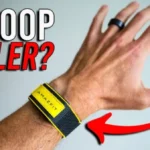
- Compared: market positioning The reviewer says Helio feels closer to a Fitbit Charge 6 competitor than a full Whoop platform rival.
Amazfit Helio Strap Review
Bottom Line
Choose the Amazfit Helio Strap for low-cost, subscription-free tracking with strong battery, comfort, and heart-rate data. Skip it if you need polished coaching, dependable auto workout detection, or onboard GPS.
Best for budget-conscious users who want a screenless, comfortable tracker for sleep, heart rate, daily wellness, and manually started workouts without a required subscription.
Not ideal for serious athletes who need built-in GPS, precise coaching, highly dependable auto workout detection, advanced guided workouts, or a more polished recovery platform.
Reviewers largely see the Amazfit Helio Strap as a serious value play: a light, comfortable, subscription-free strap with strong battery life and surprisingly good heart-rate tracking. Its best evidence is strongest for passive wellness, sleep duration, and manual workout tracking. The tradeoff is polish. Automatic workout detection is repeatedly criticized for false activities, missed sessions, or poor workout boundaries, and the Zepp app ranges from intuitive and data-rich to cluttered or unfinished. Recovery and readiness metrics can be useful, but reviewers do not treat them as a full Whoop replacement.
Compared in Reviews
Products reviewers directly compared with this model, grouped into quick takeaways.
- More expensive: price Wareable says Helio costs significantly less than the Whoop 5.0.
Apple Watches
- Worse: battery life Tom's Guide says Helio's battery looks better than Apple Watches' short battery life.
Feature Scorecards
Summary
52 reviewed features- Very positive 4.5-5.0 12% 6 features
- Positive 3.5-4.4 54% 28 features
- Neutral 2.5-3.4 23% 12 features
- Negative 1.5-2.4 12% 6 features
- Very negative below 1.5 0% 0 features
Pros
-
The strap’s very low weight is consistently praised and directly contributes to comfort.
-
Calorie usefulness is supported mainly through the app’s food intake system, which one reviewer found unusually accurate and practically helpful.
-
Subscription value is a clear strength; reviewers repeatedly emphasize the one-time price, free core features, and lack of required subscription.
-
Battery life is one of the strongest consensus positives, with many reviewers reporting about a week to ten days and often calling it impressive or fantastic.
-
Value for money is the strongest overall selling point, repeatedly praised because the strap delivers useful tracking at a low one-time price.
-
Goal tracking is praised through PAI-style feedback that gives the user a manageable activity target rather than vague workout pressure.
-
Bluetooth reliability is positive across scored reviews, including reliable app/device connection and heart-rate broadcasting to external equipment.
-
Comfort is a major strength thanks to the light, screenless design, though a few reviewers noted strap texture, height, or long-wear comfort caveats.
-
Step counts are generally treated as solid: one review found slightly lower totals than a Garmin, while another called step counting very accurate after it caught up.
-
Resting heart rate tracking generally aligned with other wearables in the supporting reviews, making it one of the more trusted passive metrics.
-
Third-party app compatibility is a strength because the app can share data with outside training platforms, though individual integrations vary.
-
Design and appearance have limited positive support, with one reviewer liking that the strap is comfortable and looks nice.
-
Pairing reliability is supported by a review that said the app connected to the Helio Strap and Amazfit watches reliably.
-
Sleep apnea monitoring is viewed as useful for concerned users, though the evidence frames it as risk or non-medical tracking rather than diagnosis.
-
Workout variety is viewed as a plus, with reviewers pointing to numerous profiles and useful strength-training options, though the screenless format keeps interaction app-based.
-
Heart rate accuracy is the product’s most consistently praised tracking area, especially for workouts and bicep use, though a few reviews still found wrist or high-intensity errors.
-
Sleep tracking accuracy is widely positive for duration and core sleep stats, though some reviews noted generous scoring or missed brief wake periods.
-
Health trend insights are generally useful, with reviewers saying the app’s messages and broader insights matched their data, feelings, or wellness patterns.
-
The user interface is usually praised as clear, easy to navigate, and well laid out, though one review still wanted less clutter.
-
Customization is a notable strength because the 22mm attachment and bicep-band options open up wearing choices, although not every strap fits cleanly.
-
Pace tracking is treated as useful when outdoor workouts are manually started with phone GPS, especially for runners and hikers.
-
Review evidence describes the Helio Strap as giving useful day-to-day activity data, but the strongest tracking praise is tied to wellness use rather than elite training precision.
-
Blood oxygen tracking has limited scored evidence, but one review explicitly said the strap reliably monitored blood oxygen along with other wellness metrics.
-
Cadence tracking has limited positive support as part of the outdoor metrics reviewers considered useful for runners and serious hikers.
-
Durability has limited positive support from one review that said the strap held up well through hikes and daily use.
-
Manual workout tracking is usually reliable and useful, especially for heart-rate-zone capture, but the system remains basic compared with richer sports-watch or Whoop-style tools.
-
Stress tracking evidence is positive but limited, with one review grouping it among reliably monitored metrics and another finding it better when worn on the bicep.
-
Readiness-style scoring is considered understandable and sometimes useful, but several reviewers said it lacks Whoop-like depth or should be treated as guidance rather than a definitive prescription.
-
The companion app earns mixed-to-positive marks: several reviewers liked its layout and data richness, while others said it lacked polish or was not useful enough during workouts.
-
Water resistance is generally adequate for everyday water exposure, with reviewers citing 5ATM protection, but swim workout support remains a caveat.
-
Strava compatibility is mixed: reviews cite Strava syncing as useful, but one reviewer complained that indoor workouts did not sync.
-
Build quality is mixed: some reviewers praised the hardware and basic execution, while others noted cheaper components or lower quality than premium rivals.
-
Fit is mixed: the strap often stays put, but smaller size, clothing snags, and occasional movement drew caveats.
-
Distance tracking received limited but positive manual-workout evidence, with the hike itself tracked well before the reviewer had to edit an overlong workout.
Cons
-
Recovery and BioCharge insights divide reviewers: several found them useful or reflective of how they felt, while others considered the logic arbitrary, inconsistent, or under-polished.
-
Reliability is mixed, with early app beta concerns balanced by later firmware updates that made the data more trustworthy.
-
Connected GPS can provide maps and outdoor workout context through the phone, but reviewers repeatedly note the need to carry a phone and the absence of onboard GPS.
-
Sleep stage tracking is mixed: some reviewers found improved or impressively precise stage data, while others said REM or stage accuracy still lagged stronger competitors.
-
Band quality is mixed, with praise for improved materials and secure use offset by stiffness, drying time, Velcro concerns, and clasp complaints.
-
Charging convenience is mixed: the magnetic puck works and charging can be quick, but many reviewers disliked the tiny, easy-to-lose proprietary puck or missing cable.
-
Charging speed has limited evidence and is only middling because one review found a full charge surprisingly not the speediest.
-
Fitness coaching is mixed: some guidance and training feedback felt accurate, but recommendation quality and overall polish drew criticism.
-
The alarm and vibration function works, but reviewers repeatedly describe the haptics as weak or gentler than preferred.
-
Habit tracking is weak compared with Whoop’s journal; the supporting review describes Amazfit’s version as basic and not close to Whoop’s implementation.
-
Route tracking evidence is limited and mixed, with one reviewer noting a hike route became polluted by a drive home until the workout was edited.
-
Size options are limited, with one scored review calling out the lack of color choice as a drawback.
-
Automatic workout detection is the most repeated weakness: many reviews found false positives, missed or misclassified workouts, and bad start or end handling, though one later update review found it much improved.
-
Guided workout support is weak because one review specifically found nothing comparable to Whoop’s strength trainer or guided strength system.
-
Apple Health compatibility is scored negatively because one reviewer repeatedly saw blank workouts until a manual resync fixed the data.
-
Button controls are a weakness because reviewers wanted a physical button or tap control to start or stop workouts without returning to the app.
-
Data syncing reliability has a clear negative data point from Apple Health blank workout exports, making this a notable but not universally reported issue.
-
App alerts received negative evidence because false activity detection could flood the app and notification center with unwanted alerts.
Compared With Category Average
Compared with other Activity & Fitness Trackers, this product is above average in calorie tracking usefulness, cadence tracking, below average in app alerts, Apple Health compatibility, habit tracking.
Summary
8 compared features- Above average 0.4+ pts higher 25% 2 features
- Same as average within 0.3 pts 0% 0 features
- Below average 0.4+ pts lower 75% 6 features
| Attribute | This product | Category average | Difference |
|---|---|---|---|
| app alerts | 1.5 | 3.7 | -2.2 |
| Apple Health compatibility | 2.0 | 4.1 | -2.1 |
| habit tracking | 2.5 | 4.3 | -1.8 |
| calorie tracking usefulness | 4.8 | 3.0 | +1.8 |
| button controls | 2.0 | 3.5 | -1.5 |
| cadence tracking | 4.0 | 2.5 | +1.5 |
| automatic workout detection | 2.2 | 3.4 | -1.2 |
| data syncing reliability | 2.0 | 3.4 | -1.4 |
FAQ
Is the Amazfit Helio Strap accurate for heart rate?
Across reviews, heart-rate accuracy is one of its strongest areas. It performs especially well for steady workouts and often improves when worn on the upper arm, though some reviewers saw wrist or high-intensity errors.
Is automatic workout detection reliable?
Not consistently. Many reviewers reported false activities, missed workouts, or workouts that continued too long, although one later update review found the feature much improved.
How is the battery life?
Battery life is a major strength. Reviewers commonly reported roughly a week to ten days, with several saying the 10-day claim felt realistic.
Does it require a subscription?
No required subscription was a major praise point. Reviewers note that the optional Aura subscription exists, but core tracking and most reviewed value came without a mandatory ongoing fee.
Is it comfortable enough for sleep?
Most reviewers found it light and comfortable enough for all-day and sleep wear. A few noted strap stiffness, bulk, damp fabric, or Velcro concerns.
Can it replace Whoop?
Reviewers generally say it can offer a lower-cost Whoop-like experience, especially for basic tracking, but the app, coaching, recovery depth, and automatic detection are not consistently on Whoop’s level.
Sample Expert Reviews We Analyzed
These are a few of the reviews included in our analysis.
Video Reviews
- Review score
- 4.6/5
- Review score
- 3.5/5
- Review score
- 3.9/5
- Review score
- 3.8/5
- Review score
- 3.8/5
Article Reviews
- Review score
- 3.9/5
- Review score
- 3.9/5
- Review score
- 3.8/5
- Review score
- 3.6/5
Consider This Instead
If you want better data syncing reliability
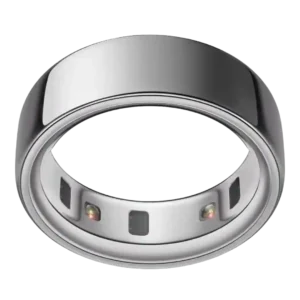
Choose Oura Ring 4. It scores 5.0 vs 2.0 for data syncing reliability, with a 4.1 overall score.
If you want better Apple Health compatibility
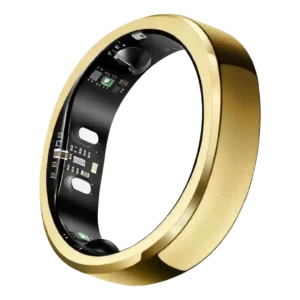
Choose RingConn Gen 3. It scores 4.5 vs 2.0 for Apple Health compatibility, with a 4.0 overall score.
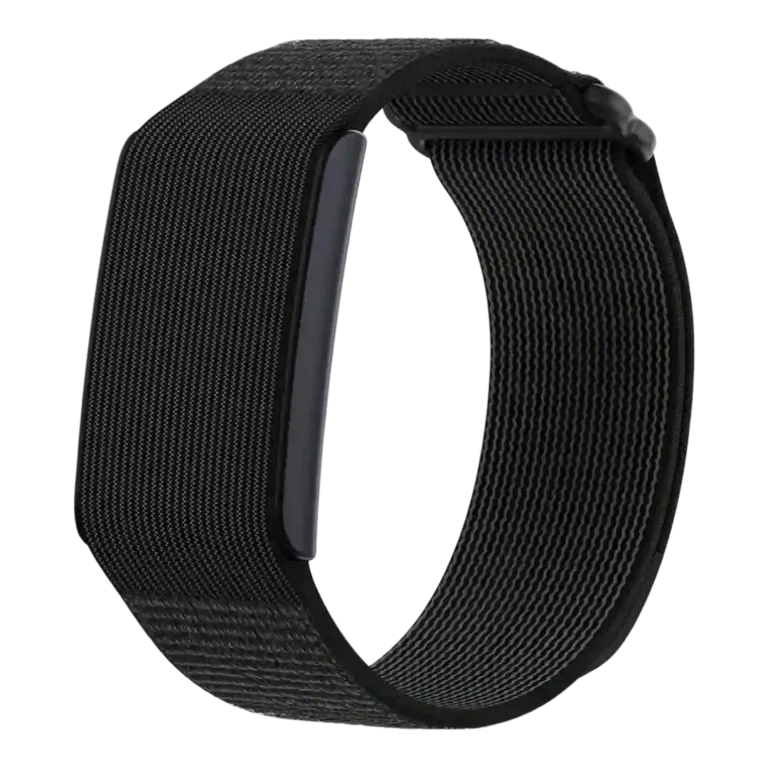
If you want better charging convenience
Choose Samsung Galaxy Ring. It scores 4.7 vs 3.0 for charging convenience, with a 3.6 overall score.
If you want better button controls
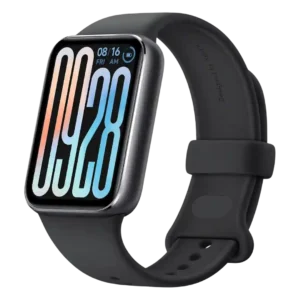
Choose Fitbit Charge 6. It scores 4.1 vs 2.0 for button controls, with a 3.6 overall score.
Overall Top Activity & Fitness Trackers Alternatives
Best for comfortable, screen-free sleep and recovery insight with a polished app. Skip it if you want subscription-free value, serious training metrics, or a ring that stays pristine.
Pros: GPS accuracy, swimming tracking
Cons: alarm function, calorie tracking usefulness
Best for long battery life, comfort, sleep/apnea insights, haptic health nudges, and no subscription. Skip it for serious workout heart-rate accuracy, full phone notifications, or a true silent alarm.
Pros: pairing reliability, charging speed
Cons: alarm function, Strava compatibility
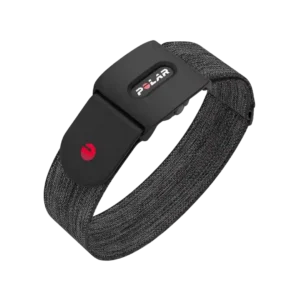
Good if you want a light, comfortable tracker with long battery life and strong sleep/activity basics. Skip it if you need built-in GPS, a larger screen, advanced training data, or...
Pros: fitness coaching, Strava compatibility
Cons: music controls, third-party app compatibility
Good if you want low-maintenance health and sleep tracking with long battery life and no subscription. Skip it if workout accuracy, polished coaching, or a slim jewelry-like feel matters most.
Pros: activity reminders, charging speed
Cons: swimming tracking, workout mode variety