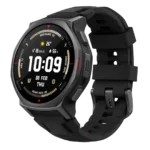
Amazfit T-Rex 3 Pro Feature Scores
Explore all 57 feature scores for Amazfit T-Rex 3 Pro, organized into pros and cons.
Scores by Feature
Summary
57 reviewed features-
Very positive 4.5-5.013 (23%)
-
Positive 3.5-4.424 (42%)
-
Neutral 2.5-3.412 (21%)
-
Negative 1.5-2.47 (12%)
-
Very negative below 1.51 (2%)
Pros
Sort
-
The LED flashlight is one of the most consistently praised features, described as genuinely useful for everyday, travel, outdoor and visibility situations.
-
Battery life is one of the strongest points, with reviewers repeatedly getting many days to roughly two weeks or more depending on always-on display, GPS and health-tracking settings.
-
GPS accuracy is broadly praised across road runs, hikes and route comparisons, with caveats around cycling, tunnels, corners and selecting the right GPS mode.
-
Outdoor visibility is a major strength, with multiple reviewers reporting easy viewing in direct sunlight, bright weather or varied outdoor conditions.
-
Value for money is broadly strong, with many reviewers calling it a steal, crazy value, or an excellent feature set for the price, though critical reviews still recommend alternatives for polish.
-
Workout tracking variety is a strong point, with reviewers repeatedly noting an unusually large number of sports and activity profiles.
-
Charging convenience is generally positive, with reviewers liking the compact magnetic USB-C puck or reporting easy charging, despite some charger-position caveats elsewhere.
-
Build quality is praised as robust, premium for the price, and materially upgraded, especially where reviewers focus on the titanium-and-sapphire hardware package.
-
Health tracking accuracy is generally positive in the evidence, with reviewers reporting close alignment with chest straps, comparison watches, Oura data or HRV expectations.
-
Brightness is widely praised, especially the 3,000-nit display, although one reviewer noted auto-brightness can be conservative in very bright settings.
-
Wellness insights are mixed-to-positive. BioCharge and HRV can feel useful and aligned with how reviewers felt, but some reviewers wanted deeper or more cohesive detail.
-
Cross-platform compatibility is a clear strength, with reviewers praising support for both Android and iOS.
-
Heart rate accuracy is mixed-to-good. Many reviewers found it solid, close or pleasantly surprising, but others saw sketchy readings, cadence lock, rough-ride drift or weaker accuracy than Garmin.
-
Materials quality is mostly praised for titanium, sapphire and premium upgrades, though one reviewer said the finish still does not match more expensive watches.
-
Size options are a clear improvement because reviewers liked the addition of 44mm and 48mm cases for different wrist sizes.
-
Water resistance gets positive evidence from reviewers who accepted the 10 ATM/dive positioning and one who said it worked beyond 45 meters in testing.
-
Button controls are generally useful, especially in wet, gloved or workout conditions, though one reviewer found the up/down buttons sticky on hikes.
-
Smartphone notifications are mixed: they arrive reliably and can be useful, but reviewers criticized limited replies, missing rich interactions or excessive buzzing.
-
Touchscreen responsiveness is generally positive in limited evidence, with reviewers calling touch interaction responsive, flawless or well executed alongside buttons.
-
Call handling is mixed. Several reviewers found Bluetooth call quality useful or surprisingly good, while others said the speaker and microphone were not loud or high-quality enough.
-
Fitness tracking accuracy is generally solid, though not flawless: reviewers praised broad tracking and race/run data, while one reported missed surfing waves and another found exercise recognition only so-so.
-
Automatic workout recognition was praised in one full review for consistently picking up common activities such as walking, running, cycling and swimming.
-
Calorie tracking was praised in one review for being native to the Zepp app and easy to use for meal logging against calorie expenditure.
-
Pairing reliability has limited but strong evidence, with one reviewer reporting a totally reliable phone connection.
-
Display quality is mostly good thanks to brightness and sapphire, but reviewers noted fingerprints, smearing or cleaning issues in some tests.
-
Style and design are subjective and mixed. Reviewers liked the rugged/premium look, but others found it bulky, harsh, angular or not premium-looking.
-
Voice assistant quality is mixed. Zepp Flow can be powerful and useful for commands, but reviewers also saw failed queries, misheard contacts or limited reliability.
-
Sleep tracking accuracy is mixed. Some reviewers found it reliable or similar to Oura, while others felt scores were inflated or not fully convincing.
-
Blood oxygen tracking received limited but positive evidence, with one reviewer saying it matched a comparison watch’s 96 percent reading impressively.
-
Durability was strongly praised where tested, with one reviewer saying the watch felt built to take serious knocks.
-
Watch face quality has limited positive evidence, with one reviewer liking the variety and style of available faces.
-
Charging speed is mixed: one review called a full recharge slow at about two hours, while others said the watch charges fast or can be topped up quickly.
-
Comfort is mixed and size-dependent. Some found the big watch wearable or better than expected, while another could not sleep comfortably with the 48mm case.
-
Bluetooth support drew limited positive evidence, mainly around the ease of pairing external sensors over Bluetooth.
-
Customization received limited positive evidence around clear data presentation and configurable workout stat screens.
-
Fit has limited positive evidence, with one reviewer saying the strap holes and stretch made it easy to get the fit right.
-
Stress tracking has limited positive evidence, grouped with sleep tracking as commendable in one review.
Cons
Sort
-
LTE connectivity is a weakness because reviewers explicitly call out the lack of LTE, 5G or cellular support as part of the safety and smartwatch tradeoff.
-
Contactless payments are a repeated weakness because Zepp Pay does not work in the United States for one reviewer and drew another dismissive Apple Pay comparison.
-
ECG functionality is a weakness because reviewers explicitly flagged ECG as missing or something that might put buyers off.
-
Menu navigation is a weakness in critical reviews, with repeated complaints about extra button presses and too many steps to access tools.
-
The user interface is polarized: a few reviewers found it intuitive enough, but several criticized rough edges, poor flow or very frustrating UX.
-
The app ecosystem is mixed-to-weak: reviewers liked having some apps and watch faces, but repeatedly said Zepp’s app store lacks big names and trails Apple or Google.
-
Coaching features are underdeveloped in the evidence. Reviewers found Zepp Coach suggestions awkward or described training insights as still a work in progress.
-
Onboard music storage is limited by MP3-only playback and no major streaming-service support, which several reviewers found outdated or frustrating.
-
Software smoothness varies sharply. Some found the interface snappy, but many reviewers reported lag, rough edges, immature software or unfinished features.
-
Wi-Fi connectivity drew limited negative evidence because one reviewer said map transfer was slow even over Wi-Fi.
-
Safety features are a weakness overall. The flashlight/SOS modes help somewhat, but reviewers criticize the lack of fall detection, crash detection, SOS, satellite messaging or LTE.
-
Reliability is mixed-to-poor outside core tracking. Some reviewers saw dependable battery and daily use, but several called software, navigation or readouts unfinished and inconsistent.
-
Band feedback is mixed. One reviewer liked the Pro’s improved quick-release setup, while several complained the strap was fiddly, sticky, or not as nice as premium rivals.
-
Smartwatch features are mixed. One reviewer found them strong outside Apple/Samsung/Google, while others found them limited, annoying, or less complete than premium ecosystems.
-
Mapping and navigation are the most divided area. Reviewers praise full-color/offline maps, but routing, rerouting, route creation and map transfer are often described as clunky, inconsistent or unreliable.
-
Recovery insights are uneven. Reviewers liked alignment with Garmin or BioCharge concepts, but criticized lack of detail, half-baked insights or needing to wear the watch overnight.
-
Third-party app support is mixed: syncing with services like Strava can work smoothly, but reviewers still criticize the lack of major on-watch apps.
-
Music controls are limited but usable: reviewers note phone playback control as a nice feature, while warning that streaming-service support is absent.
-
The operating-system experience is mixed. Some found ZeppOS logical and easy, while others said it lacks polish or feels immature versus rivals.
-
The companion app divides reviewers: some call Zepp insightful, intuitive or well presented, while others find it clunky, unpolished or poor for training workflows.