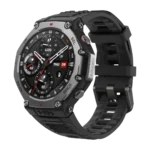
Amazfit T-Rex 3 Feature Scores
Explore all 58 feature scores for Amazfit T-Rex 3, organized into pros and cons.
Scores by Feature
Summary
58 reviewed features-
Very positive 4.5-5.06 (10%)
-
Positive 3.5-4.428 (48%)
-
Neutral 2.5-3.414 (24%)
-
Negative 1.5-2.49 (16%)
-
Very negative below 1.51 (2%)
Pros
Sort
-
Value for money was the strongest consensus, with nearly every reviewer calling it impressive for the price.
-
Battery life was one of the strongest points across reviews, usually lasting many days even with GPS and AMOLED use.
-
Outdoor visibility was a consistent highlight thanks to bright AMOLED readability in sun and varied conditions.
-
Display quality was widely praised for AMOLED color, size, clarity, and crispness, with only a few premium-screen caveats.
-
Workout variety was consistently praised as enormous, sometimes excessive, and a major part of the watch’s appeal.
-
GPS accuracy was a major strength, with most reviewers reporting reliable or very good tracks except isolated caveats.
-
Physical buttons were usually praised for workout control, though one reviewer found button integration imperfect in menus.
-
Brightness was consistently praised, especially the high-nit AMOLED screen for outdoor and sunny use.
-
Durability was broadly positive, with reviewers reporting rugged use, no damage, and strong water/weather confidence.
-
Software smoothness was often praised for fast, responsive menus, although occasional jitter and isolated map slowdowns appeared.
-
Water resistance was positively judged for swimming, weather, freediving, or pressure testing, with safety caveats separated under safety features.
-
Touchscreen responsiveness was mostly strong, though water/wetsuit touches and some map modes caused issues.
-
Customization was a strength, with data pages, maps, settings, watch faces, and activity screens praised across reviews.
-
Build quality was generally praised as rugged and sturdy, with stainless steel, polymer, Gorilla Glass, and durable construction noted.
-
User interface feedback ranged from excellent and intuitive to overwhelming, depending on reviewer tolerance for feature density.
-
Voice memos were praised by reviewers who used them for quick ideas or on-the-fly notes.
-
Style and design were subjective but generally positive, with rugged looks, premium feel, and distinctive octagonal styling noted.
-
Watch faces were praised as good-looking, plentiful, or well executed.
-
Mapping and navigation were polarizing: reviewers liked free maps and detail for the price, but criticized routing, map quality, and clunky imports.
-
Privacy controls were praised for offering cloud-storage choices, delete options, and alternate activity backup paths.
-
The Zepp companion app was viewed as improved and sometimes easy, but also fussy, confusing, or crash-prone in several reviews.
-
Resume Later was praised as a handy option for long breaks or multi-day treks.
-
Comfort was highly wrist-dependent; some found it surprisingly wearable, while others disliked the bulk or long-term wear.
-
Voice assistant quality was mixed: some reviewers loved the AI controls, while others found it flaky or easily confused.
-
Reviewers found the Zepp ecosystem improving and sometimes useful, but still less mature than Garmin, Coros, Apple, or Google alternatives.
-
The operating experience was generally smooth and responsive, though some software features still felt immature.
-
Wellness insights were useful in breadth but uneven in trustworthiness, especially where readiness and sleep metrics fed advice.
-
Coaching features were mixed, ranging from useful AI plans to advice that did not feel very helpful yet.
-
Health tracking accuracy was only broadly judged in a few reviews and was generally acceptable, though algorithmic metrics remained mixed.
-
Calorie tracking was only directly evaluated once, where one reviewer said calorie burn aligned closely with reference watches.
-
Step counting was only directly judged once, where it stayed close to a Garmin comparison.
-
Stress-related HRV data was judged comparable in one review, but this area had limited direct evaluation.
-
Wi-Fi was only directly evaluated for map downloads, where one reviewer found the process straightforward once connected.
-
Music controls were present and useful for phone playback, but not a standout feature.
Cons
Sort
-
Call handling was a clear limitation because the watch lacks a speaker, preventing normal wrist calls.
-
Recovery insights were one of the weakest areas, especially readiness and sleep scores that often felt too generous or inconsistent.
-
Contactless payments were a common weak spot due to Curve, regional limits, missing support, or setup failures.
-
Safety features were damaged by a serious dive-screen battery alert issue and missing full dive-computer safeguards.
-
Charging speed was repeatedly criticized as slow, often around two to three hours from empty.
-
Onboard music was limited by MP3-only storage, no streaming, headphone requirements, or unintuitive setup.
-
Size options were a weakness because the watch mostly comes as one large body that does not suit every wrist.
-
Reliability was hurt by half-baked software, quirks, and features that did not always behave consistently.
-
Flashlight usefulness was mixed: screen flashlight features helped some users, but lack of a real LED flashlight disappointed others.
-
Auto-detection was criticized as unreliable, with one reviewer disabling it after false activity recordings.
-
Fit was polarizing because the large case suits bigger wrists but can dominate smaller wrists or get in the way.
-
Menu navigation was only clearly criticized in one review, where the feature volume made menus easy to get lost in.
-
Smartphone notification usefulness was limited by unreliable raise-to-wake behavior, though basic notification mirroring worked.
-
Pairing reliability was mixed, with working accessories but reported gaps for power meters, footpods, and easier Garmin/Coros pairing.
-
Sleep tracking was mixed: total sleep timing often worked, but several reviewers reported bugs or weak sleep-stage/readiness algorithms.
-
Charging convenience was mixed: reviewers liked the small USB-C puck or magnetic dock, but disliked needing extra cables or a proprietary puck.
-
Bluetooth support is useful for sensors, but reviewers reported mixed compatibility and reliability with some accessories.
-
Smartwatch features were good for basics and outdoor extras, but missing speaker/calls and mature app support held it back.
-
Cross-platform use works on Android and iOS, but reviewers repeatedly noted iPhone or smartwatch-feature limitations.
-
Third-party support was mixed: Strava and apps could work well, but route syncing and data exports had clear limitations.
-
Heart rate accuracy was mixed: steady running and indoor cycling often worked well, while outdoor cycling and intensity changes were weaker.
-
Materials were acceptable for the price, but several reviewers noted Gorilla Glass and polymer compromises versus sapphire or premium builds.
-
Fitness tracking accuracy was mixed: basic GPS workouts were strong, while strength reps, elevation, and some advanced metrics had issues.
-
Band feedback was split: several liked the soft, stretchy straps, while others disliked stiffness or the tool-based swap system.