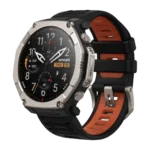
Amazfit T-Rex Ultra 2 Feature Scores
Explore all 47 feature scores for Amazfit T-Rex Ultra 2, organized into pros and cons.
Scores by Feature
Summary
47 reviewed features-
Very positive 4.5-5.017 (36%)
-
Positive 3.5-4.416 (34%)
-
Neutral 2.5-3.410 (21%)
-
Negative 1.5-2.44 (9%)
Pros
Sort
-
Battery life was the strongest consensus win, with reviewers praising slow drain, multi-week use, and unusually strong GPS endurance.
-
GPS accuracy was one of the strongest areas, with repeated praise for fast, accurate positioning, solid tracks, and strong repeat-route consistency.
-
Outdoor visibility was a standout strength, with direct-sun readability and high-brightness snow/sun performance repeatedly praised.
-
Build quality was widely praised as premium, rugged, and flagship-level, though the hardware strength contrasted with software concerns.
-
Reviewers strongly praised the large workout library, especially niche outdoor and adventure modes, while noting most people will use only a subset.
-
Voice notes were a clear win, repeatedly described as reliable, delightful, and useful during workouts.
-
Display quality was excellent, with reviewers repeatedly calling the AMOLED screen one of the best or a major upside.
-
Durability was excellent in the evidence, with rugged construction and real-world knocks, drops, and harsh-use confidence.
-
The flashlight was broadly useful and appreciated, especially at home or outdoors, but one reviewer said it was not practical for faster trail running.
-
Value was divided: reviewers praised the feature set for the price versus Garmin/Apple, but some criticized the $549 price when software felt unfinished.
-
Brightness was excellent, with reviewers finding the screen crisp and easy to see outdoors.
-
Button controls were a highlight, with glove-friendly operation and tactile, easy-to-feel buttons.
-
Materials felt premium, with reviewers calling out the titanium back and more durable materials.
-
Call handling was viewed as solid, with wrist calls, louder speaker output, and audible prompts reducing phone reliance.
-
Touchscreen responsiveness was mostly good, though one reviewer found it overly sensitive and in need of subtlety.
-
Coaching was received positively, with Zepp Coach and training advice described as helpful for planning and guidance.
-
Voice assistant feedback was positive, with Zepp Flow described as useful and capable of offline watch control.
-
Water resistance was treated positively, especially for scuba/dive suitability and medium-depth water survival.
-
Mapping and navigation drew the most mixed evidence: offline maps and hiking use impressed, but rerouting, cycling navigation, climb detection, and route creation had notable problems.
-
Safety features were viewed positively for outdoor use, especially features meant to keep users safe in remote environments.
-
The user interface was generally easy to use, especially with the button/touch combination.
-
Fitness accuracy looked good where reviewers discussed tracked sport detail and elevation, but the broader evidence base was thinner than for GPS or heart rate.
-
Reviewers found the newer sensor and overnight health data generally credible, though evidence focused on broad health metrics rather than every individual vital.
-
Wellness insights were generally useful, especially BioCharge and the broad health-feature set, though not all training guidance was equally convincing.
-
Smartwatch features were useful for basics and outdoor use, but reviewers said it was less smart than Apple and lacked premium frills.
-
Bluetooth/app connectivity was reliable in the Live Science test, with no disconnects or transfer problems reported.
-
Menu navigation was praised as easy, helped by physical buttons and touchscreen control.
-
Pairing reliability was strong in the available evidence, which noted no disconnects or transfer/update problems.
-
Band quality was mixed: one reviewer disliked the thick rigid strap, while others liked the secure, quick-release design.
-
Design opinion was split between masculine/bulky styling and praise for the more refined, attractive T-Rex look.
-
Recovery evidence was mixed: one review found exertion and recovery guidance useful, while another questioned the usefulness of the exertion target.
-
The free Zepp food-logging feature was useful enough to reveal calorie trends and a typical daily count.
-
Charging convenience was positive where mentioned, thanks to the charging puck working with common USB-C cables.
Cons
Sort
-
Reliability was mixed to poor overall: hardware seemed trustworthy, but several reviewers said key new software features did not reliably work.
-
Onboard media was weak because reviewers noted no subscription music support and called the music feature nearly useless without streaming.
-
Third-party app support was a clear weakness, with limited apps and missing golf support called out.
-
Contactless-payment evidence was region-dependent: one review liked European NFC support, while others criticized limited or unavailable payment support.
-
Size options were limited in the evidence, with one review calling one-size availability a downside.
-
Comfort was the main hardware drawback: most reviewers found the watch bulky or uncomfortable for sleep, though one hands-on review found it comfortable despite the size.
-
Software smoothness was inconsistent, ranging from minor lags and improved routing to major software stumbles and unfixed core-feature problems.
-
Fit was limiting for smaller wrists, with reviewers warning that the size and heft require a large enough wrist.
-
The operating-system experience was mixed to weak: useful features exist, but reviewers criticized the lack of premium polish and unfinished software story.
-
The app ecosystem lagged premium competitors, especially Garmin, with reviewers pointing to weaker ecosystem depth and external support.
-
Sleep tracking was treated as middling, with one review calling scores and stages funky and another finding REM detection only average.
-
Companion app quality was mixed, with decent connectivity but route editing, waypoint categories, and Zepp route creation needing polish.
-
Customization was mixed: watch-face customization was praised, but case/color/size customization was limited.
-
Heart-rate evidence was split: some reviewers found it accurate or improved, while testing-heavy reviews reported cadence lock, cold-weather struggles, and poor performance during running or lifting.