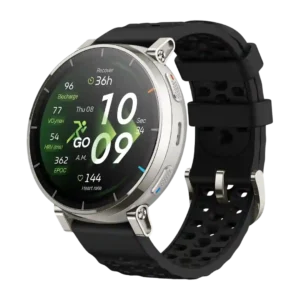
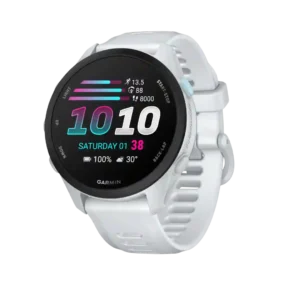
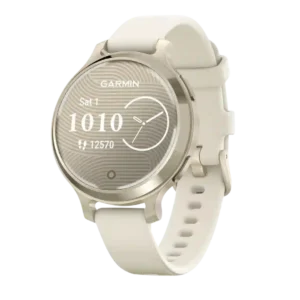
- Compared: premium outdoor watch tier Lifehacker grouped the Ultra 2 against Suunto Vertical 2 as a $500-plus outdoor-watch competitor.
- Similar: specs and all-day wear Suunto Vertical 2 was described as a close specs match but sleeker for all-day wear.
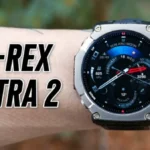
Amazfit T-Rex Ultra 2 Review
Bottom Line
Choose the Amazfit T-Rex Ultra 2 for huge battery life, rugged hardware, bright outdoor visibility, strong GPS, and offline maps. Skip it if you need a slim daily watch, mature Garmin-like navigation, reliable wrist heart-rate accuracy, or streaming music.
Best for outdoor explorers who prioritize long battery life, rugged materials, strong GPS, bright maps, and a real flashlight over slim comfort or polished smartwatch extras.
Not for small wrists, sleep-tracking comfort seekers, users who need mature Garmin-style navigation today, or anyone relying on streaming music, broad third-party apps, or reliable contactless payments.
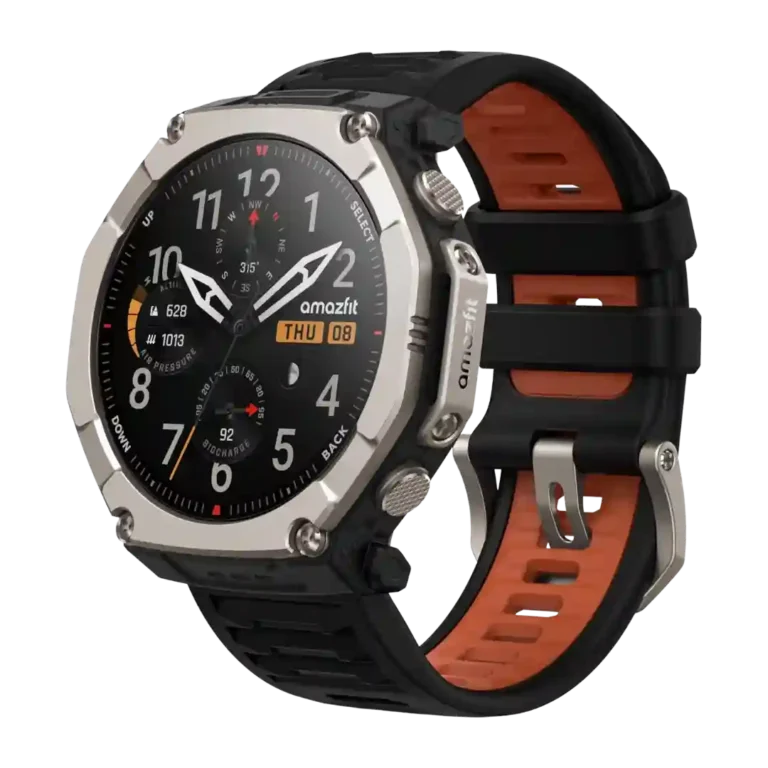
Reviewers consistently treat the T-Rex Ultra 2 as an outdoor-first watch rather than a general smartwatch. Its strongest evidence is hardware-driven: long battery life, a rugged titanium/sapphire build, bright AMOLED visibility, strong GPS, useful flashlight, and offline maps that make it credible for hikes and multi-day adventures. The tradeoff is that the big case hurts comfort and fit, especially during sleep or on smaller wrists, and several reviewers found navigation software, climb segmentation, rerouting, music, payments, and app support less mature than Garmin or Apple alternatives. It offers a compelling feature-to-price ratio, but the premium price exposes Amazfit’s software gaps more sharply than on cheaper T-Rex models.
Compared in Reviews
Products reviewers directly compared with this model, grouped into quick takeaways.
- Worse: ruggedness and outdoor focus The review positioned T-Rex Ultra 2 as more durable, waterproof, and outdoor-focused than T-Rex 3.
- Worse: battery life The reviewer said T-Rex Ultra 2 beats Apple's Ultra watch by a wide margin for battery life.
Feature Scorecards
Summary
47 reviewed features- Very positive 4.5-5.0 36% 17 features
- Positive 3.5-4.4 34% 16 features
- Neutral 2.5-3.4 21% 10 features
- Negative 1.5-2.4 9% 4 features
- Very negative below 1.5 0% 0 features
Pros
-
Outdoor visibility was a standout strength, with direct-sun readability and high-brightness snow/sun performance repeatedly praised.
-
Display quality was excellent, with reviewers repeatedly calling the AMOLED screen one of the best or a major upside.
-
Durability was excellent in the evidence, with rugged construction and real-world knocks, drops, and harsh-use confidence.
-
Brightness was excellent, with reviewers finding the screen crisp and easy to see outdoors.
-
Battery life was the strongest consensus win, with reviewers praising slow drain, multi-week use, and unusually strong GPS endurance.
-
GPS accuracy was one of the strongest areas, with repeated praise for fast, accurate positioning, solid tracks, and strong repeat-route consistency.
-
Voice notes were a clear win, repeatedly described as reliable, delightful, and useful during workouts.
-
Button controls were a highlight, with glove-friendly operation and tactile, easy-to-feel buttons.
-
Materials felt premium, with reviewers calling out the titanium back and more durable materials.
-
Reviewers strongly praised the large workout library, especially niche outdoor and adventure modes, while noting most people will use only a subset.
-
Build quality was widely praised as premium, rugged, and flagship-level, though the hardware strength contrasted with software concerns.
-
Coaching was received positively, with Zepp Coach and training advice described as helpful for planning and guidance.
-
Voice assistant feedback was positive, with Zepp Flow described as useful and capable of offline watch control.
-
Water resistance was treated positively, especially for scuba/dive suitability and medium-depth water survival.
-
Bluetooth/app connectivity was reliable in the Live Science test, with no disconnects or transfer problems reported.
-
Menu navigation was praised as easy, helped by physical buttons and touchscreen control.
-
Pairing reliability was strong in the available evidence, which noted no disconnects or transfer/update problems.
-
Safety features were viewed positively for outdoor use, especially features meant to keep users safe in remote environments.
-
The user interface was generally easy to use, especially with the button/touch combination.
-
The flashlight was broadly useful and appreciated, especially at home or outdoors, but one reviewer said it was not practical for faster trail running.
-
Call handling was viewed as solid, with wrist calls, louder speaker output, and audible prompts reducing phone reliance.
-
Touchscreen responsiveness was mostly good, though one reviewer found it overly sensitive and in need of subtlety.
-
Fitness accuracy looked good where reviewers discussed tracked sport detail and elevation, but the broader evidence base was thinner than for GPS or heart rate.
-
Reviewers found the newer sensor and overnight health data generally credible, though evidence focused on broad health metrics rather than every individual vital.
-
Wellness insights were generally useful, especially BioCharge and the broad health-feature set, though not all training guidance was equally convincing.
-
The free Zepp food-logging feature was useful enough to reveal calorie trends and a typical daily count.
-
Charging convenience was positive where mentioned, thanks to the charging puck working with common USB-C cables.
-
Value was divided: reviewers praised the feature set for the price versus Garmin/Apple, but some criticized the $549 price when software felt unfinished.
-
Smartwatch features were useful for basics and outdoor use, but reviewers said it was less smart than Apple and lacked premium frills.
-
Design opinion was split between masculine/bulky styling and praise for the more refined, attractive T-Rex look.
-
Mapping and navigation drew the most mixed evidence: offline maps and hiking use impressed, but rerouting, cycling navigation, climb detection, and route creation had notable problems.
-
Recovery evidence was mixed: one review found exertion and recovery guidance useful, while another questioned the usefulness of the exertion target.
-
Band quality was mixed: one reviewer disliked the thick rigid strap, while others liked the secure, quick-release design.
Cons
-
Heart-rate evidence was split: some reviewers found it accurate or improved, while testing-heavy reviews reported cadence lock, cold-weather struggles, and poor performance during running or lifting.
-
Customization was mixed: watch-face customization was praised, but case/color/size customization was limited.
-
Companion app quality was mixed, with decent connectivity but route editing, waypoint categories, and Zepp route creation needing polish.
-
Software smoothness was inconsistent, ranging from minor lags and improved routing to major software stumbles and unfixed core-feature problems.
-
The app ecosystem lagged premium competitors, especially Garmin, with reviewers pointing to weaker ecosystem depth and external support.
-
Sleep tracking was treated as middling, with one review calling scores and stages funky and another finding REM detection only average.
-
Comfort was the main hardware drawback: most reviewers found the watch bulky or uncomfortable for sleep, though one hands-on review found it comfortable despite the size.
-
Fit was limiting for smaller wrists, with reviewers warning that the size and heft require a large enough wrist.
-
The operating-system experience was mixed to weak: useful features exist, but reviewers criticized the lack of premium polish and unfinished software story.
-
Contactless-payment evidence was region-dependent: one review liked European NFC support, while others criticized limited or unavailable payment support.
-
Third-party app support was a clear weakness, with limited apps and missing golf support called out.
-
Reliability was mixed to poor overall: hardware seemed trustworthy, but several reviewers said key new software features did not reliably work.
-
Onboard media was weak because reviewers noted no subscription music support and called the music feature nearly useless without streaming.
-
Size options were limited in the evidence, with one review calling one-size availability a downside.
Compared With Category Average
Compared with other Smartwatches, this product is above average in voice assistant quality, below average in reliability, comfort, software smoothness.
Summary
8 compared features- Above average 0.4+ pts higher 13% 1 feature
- Same as average within 0.3 pts 0% 0 features
- Below average 0.4+ pts lower 88% 7 features
| Attribute | This product | Category average | Difference |
|---|---|---|---|
| reliability | 2.1 | 3.8 | -1.7 |
| comfort | 2.7 | 4.3 | -1.6 |
| voice assistant quality | 4.5 | 3.0 | +1.5 |
| software smoothness | 2.8 | 3.9 | -1.2 |
| fit | 2.7 | 3.9 | -1.2 |
| size options | 2.0 | 3.2 | -1.2 |
| operating system experience | 2.7 | 3.8 | -1.1 |
| sleep tracking accuracy | 2.8 | 3.7 | -1.0 |
FAQ
Is the Amazfit T-Rex Ultra 2 good for outdoor adventures?
Yes. Reviewers consistently praised its rugged build, long battery life, bright display, strong GPS, offline maps, flashlight, and outdoor-focused feature set.
How good is the battery life?
Battery life was the strongest point across reviews. Multiple reviewers reported very slow drain, multi-week daily use potential, and strong GPS endurance for long outings.
Are the maps and navigation reliable?
The offline maps and GPS were often praised, especially for hiking and general outdoor use. However, reviewers also found issues with rerouting, cycling-speed navigation, route creation, and climb segmentation.
Is it comfortable for daily wear and sleep?
Comfort is the biggest hardware tradeoff. Reviewers repeatedly called it large or bulky, and several warned that it can be uncomfortable for sleep or unsuitable for smaller wrists.
How accurate is heart-rate tracking?
Heart-rate accuracy was mixed. Some reviewers found it improved or accurate, while testing-heavy reviews reported cadence lock, cold-weather problems, and weaker performance during running, cycling, or lifting.
Does it work well as a smartwatch?
It covers basics like calls, voice control, app widgets, and some payments, but reviewers said its app ecosystem, third-party apps, streaming music, and contactless payments lag Apple and Garmin.
Is the voice memo feature useful?
Yes. Reviewers repeatedly called workout voice notes reliable, delightful, and easy to fold into runs or hikes, though one noted the implementation still missed GPS position tagging.
Sample Expert Reviews We Analyzed
These are a few of the reviews included in our analysis.
Video Reviews
- Review score
- 4.0/5
- Review score
- 4.3/5
- Review score
- 2.9/5
- Review score
- 4.0/5
Article Reviews
- Review score
- 4.2/5
- Review score
- 4.7/5
- Review score
- 3.8/5
- Review score
- 3.8/5
Consider This Instead
If you want better reliability
Choose Garmin Forerunner 165. It scores 5.0 vs 2.1 for reliability, with a 4.2 overall score.
If you want better third-party app support
Choose Garmin Forerunner 265. It scores 5.0 vs 2.3 for third-party app support, with a 3.8 overall score.
If you want better onboard music storage
Choose Garmin Fenix 8. It scores 4.7 vs 2.0 for onboard music storage, with a 4.0 overall score.
If you want better size options
Choose Garmin fēnix 7X Pro. It scores 4.8 vs 2.0 for size options, with a 3.7 overall score.
Overall Top Smartwatches Alternatives
Best for rugged outdoor training, long battery life, accurate GPS, maps, calls, and a genuinely useful flashlight. Skip it if the high price, tactical extras, proprietary charging cable, or mixed...
Pros: wellness insights, build quality
Cons: LTE connectivity, band quality
Good if you want the best balanced Apple Watch for an older upgrade, stronger battery, comfort, and health tools. Skip it if you own Series 10, need week-long battery, or...
Pros: ECG functionality, app ecosystem
Cons: cross-platform compatibility, recovery insights
Choose it if you want a rugged Garmin hybrid with real hands, a sharp AMOLED display, strong tracking, and a genuinely useful flashlight. Skip it if price, full maps, onboard...
Pros: heart rate accuracy, GPS accuracy
Cons: onboard music storage, mapping and navigation
Best for bright AMOLED visuals, strong battery life, accurate GPS, maps, and standout value. Skip it if you need rich apps, reliable payments, LTE, ECG, or the cleanest companion app.
Pros: step counting accuracy, menu navigation
Cons: voice assistant quality, contactless payments