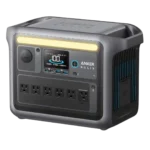
Anker Solix C1000 Feature Scores
Explore all 111 feature scores for Anker Solix C1000, organized into pros and cons.
Scores by Feature
Summary
111 reviewed features-
Very positive 4.5-5.062 (56%)
-
Positive 3.5-4.426 (23%)
-
Neutral 2.5-3.49 (8%)
-
Negative 1.5-2.47 (6%)
-
Very negative below 1.57 (6%)
Pros
Sort
-
Fast recharging is a signature strength. Many owners and testers refill the station in roughly 55–90 minutes from AC power.
-
The overall consensus is strongly positive: buyers value the combination of power, fast charging, compactness, and versatility. Noise, capacity limits, and app quirks prevent it from being perfect.
-
Wall charging is one of the clearest strengths, with many tests reaching full charge in roughly an hour. Ultra-fast mode is convenient, though it often brings louder fans.
-
The C1000 is highly effective for short outages involving refrigerators, routers, lights, medical gear, and workstations. It is a targeted essentials backup, not a whole-home solution for days.
-
Reviewers repeatedly praise the 1,800W inverter for delivering more power than expected from such a small station.
-
The inverter successfully runs microwaves, kettles, coffee makers, refrigerators, power tools, and some heaters. Laundry appliances, rooftop air conditioners, and simultaneous high-draw loads can exceed its limits.
-
The controls are simple enough for first-time users, older owners, and nontechnical buyers. Most tasks amount to enabling an output and plugging in a device.
-
Long-life chemistry and several extended-use reports support confidence in years of service. A few owners nevertheless reported capacity or charging problems after prolonged use.
-
Phone access to charge, temperature, input, output, and time remaining is especially useful when the station sits under a desk, outside, or in another room.
-
The compact shape and dual handles make it practical for car camping, road trips, and moving around a house. At roughly 28 pounds, it is portable rather than lightweight.
-
Multiple outlets and a strong inverter let users run several electronics or appliances together, provided the combined load stays below the limit.
-
The case, handles, buttons, and internal structure feel solid and durable. Even though much of the housing is plastic, reviewers rarely describe it as flimsy.
-
The C1000 packs unusually high output into a compact body that fits well in vehicles, closets, and work areas. This power-to-size balance is one of its most repeated strengths.
-
The warm, adjustable light bar is useful in tents, outages, and dark work areas. Placement and automatic behavior drew a few minor complaints.
-
The station handles mixed office, campsite, kitchen, and tool loads with strong stability. It shuts down safely when users exceed its continuous limit.
-
UPS mode is a major strength for offices, routers, medical equipment, and alarms. True bypass and quick switching worked well, although power-saving settings need attention for essential low-draw devices.
-
Runtime is strong for electronics, CPAP machines, refrigerators, and moderate camping loads. Heaters, air conditioners, and other high-wattage devices can drain it quickly.
-
The 3,000-cycle rating is repeatedly viewed as enough for many years of regular charging and discharging.
-
The display and app clearly show battery percentage, incoming watts, outgoing watts, and estimated time remaining. This makes load planning easy.
-
The five-year warranty is longer than many competing portable stations and repeatedly increases buyer confidence.
-
Two sturdy side handles distribute the weight well and make short carries more comfortable than a single central handle.
-
The 2,400W surge capability is exceptional for a compact 1kWh station and helps start heaters, tools, and cooking appliances.
-
The app can switch outputs, adjust charging wattage, manage timers, and control the light without touching the unit.
-
Most real-world tests matched or exceeded charging, output, and runtime expectations, though solar results depend heavily on the panel setup.
-
Built-in handles make short moves manageable, but the roughly 28-pound weight still encourages two-handed carrying over distance.
-
The app is often praised for live data, charging controls, timers, and remote switching. Complaints center on missing history, notifications, charge limits, and occasional connectivity problems.
-
The switchover is fast enough to keep computers, networking gear, and alarm systems running through brief outages. Multiple tests reported no visible interruption.
-
Several units survived hard drops, tailgate tumbles, stairs, and rough truck use without functional damage.
-
Reviewers consistently favor the LiFePO4 pack for its safer chemistry and long service life. The 3,000-cycle rating gives frequent users confidence in daily use.
-
A continuous rating around 1,800W covers most single household appliances and many tool loads, though not every large appliance at once.
-
Drops, truck use, road vibration, and extended outdoor handling caused little or no damage in several accounts. Long-term field users generally found it tough.
-
Value is excellent at common sale prices around the mid-$400s to $600s, but the full MSRP feels expensive. Discounts materially change the recommendation.
-
The combination of AC, USB-C, USB-A, and 12V outputs is widely praised as generous. A few specialized users still want more DC barrel or USB ports.
-
LiFePO4 chemistry earns strong approval for safety, stability, and longevity compared with older lithium-ion formulations.
-
AC, solar, and vehicle inputs provide flexible charging options. Cable and connector choices can require adapters with some third-party panels.
-
Front-facing outputs, clear labels, and sensible spacing make the unit intuitive to plug in and operate.
-
The live estimate helps users decide which loads to keep running and how soon they need to recharge.
-
SurgePad and the high-output inverter successfully start many refrigerators, heaters, tools, and cooking appliances.
-
Initial operation and app pairing are usually straightforward. Registration, missing documentation, or app connection issues complicated setup for a small group of owners.
-
Up to 600W of solar is unusually strong for this footprint. Achieving the maximum requires panels with the right voltage and current characteristics.
-
The blocky but compact footprint stores easily in vehicles and closets while leaving room for a large inverter and battery.
-
Doubling capacity with one add-on battery is valuable for longer trips and backup. The single-battery limit keeps it from scaling into a large home system.
-
Bluetooth gives reliable local control when Wi-Fi is unavailable, which is especially handy at campsites. Several owners found it more useful than expected.
-
Reviewers describe heavy-duty plastic, an aluminum frame, and industrial-grade electronics rather than cheap or flimsy parts.
-
Packaging is consistently described as sturdy, padded, and protective, with several units arriving in perfect condition.
-
Pure-sine, stable AC output works well with computers, CPAP machines, networking gear, and other sensitive electronics.
-
The compact shape fits cupboards, trunks, and packed vehicles well, making it easy to keep available between trips.
-
An optional battery can double storage to about 2.1kWh, a useful step-up for longer trips. Buyers note that only one expansion battery is supported and the add-on can be costly.
-
True bypass and charge-while-powering behavior work well for UPS and workstation use. Expansion-battery quirks have occasionally complicated this mode.
-
It works with Anker and many third-party panels when voltage and connectors match. Buyers should verify limits and cable standards before purchasing panels.
-
Front-mounted, well-spaced outlets are easy to reach and accommodate large adapters better than many compact competitors.
-
Faulty units were generally resolved through troubleshooting and replacement rather than user repair. Replacement experiences were often positive.
-
Anker supplied replacement units in several warranty cases, suggesting good availability for complete-unit replacement.
-
Independent tests recovered a high share of the rated capacity through both AC and DC outputs, especially at moderate loads.
-
The clean gray-and-blue styling looks modern and less industrial than many competing stations. Owners also like darker-shell variants.
-
Most reviewers can read the main display in sunlight and darkness, but smaller runtime and wattage figures may require standing close.
-
The C1000 generally holds its charge well between uses, making it practical to keep ready for outages or occasional trips.
-
Bench testing found the AC frequency stable around 60Hz, supporting sensitive electronics and motor loads.
-
At low and moderate loads, the fans can be nearly silent or barely audible. Noise becomes much more noticeable only as load or charging speed rises.
-
Tests with computers, appliances, and high loads found stable operation and graceful overload shutdowns.
-
The pure-sine inverter supplies clean AC suitable for sensitive electronics and common household appliances.
-
Stored units generally retain charge well, supporting emergency readiness between occasional uses.
-
The 2,400W surge mode gives short-term headroom for motor and heater startup loads that would overwhelm many 1kWh stations.
-
Testing found stable voltage under demanding loads, and the unit maintained usable AC output even near empty.
-
Cooling keeps the electronics under control, but the small fans work hard during fast charging and heavy loads. External airflow can noticeably reduce temperature.
-
Many owners report months or more than a year of regular use without meaningful capacity loss. A smaller number encountered charging or inverter problems later in ownership.
-
Most owners describe dependable backup performance, including months or years of use. A minority reported shutdowns, failed charging, or declining runtime that required replacement or troubleshooting.
-
Temperature monitoring and protective charging behavior inspire confidence, but users would like configurable maximum charge limits for long-term battery care.
-
The station survived rough outdoor use in several accounts, but reviewers still recommend protection from direct rain where no clear IP rating is stated.
-
Support is often praised for responsive replacements, refunds, and follow-up. Some cases required escalation or produced generic answers before resolution.
-
The roughly 1kWh pack is a good match for weekends, workstations, and short outages. It is not large enough for unrestricted whole-home backup or long high-draw use.
-
The LCD is generally bright, informative, and well designed. A few users dislike small secondary text or washed-out outdoor readability.
-
Wi-Fi enables remote status checks and controls from beyond Bluetooth range. Most experiences were positive, but a few owners reported dropped or unstable connections.
-
The front AC outlets are generous for a station this size and are spaced well enough for bulky plugs. Reviewers appreciated being able to connect several household devices.
-
The percentage display was praised as dependable near empty, allowing users to run demanding loads down to the last few percent with confidence.
-
Measured recharge and round-trip efficiency are among the better results reported for this class, especially at moderate settings.
-
One owner praised the claimed dustproof construction for rugged outdoor use, though broader testing is limited.
-
Field use in hot weather was generally successful, though higher temperatures can trigger more fan activity.
-
The box generally includes the essential AC, car, and solar charging cables, reducing the need for immediate extra purchases.
-
The large pure-sine inverter handles demanding devices confidently and maintains stable output across varied loads.
-
Reviewers generally like the C1000’s operating temperature range, describing it as effective and useful in real-world operation.
-
When loads exceed the limit, the C1000 shuts down cleanly and can restart shortly afterward, protecting both the station and connected devices.
-
The 100W USB-C port is useful for laptops and larger electronics. Some versions pair it with a weaker 30W port, making the USB-C offering capable but uneven.
-
Some users valued being able to use the app without an account, while another criticized login requirements for basic remote functions.
-
The C1000 works well as a solar-supported camping station, but the controller limits and real-world panel output make it less dependable as a solar-only backup.
-
The regulated car-style output is useful for coolers, pumps, and other vehicle accessories. Testing also shows that its wattage ceiling is more modest than the AC inverter.
-
Expansion batteries and compatible solar panels broaden the C1000’s uses. The ecosystem is useful, though expansion cables and add-on pricing can be awkward.
-
Long-term storage is simple, but Anker recommends periodically topping up the battery rather than leaving it untouched indefinitely.
Cons
Sort
-
The included cords work, but several owners found them too short, thick, bulky, or awkward—especially the expansion-battery cable.
-
The C1000 does not combine AC and DC input; plugging in AC disables solar or other DC charging. Reviewers repeatedly call this a missed opportunity.
-
The C1000’s instruction quality is a recurring weakness, with users describing practical limitations or frustrating behavior.
-
Power-saving modes can shut off low-draw USB, AC, or 12V devices unless several timeout settings are adjusted. This is a recurring concern for overnight coolers and medical equipment.
-
There is no built-in compartment for the thick charging cords, so owners often strap them to a handle or store them separately.
-
Some owners question paying more for the expansion battery than for a discounted second C1000, despite the cleaner stacked setup.
-
Fan noise rises sharply near maximum output or during ultra-fast charging. Several reviewers describe it as the main compromise for the compact chassis.
-
Standard vehicle charging is slow and can take much of a driving day. Higher-voltage setups improve speed, but ordinary 12V input remains a weak point.
-
One detailed electrical test detected noise on the AC inverter, making this a niche concern for interference-sensitive equipment.
-
Live wattage is useful, but users repeatedly want longer-term graphs, logs, and historical consumption data rather than a few seconds of activity.
-
XT60-based solar connections work with the supplied adapters, but some owners needed MC4 adapters or dealt with a loose connector.
-
Certain furnace or appliance setups may need a neutral-ground bonding plug before they will operate correctly.
-
At roughly 1,500W or more, runtime can fall to around half an hour, so the station is better for intermittent high-draw use than sustained heating.
-
The C1000 should not be enclosed in a closet or blocked space because heat and fan airflow need room to escape.
-
The unit monitors and manages heat effectively, but it can run warm in UPS mode or heavy use. Open airflow is important.
-
Firmware has fixed important external-battery charging problems, although one owner reported communication instability after an update.
-
The solar controller tracks panels effectively, but voltage, amperage, and low-input thresholds can prevent users from reaching the full advertised solar rate.
-
Most outdoor use was trouble-free in chilly conditions, but one owner reported a complete failure to operate around 30°F.
-
Solar results vary widely with panel quality, angle, weather, and voltage. Properly matched 400–600W arrays can be fast, while small portable panels may take days.
-
Around 25–30 pounds is manageable for many adults and light for the output class, but still heavy for long carries, stairs, or users with limited strength.
-
Outdoor durability reports are positive, but sources conflict on formal weather ratings and some variants lack an IP rating. Keeping it sheltered remains prudent.
-
Noise opinions depend heavily on load: light use can be quiet, while fast charging or high output can sound harsh or loud. Fan noise is the most consistent complaint.
-
Pairing is usually quick over Bluetooth or Wi-Fi, but isolated reports describe reconnection bugs and instability after updates.