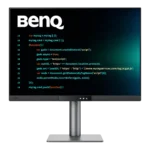
BenQ RD280UG Feature Scores
Explore all 47 feature scores for BenQ RD280UG, organized into pros and cons.
Scores by Feature
Summary
47 reviewed features-
Very positive 4.5-5.022 (47%)
-
Positive 3.5-4.415 (32%)
-
Neutral 2.5-3.47 (15%)
-
Negative 1.5-2.42 (4%)
-
Very negative below 1.51 (2%)
Pros
Sort
-
The tall display excels at coding, trading, writing, spreadsheets, research, creative tools, and multi-window work. Its extra vertical space often replaces the need for a second screen.
-
The unusual 3:2 shape is the monitor’s defining strength. It may feel odd briefly, but programmers, traders, writers, and creative users repeatedly preferred its extra vertical room.
-
Overall satisfaction is very high among work-focused reviewers, several of whom made it a primary display or considered buying another. Enthusiasm drops mainly when judged as a gaming, HDR, or value-first monitor.
-
The 3840 × 2560 panel adds 400 vertical pixels beyond standard 4K, producing a spacious, highly detailed desktop. Text and dense interfaces benefit most from the extra resolution.
-
Moving from 60Hz to 120Hz makes scrolling, window movement, charts, and casual gaming feel substantially smoother. It is a major upgrade for productivity, even if competitive gaming monitors run much faster.
-
Eye comfort is a standout strength, combining low-blue-light modes, automatic brightness, Paper Color, reminders, and MoonHalo bias lighting. Long-session users repeatedly found the screen comfortable, especially in dim rooms.
-
Although it occupies roughly a 28-inch footprint, the taller panel feels closer to a 32-inch widescreen in vertical space. That added height makes dense work layouts feel less cramped.
-
Sharpness is one of the monitor’s biggest strengths. Small fonts, code, documents, and fine image details look crisp and print-like despite the matte coating.
-
The roughly 2,000:1 contrast is a clear improvement over ordinary IPS monitors and the earlier model. Text gains definition, images have more punch, and dark content looks richer.
-
The Nano Matte coating handles windows, skylights, and room lighting extremely well. It adds only slight grain while keeping reflections from washing out the work area.
-
Connectivity is a major strength, combining USB-C power delivery, HDMI, DisplayPort, USB-B, and accessible downstream ports. A few reviewers disliked specific port positions, but the overall selection is highly versatile.
-
The OSD is clear and feature-rich, with large text, a joystick, and a quick-access Function Bar. Some prefer physical controls, but rapid mode switching is widely praised.
-
Scrolling and everyday motion look smooth at 120Hz, especially in code, charts, and desktop apps. Games are improved too, though moving objects can still look softer than on a gaming monitor.
-
Construction feels solid, stable, and reassuringly well assembled. The monitor is more utilitarian than delicate, but its materials and fit suit a premium work display.
-
The stand offers generous height, tilt, swivel, and portrait rotation, with smooth movement and a stable base. Rotating the display requires enough cable slack to avoid stressing rear-facing connections.
-
The panel looks crisp, rich, and pleasing in SDR, with excellent text clarity and stronger-than-average IPS contrast. Its weaker HDR, gamut, and motion performance keep it from being an all-purpose image-quality leader.
-
The built-in USB hub is practical, with easily reached USB-A and USB-C ports for peripherals and charging. Placement under the front edge is convenient for temporary devices but awkward for permanent cabling.
-
Brightness is sufficient for normal indoor work and can be driven high when needed. More importantly, it dims very low while preserving clarity, and the ambient sensor can adjust it automatically.
-
MoonHalo lighting, thoughtful controls, and polished integration give the monitor a premium character beyond its utilitarian shell. It feels refined and purposeful rather than showy.
-
Windows, macOS, and Linux support is unusually broad, and Linux brightness control worked immediately in testing. A few software and multi-input control quirks prevent a completely seamless experience.
-
The adjustable cable loop is simple but unusually effective, and daisy chaining can further reduce desk clutter. Multi-monitor users especially benefit from the cleaner wiring.
-
The design is clean, minimal, and professional rather than flashy. The flush Function Bar and restrained charcoal finish work particularly well in stacked or office setups.
-
PC games run smoothly enough for casual use, and the 120Hz upgrade makes the monitor far more versatile than its predecessor. The unusual aspect ratio and slower response still make dedicated gaming displays a better fit for enthusiasts.
-
Blacks look noticeably deeper than on standard IPS panels, helping the screen feel richer and more immersive. Some greyish glow remains in very dark scenes and rooms.
-
The KVM is genuinely useful for sharing peripherals between two computers and works better than many monitor-integrated implementations. Wake behavior and control quirks keep it from feeling flawless.
-
The upgraded IPS panel delivers much stronger contrast than typical IPS displays. It remains an IPS screen rather than an OLED-class entertainment panel, but its work-focused balance is impressive.
-
Ghosting is controlled reasonably well once overdrive is raised. A little inverse ghosting can appear, but it is subtle and generally worth the added clarity.
-
The default overdrive setting is a sensible all-purpose choice, while the Premium mode adds useful motion clarity for games. Tuning remains conservative enough to avoid severe artifacts.
-
Story-driven and vertically oriented games can look unusually immersive, with more scenery visible above and ahead. The presentation is vibrant and enjoyable, though not every game handles 3:2 equally well.
-
Physical assembly is exceptionally quick, and USB-C can reduce a laptop setup to one cable for video, data, and charging. Monitor-arm installation is also straightforward.
-
A standard 100mm VESA pattern makes arm mounting straightforward. This was welcomed by the reviewer who preferred a monitor arm.
-
Color accuracy ranges from respectable to merely average depending on mode and measurement. It looks natural enough for everyday design and light creative work, but demanding color professionals should choose a specialist display.
-
The Local Contrast option lifts darker tones to keep text legible at very low brightness. It pairs especially well with the monitor’s night-focused comfort features.
-
HDMI 2.1 can carry the full 3840 × 2560 resolution at 120Hz with compatible hardware. It is a welcome upgrade for users who do not rely solely on USB-C.
-
One reviewer used the monitor heavily for more than four months and remained strongly satisfied. No durability failure was reported during that extended daily use.
-
AMD FreeSync worked in testing, and another reviewer reported unofficial Nvidia G-Sync support. Adaptive sync is useful here, but the monitor is still tuned more for work than high-speed gaming.
-
Variable refresh works with AMD FreeSync and has also been reported with unofficial Nvidia G-Sync. That broad compatibility helps casual gaming feel smoother.
Cons
Sort
-
HDR is consistently disappointing. Limited brightness, modest contrast, and a static backlight leave highlights weak and dark scenes washed out, making SDR the better choice.
-
The static backlight cannot provide meaningful local dimming. Dark HDR scenes lose depth and highlights lack the separation available from OLED or advanced mini-LED displays.
-
The 120Hz panel is fine for casual gaming but too slow for serious competitive play. A 5ms response, residual blur, and unconventional aspect ratio put esports players at a disadvantage.
-
Sleep and wake behavior can be frustrating in a two-computer KVM setup. When both connected systems sleep, the monitor may not wake on the intended input without extra effort.
-
The speakers are adequate for podcasts and basic system audio but lack volume and depth. One reviewer found them improved over the previous model, yet they remain no substitute for external speakers.
-
Backlight control is acceptable rather than exceptional. A visible glow can remain around dark imagery when the room is very dark.
-
DisplayPort connectivity supports the full panel and daisy chaining, but bandwidth becomes tight when driving multiple high-resolution screens at 120Hz. Careful cable and compression support may be needed.
-
The 5ms response is acceptable for casual play but visibly slower than dedicated gaming displays. Fast motion can blur, so serious competitive players will notice the limitation.
-
Color is vivid enough for general work, yet measured DCI-P3 coverage repeatedly fell below BenQ’s claim and below stronger rivals. Photos and videos can look less saturated than on wider-gamut monitors.
-
The premium price makes sense mainly for buyers who will use the 3:2 workspace and comfort features every day. Cheaper 4K, gaming, and color-focused monitors offer better value for narrower needs.