If you want better EQ customization
Choose Denon Home 400. It scores 4.3 vs 1.8 for EQ customization, with a 4.2 overall score.
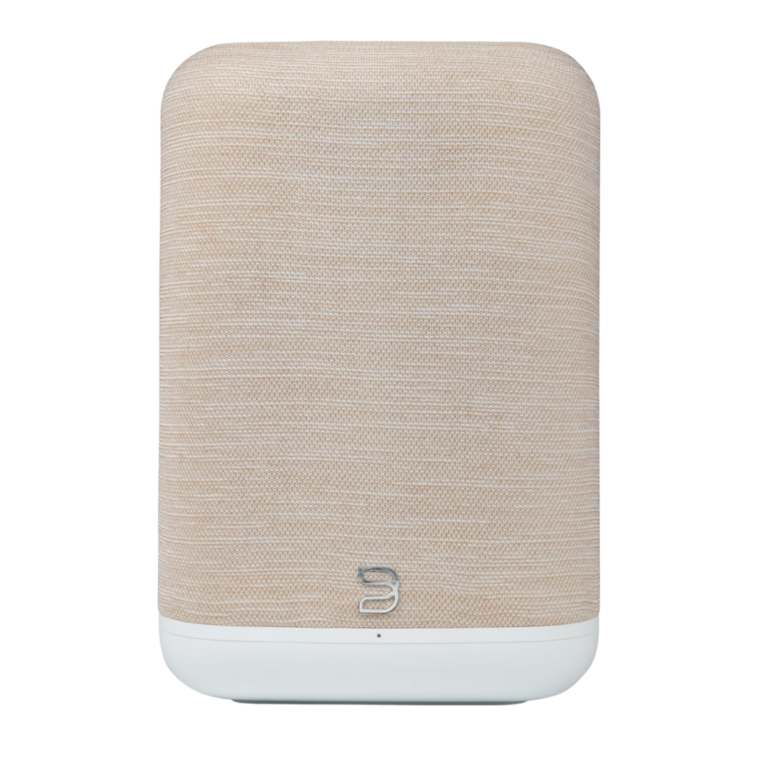
Choose it for clean, spacious sound, excellent BluOS flexibility, and unusually broad connectivity in a small room. Skip it if you want deep bass, true stereo from one box, advanced EQ, Google Cast, or battery-powered portability.
Best for listeners who want refined sound, excellent vocals, hi-res flexibility, and a compact speaker that can grow into a BluOS multiroom or home theater system. It is particularly well suited to bedrooms, kitchens, offices, and desks.
Skip it if deep bass, one-box stereo imaging, advanced EQ or room correction, Google Cast, or battery-powered portability are priorities. Large rooms and bass-heavy listening expose its limits most clearly.
The Bluesound Pulse Flex P130 is strongest when treated as a compact hi-fi endpoint rather than a bass-heavy party speaker. Its clean, open presentation, excellent vocal clarity, fine detail, broad wired and wireless connectivity, and mature BluOS ecosystem make it unusually flexible for desks, bedrooms, kitchens, multiroom systems, and BluOS home theater setups. Build quality and setup are also consistently strong. The tradeoff is physical impact: one unit is mono, deep sub-bass is limited in several tests, and higher output can become strained in at least one evaluation. Sound customization is basic, with limited EQ and no room correction, while Google Cast and battery-powered portability are absent. For listeners who prioritize refinement, streaming depth, and system expansion over slam, it is a compelling compact speaker.
Choose Denon Home 400. It scores 4.3 vs 1.8 for EQ customization, with a 4.2 overall score.
Products reviewers directly compared with this model, grouped into quick takeaways.
Bass is controlled and can sound surprisingly full for the cabinet size, but deep sub-bass and physical impact are the recurring weakness. Bass-heavy listeners are the least likely to be satisfied.
No. A single unit is mono, so true stereo imaging requires a second speaker; pairing two can materially improve imaging, scale, and headroom.
BluOS is one of the product’s biggest strengths, praised for stability, logic, service integration, presets, and multiroom control. One test found more quirks with an older iPhone 11.
USB-C is especially useful for computer audio, while the optical/analog combo input broadens source compatibility. The overall wired input selection is unusually strong for a speaker this size.
AirPlay 2 is praised as easy and good-sounding for iPhone users. Google Cast is absent, which is a notable drawback for Android users who rely on it.
It is light and easy to move around the house, but there is no built-in battery. It still needs wall power, so it is not intended as a beach, park, or unplugged patio speaker.
These are a few of the reviews included in our analysis.
The Bluesound PULSE Flex is a compact wireless speaker with a refined hi-fi sound, BluOS streaming support, versatile connectivity, and solid...
Bluesound PULSE FLEX P130 brings BluOS, hi-res streaming, and cleaner sound to small rooms, but is it the best $379 wireless speaker?
If you crave excitement, the Pulse Flex 2025 may not be for you – but for the rest of us, its sound and features more than make up for it
I loved this wireless speaker’s ace connectivity and sense of space and but have to ask: where’s the bass?
Bluesound sets the cat amongst the pigeons in a fiercely competitive market with a wireless speaker that’s both flexible and a very...
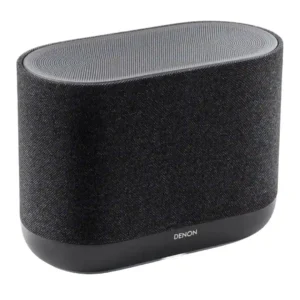
Best for spacious, detailed music, useful tuning, and HEOS expansion. Skip it if you need native Alexa/Google smarts, a battery, HDMI, or the easiest app experience.
Pros: Dialogue clarity (for TV/soundbar use), Setup simplicity
Cons: Battery life (if portable), Water resistance rating