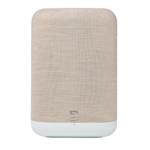
Bluesound Pulse Flex P130 Feature Scores
Explore all 46 feature scores for Bluesound Pulse Flex P130, organized into pros and cons.
Scores by Feature
Summary
46 reviewed features-
Very positive 4.5-5.028 (61%)
-
Positive 3.5-4.44 (9%)
-
Neutral 2.5-3.48 (17%)
-
Negative 1.5-2.44 (9%)
-
Very negative below 1.52 (4%)
Pros
Sort
-
The speaker fits naturally into BluOS home theater setups as a surround channel, with flexible wider-system integration repeatedly highlighted as a strength.
-
The rounded, compact redesign is widely liked for looking clean, elegant, and easy to blend into a room, with finish choices that feel more polished than before.
-
The P130 comes across as a polished, capable compact BluOS speaker with strong build, connectivity, and system flexibility. Its few shortcomings are concentrated in bass depth and missing convenience features.
-
Fine detail is consistently strong, with clean separation, clear transients, and good organization even when mixes become crowded.
-
This is an especially natural fit for bedrooms, kitchens, offices, desks, and smaller living spaces, where its compact cabinet still produces a full, refined presentation.
-
Build and finish are consistently strong, with a solid cabinet, clean assembly, and a premium feel that suits visible living spaces.
-
Its sound is open and well organized, giving vocals, instruments, and electronic textures distinct space without letting busy mixes collapse into congestion.
-
The tuning is generally even, clean, and midrange-friendly, with strong tonal consistency. The main imbalance is reduced weight at the very bottom.
-
BluOS makes the speaker especially strong as part of a larger system, with easy multiroom use and meaningful gains when two units are paired.
-
Vocals are one of the clearest strengths, staying present, intelligible, and well defined without being pushed unnaturally forward.
-
Hi-res and file-format support is unusually broad for a compact wireless speaker, and higher-quality material is handled convincingly.
-
BluOS gives the speaker unusually deep streaming, library, preset, grouping, and system-control flexibility. That ecosystem is a central reason to choose it.
-
The overall presentation is clean, detailed, spacious, and mature, with standout midrange clarity. Deep bass and outright energy are the main sonic compromises.
-
Physical playback controls and programmable presets are genuinely useful day to day, reducing how often a phone needs to come out.
-
BluOS is a major strength: mature, stable, logical, and generally smooth across devices. Older phones can still expose occasional quirks.
-
Music sounds clean, spacious, and refined, with excellent vocals and strong organization. The tradeoff is a calmer character that can feel restrained on bass-heavy or attack-driven tracks.
-
The optical/analog combo input is a welcome part of an unusually flexible wired connection set and makes traditional sources easy to add.
-
At roughly 3.5 pounds, the speaker is easy to lift, reposition, and move between rooms with one hand.
-
Physical connectivity is a standout, with reviewers especially valuing USB-C and the unusually broad set of wired source options.
-
Dynamics are solid rather than explosive from one unit, while a stereo pair opens up noticeably more scale and headroom.
-
Quiet listening is a strength: tonal balance holds together and vocals remain intelligible at lower levels.
-
Setup is usually fast and straightforward through BluOS. One reviewer needed a second Wi-Fi attempt, but others reported an uneventful process.
-
One unit generally earns good marks for sound, connectivity, and ecosystem depth at the price. Value becomes harder to defend if two speakers are needed for proper stereo.
-
The top-panel buttons respond quickly and give useful feedback, though one reviewer found their slim shape less pleasant under a fingertip.
-
AirPlay 2 works especially well for iPhone users, with easy operation and good sound quality.
-
Bluetooth remained stable in direct testing, with no connection problems called out.
-
Bluetooth works reliably in practice and adds an easy fallback alongside the deeper Wi-Fi and BluOS options.
-
Deep standby is an unusually thoughtful touch, cutting idle power use to a very low level instead of leaving the Wi-Fi speaker fully awake.
-
BluOS handles stereo and multiroom setup quickly and with strong stability, making paired-speaker use one of the ecosystem’s easier wins.
-
Spotify Connect sits within a broader Connect experience described as top-tier both sonically and ergonomically.
-
aptX HD is a welcome addition, especially for Android users who want better-quality Bluetooth playback.
-
Adding a Bluesound subwoofer is presented as an effective way to turn the compact speakers into a discreet but more powerful surround setup.
Cons
Sort
-
Alexa support exists, but integrating it through Amazon Alexa Skills is repeatedly described as awkward and patience-testing.
-
Sound tuning is one of the weakest areas: EQ is limited to basic bass and treble changes, and there is no room correction.
-
Google Cast is absent, and that is a meaningful drawback for Android users who depend on casting from their usual apps.
-
Google Cast support is missing, leaving Android-focused users more dependent on BluOS integrations or Bluetooth.
-
Its compact size makes room-to-room moves easy, but the lack of a built-in battery means it still needs wall power and is not truly portable.
-
There is no screen for album art or even a clock, so buyers wanting glanceable smart-speaker information will miss it.
-
Newer iPhones worked without issue in one test, while an older iPhone 11 was noticeably less consistent with BluOS.
-
The startup LED sequence is more functional than decorative, and its busy light show can become mildly annoying.
-
The LED status sequence communicates pairing and connection states, but the busy startup light show is more annoying than elegant.
-
Wi-Fi 5 should be adequate for normal streaming, but at this price the absence of Wi-Fi 6 feels behind the times.
-
Output is sufficient for bedrooms, offices, and other smaller spaces, but one test found it noticeably quieter than expected for the class.
-
A single unit is inherently narrow and point-sourced because it is mono. Pairing two can dramatically improve imaging, scale, and separation.
-
It stays composed at sensible moderate-to-high levels, but pushing toward the upper end can make the sound harsh and squeezed.
-
Bass is controlled and can sound surprisingly weighty for the cabinet size, but deep sub-bass is the recurring weakness and physical impact trails bassier rivals.