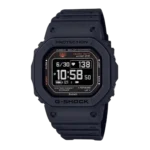
Casio G-Shock DW-H5600 Feature Scores
Explore all 44 feature scores for Casio G-Shock DW-H5600, organized into pros and cons.
Scores by Feature
Summary
44 reviewed features-
Very positive 4.5-5.08 (18%)
-
Positive 3.5-4.48 (18%)
-
Neutral 2.5-3.420 (45%)
-
Negative 1.5-2.48 (18%)
Pros
Sort
-
Style and design are the clearest consensus strengths, with reviewers repeatedly praising the classic square G-Shock look and retro appeal.
-
Display quality is a standout strength thanks to the MIP screen, though one reviewer disliked the small data and menu text.
-
Durability is one of the strongest points, with reviewers describing the watch as extremely tough, bulletproof, and hard to destroy.
-
Band quality is widely praised for softness, flexibility, and adjustability, fitting the watch’s active-use role.
-
Outdoor visibility is a clear strength, with repeated praise for bright-light readability and legibility at angles.
-
Build quality is widely praised as rugged and authentically G-Shock, despite one concern about removable shroud behavior.
-
Fit is strong overall because the strap offers many holes and enough adjustability, though size remains a concern for smaller wrists.
-
Brightness and backlight performance are mostly praised, but the small screen can still make workout stats hard to check outside.
-
Battery life ranges from poor with always-on features to strong for lighter use, commonly landing around a week.
-
Comfort is mixed but generally favorable: many found it wearable, while others felt the rear sensor or thickness irritated the wrist.
-
Sleep tracking is generally acceptable and sometimes close to trusted trackers, though reviewers also found it inconsistent or confusing.
-
Charging speed is acceptable but not impressive, with reviewers reporting around one to three hours depending on the source.
-
Water resistance received positive treatment as part of the rugged package, specifically with excellent water resistance noted.
-
Customization is useful for workouts, widgets, and function ordering, but reviewers also wanted more face and display flexibility.
-
Auto-detection received one clear positive mention for recognizing started workouts well.
-
Bluetooth syncing generally worked in the one clear review mention, though that review still noted occasional extra steps elsewhere.
Cons
Sort
-
Button controls are a major complaint because the recessed, stiff buttons are hard to press, especially during workouts.
-
Third-party support is the most criticized connected feature, with repeated complaints about missing or limited integration and export options.
-
The app ecosystem is a recurring weakness, with limited gamification, weak trend visibility, data lock-in, and a subpar app experience.
-
The companion app is consistently criticized for clunkiness, learning curve, slow performance, ads, and weak data presentation.
-
The user interface is one of the weaker areas, especially around data discovery, button-driven navigation, and non-intuitive behavior.
-
Workout mode variety is limited, with reviewers noting only a few core activities and little appeal for serious fitness users.
-
Calorie and energy-use estimates drew skepticism because reviewers tied them to unreliable heart-rate or movement data.
-
The operating system experience is held back by a dated, complicated, and laggy interaction model.
-
Coaching and training guidance exists, but reviewers found it less motivational, poorly implemented, or abstract compared with stronger platforms.
-
Value depends heavily on buyer type: G-Shock fans often see value, while reviewers focused on smartwatch or fitness depth see better alternatives.
-
Pairing reliability is mixed, with some reliable use but multiple complaints about manuals, updates, and inconsistent syncing.
-
Software smoothness is uneven, with slow data appearance, early hurdles, longer syncing, and charging/status quirks.
-
Menu navigation is polarizing: one reviewer found it intuitive, but most found scrolling, button flow, or missing reverse controls cumbersome.
-
GPS performance depends on phone-connected GPS and ranges from surprisingly accurate to unreliable or far off.
-
Recovery insights have potential through Polar-derived features, but reviewers often found the guidance opaque or unhelpful.
-
Stress support is limited, with the guided breathing experience described as very basic.
-
Fitness tracking works for casual use, but reviewers repeatedly warned that accuracy and depth fall short of dedicated fitness watches.
-
Reliability has some uncertainty because reviewers encountered delayed run data and hoped future updates would fix issues.
-
Smartwatch capability is useful but basic; reviewers praised the essentials while emphasizing that it is not a full smartwatch replacement.
-
Charging convenience is mixed: some liked the clip or solar assist, while others found the proprietary clip awkward or frustrating.
-
Blood oxygen tracking is useful as a spot-check feature, but reviewers reported stillness requirements and occasional errors.
-
Step counting can be solid in normal daily use, but arm movement, workouts, and distance estimation produced notable overcounts or shortfalls.
-
Health tracking is useful but inconsistent: one reviewer found it solid, while others saw inflated values or only broad health guidance.
-
Watch face quality is mixed: reviewers appreciated some faces and sport display options but criticized the small selection and cramped layouts.
-
Materials quality is mixed: reviewers like the soft matte bio-resin feel, but some saw fingerprints and scratches.
-
Notifications are useful for basic alerts, but reviewers disliked limited replies, firehose-style delivery, and awkward reading controls.
-
Wellness insights provide useful data for casual users, but presentation and interpretation are uneven and sometimes feel superficial.
-
Heart rate accuracy splits sharply: several reviewers found readings close to reference devices, but others saw elevated maximums or large deviations.