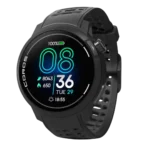
Coros Pace Pro Feature Scores
Explore all 49 feature scores for Coros Pace Pro, organized into pros and cons.
Scores by Feature
Summary
49 reviewed features-
Very positive 4.5-5.014 (29%)
-
Positive 3.5-4.418 (37%)
-
Neutral 2.5-3.411 (22%)
-
Negative 1.5-2.44 (8%)
-
Very negative below 1.52 (4%)
Pros
Sort
-
Display quality was one of the strongest points, with reviewers repeatedly calling the AMOLED screen bright, sharp, clear, vibrant, and easy to read.
-
Battery life was one of the clearest strengths, with reviewers repeatedly reporting multi-day AMOLED use and strong GPS endurance, though one review saw shorter always-on life under heavy GPS use.
-
Software smoothness was a clear strength, with reviewers praising fast menus, snappy map rendering, and little to no lag.
-
Mapping and navigation were major strengths thanks to bright offline topo maps, easy route following, and quick map rendering, though reviewers noted missing routable maps, labels, and some workflow polish.
-
Value for money was widely praised, especially for AMOLED, maps, GPS accuracy, and battery at a mid-range price, despite compromises in smartwatch features and materials.
-
GPS accuracy was consistently strong, with reviewers calling it reliable, accurate, top-notch, or close to Garmin, though not flawless in every situation.
-
Outdoor visibility was excellent; reviewers repeatedly said the AMOLED remained readable in direct sun, rain, darkness, and varied weather.
-
Comfort was a major strength due to the light body, though the larger case and silicone strap were less comfortable for some smaller wrists or sleep use.
-
Brightness was consistently excellent, with reviewers praising the 1,500-nit AMOLED for night use, sunlight, and general readability.
-
The companion app was widely praised as clear, useful, configurable, and easy to understand, with only occasional criticism of presentation clarity.
-
Fitness tracking accuracy was strong for runs, GPS-based workouts, and general use, though strength training and some harder sensor scenarios were less reliable.
-
Menu navigation was praised as quick, simple, and intuitive, especially through the crown and minimal interface.
-
Pairing reliability was strong in reviews that connected external sensors, with easy or no-problem Bluetooth pairing.
-
Touchscreen responsiveness was usually excellent, but some reviewers noted finicky scrolling, water-triggered touches, or touchscreen design that felt secondary.
-
Sleep tracking evidence was mostly positive for sleep/wake timing or perceived sleep scores, though one reviewer found it did not always match Whoop.
-
Bands drew mixed feedback: some reviewers liked the dry, comfortable silicone or optional nylon bands, while others found the silicone strap fiddly or poor for smaller wrists.
-
Charging convenience was split: reviewers liked the tiny USB-C adapter for travel, but others criticized the changed port, lack of a cable, and risk of losing the adapter.
-
The user interface was generally intuitive and easy, though some reviewers wanted more polish and glanceable insight presentation.
-
Workout tracking variety was broad enough for most runners and multisport users, though not as extensive as some brands or higher-end Coros models.
-
Bluetooth performance was praised when reviewers used it for sensor connections or map transfers, with easy pairing and practical backup syncing.
-
Charging speed was viewed positively overall, with some reviewers reporting full charges in about one to two hours.
-
Button controls were generally easy and improved, especially with gloves or workouts, but the crown/button layout caused some accidental pauses and a few reviewers preferred more conventional buttons.
-
Wellness insights were useful and easy to understand, especially through the app, but remained secondary to training and sensor limitations.
-
Recovery insights were useful but uneven, with positive recovery tools offset by criticism of training-load formulas and presentation.
-
Coaching and training tools were useful for runners, but several reviewers criticized training-load presentation and flexibility compared with Garmin.
-
Third-party syncing is a strength where reviewers discussed it; Strava and similar integrations moved data quickly and supported the training workflow.
-
Fit was positive where the strap sat securely, but the broader evidence also suggests some wrist-size limitations.
-
The operating system experience was considered focused and polished by reviewers who wanted a training-first watch rather than a full smartwatch.
-
Reliability was positive where reviewers recommended the watch's core functionality and long-term training use.
-
Third-party app support was positive where mentioned, with a rich set of apps and quick data sharing.
-
Watch faces were mixed: reviewers liked some defaults and available faces, but criticized limited interactivity.
-
Style and design were mixed: some liked the look, but others found it basic or cheaper-looking compared with rivals.
Cons
Sort
-
Contactless payments were a clear weakness because reviewers repeatedly noted the lack of Garmin Pay, Apple Pay, or NFC payments.
-
Flashlight usefulness scored poorly because reviewers repeatedly wanted a simple screen flashlight and noted that it was missing.
-
Music controls were weak because reviewers said the watch could not control phone playback and lacked the seamless music experience expected from rivals.
-
Onboard music storage was useful in theory but limited by drag-and-drop MP3 files and no streaming service support.
-
ECG was treated as limited because reviewers emphasized that it is not medically certified and should not be used as a medical device.
-
Smartwatch features were the main compromise: reviewers accepted the focused sports-watch design but noted limited apps, payments, calls, reports, and streaming smarts.
-
Materials quality was a recurring compromise: the lightweight polymer build helped comfort but mineral glass and plastic felt less premium and less rugged than rivals.
-
Wi-Fi connectivity was a weak point in the review that tested it, with repeated sync attempts needed and ongoing imperfections.
-
Size options were a weakness because the single larger case was too big or less appealing for smaller wrists.
-
Customization was limited; reviewers liked configurable workout fields but wanted more watch-face and data-field flexibility.
-
Smartphone notifications worked for basics but were criticized for missing emoji support, wasted screen space, and limited interaction.
-
Stress tracking was criticized in the one opinionated review because workouts appeared as stress regardless of whether the activity felt enjoyable.
-
Water resistance was adequate for pool/open-water swimming but scored lower for hikers because reviewers said it was not suitable for diving or high-impact water sports.
-
Durability was a concern for rugged use because reviewers noted the mineral glass, plastic build, and weaker suitability for harsh adventures.
-
Blood oxygen support was treated as limited because reviewers noted it as more of an on-demand or altitude-oriented feature rather than a deeply used health metric.
-
Build quality was mixed: reviewers liked the light, practical construction but repeatedly noted the plastic case and less premium feel.
-
Heart-rate accuracy was the most mixed core sensor result: good for steady runs and general use, but less dependable during intervals, outdoor cycling, intense climbs, or strength work.