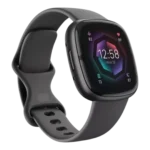
Fitbit Sense 2 Feature Scores
Explore all 55 feature scores for Fitbit Sense 2, organized into pros and cons.
Scores by Feature
Summary
55 reviewed features-
Very positive 4.5-5.010 (18%)
-
Positive 3.5-4.423 (42%)
-
Neutral 2.5-3.411 (20%)
-
Negative 1.5-2.46 (11%)
-
Very negative below 1.55 (9%)
Pros
Sort
-
Battery life is one of the strongest points, with reviewers repeatedly reporting multi-day use and often five to seven days depending on always-on display, GPS, and sensor settings.
-
Comfort is a major strength, with many reviewers saying the thinner, lighter Sense 2 is easy to wear all day, overnight, and during workouts.
-
The physical button is one of the clearest upgrades, repeatedly described as easier, more reliable, and more functional than the previous haptic or capacitive control, with one reviewer finding it mushy.
-
Display quality is consistently strong, with reviewers praising the AMOLED screen for brightness, color, clarity, and visual appeal despite occasional bezel or sharpness caveats.
-
Charging speed is praised, especially the repeated claim that a short 10- to 12-minute top-up provides about a day of use.
-
Sleep tracking is one of the strongest tracking areas, with reviewers calling it enjoyable, on target, fantastic, or among the best Fitbit capabilities.
-
The user interface is mostly praised as cleaner, simpler, and more modern, with reviewers seeing it as a promising Fitbit OS redesign.
-
Outdoor visibility is strong where reviewed, with the bright AMOLED display and max brightness helping readability in sun or outdoor use.
-
The Fitbit app is mostly praised for intuitive summaries and digestible health data, though one reviewer still found menu depth and settings management not very user-friendly.
-
Cross-platform compatibility is a clear advantage, with reviewers emphasizing that the Sense 2 works with both iPhones and Android phones.
-
Touchscreen responsiveness is strong, with reviewers praising the zippy, lag-free, responsive screen.
-
Wellness insights are a strength when users want holistic health context, stress awareness, and digestible Fitbit summaries, though usefulness depends on acting on the data.
-
Style and design are mostly praised as sleek, premium, attractive, and comfortable, though at least one reviewer preferred the Versa 4’s look.
-
Water resistance is positively viewed, with reviewers saying it is suitable for showering, swimming, rain, or rugged wet use.
-
Workout tracking variety is mostly positive thanks to more than 40 exercise modes, though one reviewer found too many modes generic or basic.
-
Health tracking accuracy is generally useful for trends and illness awareness, though reviewers note regional feature limits, Premium gates, and weaker performance in scientific testing.
-
Stress tracking is the defining feature and sharply mixed: many like the mindfulness prompts and cEDA awareness, while others find it clunky, vague, niche, or gimmicky.
-
Build quality is generally solid to good, but not universally premium; reviewers praise the hardware while also noting downgrades such as aluminum replacing stainless steel.
-
Coaching features are useful for stress breathing, meditation prompts, and readiness guidance, but their value depends on whether users respond to prompts and accept Premium-gated extras.
-
Recovery insights are generally useful, especially Daily Readiness guidance, but reviewers repeatedly note that richer recovery data can depend on Fitbit Premium.
-
Brightness earns praise where discussed, with reviewers saying the max-brightness setting or direct-sunlight visibility made the screen easy to read outdoors.
-
Smartphone notifications are generally useful and readable, but reviewers also complain about delayed or awkward notification behavior and platform limits.
-
Durability evidence is limited but very positive, with one reviewer reporting the watch survived rugged off-trail use without a scratch.
-
Pairing reliability is positive in limited evidence, with one reviewer reporting no trouble pairing through the Fitbit app.
-
Menu navigation is mostly improved and easier to read, but reviewers also found some menus sluggish or awkward in practice.
-
Step counting is generally decent to good, but not perfect; reviewers saw accurate daily step matches while also noting overcounting tendencies.
-
Fitness tracking accuracy is mixed: some reviewers call it a solid activity tracker, while others report weak GPS or heart-rate performance during demanding workouts.
-
ECG is viewed as useful for spotting irregular rhythm or saving readings, but reviewers also note manual use and non-medical limitations.
-
Reliability is mixed: syncing can be trouble-free, but another reviewer found GPS reliability inconsistent.
-
Blood oxygen tracking is treated as a useful health metric, especially for overnight monitoring and illness awareness, though the review evidence is limited.
-
Bluetooth range and syncing received positive evidence, with one reviewer calling the Bluetooth 5.0 connection stronger over a wider distance.
-
Fit evidence is limited but positive, with one reviewer saying the single size seems to fit a broad range of wrists well.
-
Size options evidence is limited; one reviewer thought the single size was a good compromise that fit many wrists.
Cons
Sort
-
Third-party app support is one of the lowest-scoring areas because reviewers repeatedly say support was removed, absent, or no longer planned.
-
Music controls are a clear weakness: reviewers repeatedly complain that the Sense 2 lost phone music controls and cannot control playback from the wrist.
-
Wi-Fi connectivity is a clear weakness because multiple reviewers criticize Wi-Fi as disabled or unavailable despite the hardware.
-
Onboard music storage is also a clear weakness, with reviewers saying offline music or storage support is gone or unavailable.
-
Reviewers consistently criticize the app ecosystem because third-party app support is gone or extremely limited, leaving the watch with few expandable smartwatch functions.
-
Voice assistant quality is weak overall because Google Assistant was removed and Alexa is often described as limited, surprising, or inadequate as a replacement.
-
Smartwatch features are a major weakness; reviewers repeatedly say the Sense 2 is closer to a premium fitness tracker than a full smartwatch.
-
Value for money is mixed-to-negative: the Sense 2 is compelling at discounts, but many reviewers say missing smartwatch features, Premium gates, and cheaper alternatives weaken its value.
-
Mapping and navigation were mostly discussed as delayed or coming soon, so early reviewers treated Google Maps support as promising but not yet a dependable reason to buy.
-
Heart-rate accuracy is a recurring concern, with multiple reviewers reporting lag, low readings, drops during intervals, or poor workout tracking, though a few saw decent normal-use performance.
-
GPS accuracy is one of the most divided areas, ranging from solid locks and accurate routes to wandering tracks, distance errors, and poor reliability for serious training.
-
Call and voice-response handling is mixed: some reviews praise taking calls or text dictation, while others note calls were unavailable at launch or that the speaker quality was poor.
-
Materials quality takes a hit versus the original Sense because one reviewer specifically criticized the loss of stainless steel.
-
The operating system experience is limited: one reviewer calls the Sense 2 more like a fitness tracker with a few smart extras than a full smartwatch.
-
Payments are mixed: setup can be easy, but Fitbit Pay bank support was criticized and Google Wallet was discussed as a needed or future improvement.
-
Customization is mixed: exercise ordering and shortcuts can be customized, but reviewers complain about fixed complications, limited workout data screens, and mood logging presets.
-
Calorie tracking evidence is limited and mixed, with one reviewer seeing a large calorie-burn discrepancy against another watch during the same walk.
-
Charging convenience is mixed: the magnetic/proprietary cable works, but reviewers complain about USB-A, lack of wireless charging, or alignment quirks.
-
Auto-detection is useful when it catches walks or workouts, but reviewers split between improved background tracking and cases where automatic sessions were inaccurate, lacked GPS, or even failed to save.
-
Band impressions are mixed: some praise the comfort and easy attachment system, while others worry about release latches or dislike the default silicone band.
-
Watch face quality is mixed: some reviewers liked the available faces, while another found selection poor and clunky to implement.
-
Software smoothness is mixed-to-positive: some reviewers found the UI snappier and smooth, while others noted sluggish menus, miss-presses, or slow tile movement.