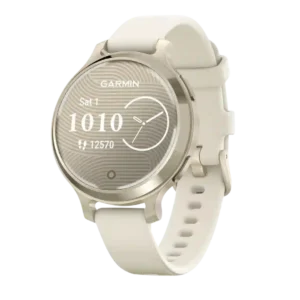
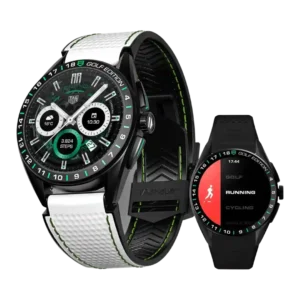
- Better: overall smartwatch polish Tech Advisor found it hard to recommend the Sense 2 over Apple Watch SE or Samsung alternatives.
- Better: heart rate accuracy TechRadar trusted Apple Watch SE more than the Sense 2 for workout heart-rate readings.
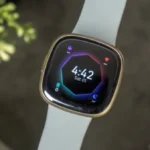
Fitbit Sense 2 Review
Bottom Line
Choose the Fitbit Sense 2 for comfortable multi-day health, sleep, and stress tracking. Skip it if you want strong smartwatch apps, music controls, reliable GPS/heart-rate workout data, or the best value.
Best for Fitbit users who want a comfortable wellness watch with strong battery life, sleep tracking, health metrics, stress tools, and cross-platform phone support.
Not for buyers who want a full smartwatch experience, onboard music, robust app support, LTE, or highly reliable GPS and heart-rate data for serious training.
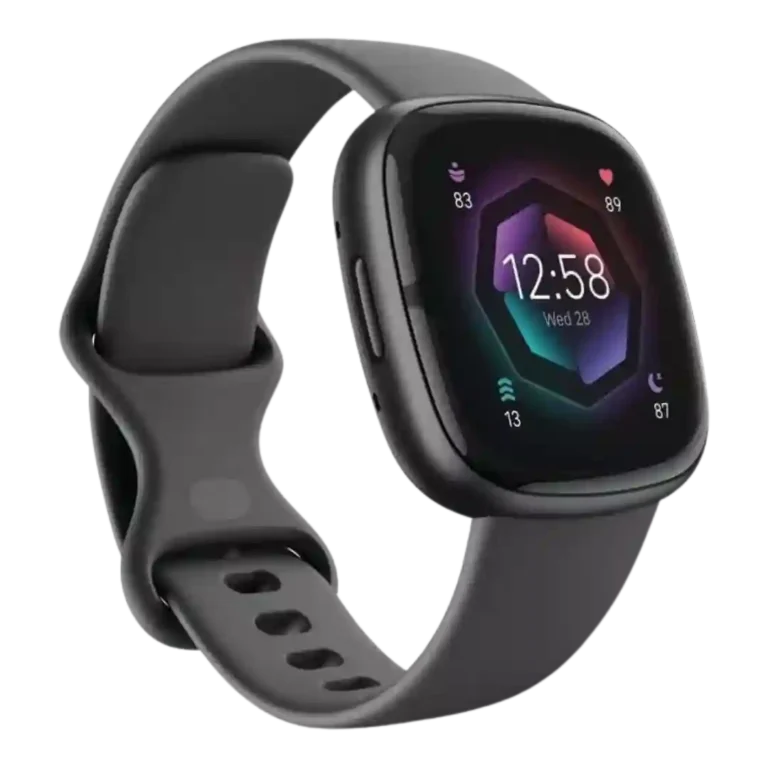
Across the reviews, the Fitbit Sense 2 comes through as a polished health-first wearable rather than a full smartwatch. It earns consistent praise for comfort, multi-day battery life, bright display quality, sleep tracking, and its unusually proactive stress tools. The tradeoff is that Google-era Fitbit trimmed away many smartwatch basics reviewers expected: third-party apps, music support, active Wi-Fi, and Google Assistant. Fitness feedback is also uneven, with several reviewers reporting shaky GPS or heart-rate results during workouts, even as others found casual tracking and health metrics useful. The Sense 2 works best when judged as a Fitbit wellness watch, but its price is harder to defend against cheaper Fitbits and more capable Apple, Samsung, Garmin, or Pixel alternatives.
Compared in Reviews
Products reviewers directly compared with this model, grouped into quick takeaways.
- Worse: health sensors for the price The Sense 2 costs more than the Versa 4 but adds ECG and EDA health sensors.
Pixel Watch
- More expensive: smartwatch value The Verge questioned paying for the Sense 2 when Pixel Watch costs only slightly more and is smarter.
- Worse: battery life PCMag found the Sense 2 battery far stronger than the Pixel Watch.
Feature Scorecards
Pros
-
Cross-platform support is a major advantage because reviewers emphasize that it works with both Android phones and iPhones.
-
Pairing reliability is strong in the evidence, with reviewers reporting immediate setup, trouble-free pairing, and dependable data sync.
-
Durability evidence is limited but positive, with one reviewer reporting the watch survived a rugged outing without a scratch.
-
Touchscreen responsiveness is strong, with reviewers praising fast swipes, taps, and low-lag interaction.
-
Outdoor visibility is excellent, with reviewers reporting readable text outdoors and under bright sun.
-
Charging speed is a strength, with multiple reviewers citing quick top-ups and about a day of use from roughly 10 to 12 minutes.
-
Comfort is consistently praised, with reviewers describing the Sense 2 as lightweight enough for all-day wear and sleep tracking.
-
Brightness is consistently strong, with AMOLED display comments emphasizing colorful output and readability in harsh daylight.
-
Water resistance is strong, with reviewers citing 5ATM, 50-meter, shower, swimming, and 164-foot claims or use cases.
-
Battery life is one of the strongest points, with reviewers commonly reporting multi-day use and large gains over daily-charge smartwatches.
-
Display quality is widely positive, with reviewers praising the AMOLED panel’s brightness, color, contrast, and readability.
-
Sleep tracking is one of the most praised health features, with reviewers calling it accurate, detailed, and among Fitbit’s best strengths.
-
The physical button is a clear improvement over older haptic controls, though one review noted occasional mis-presses and another found the feel mushy.
-
Style and design are well regarded overall, with reviewers calling the watch sleek, lightweight, sporty, and unobtrusive.
-
Bluetooth and syncing are generally dependable in the evidence, with reviewers reporting trouble-free sync and improved range.
-
Health tracking accuracy is a relative strength, especially for trends, temperature, illness signals, and broad health metrics.
-
Fit is strong overall, with reviewers saying the slimmer body sits flush and maintains good skin contact on different wrists.
-
Recovery insights are useful through Daily Readiness and related metrics, but the best detail is often tied to Fitbit Premium.
-
ECG is treated as a valuable advanced health feature for atrial-fibrillation checks, though not a daily-use feature for everyone.
-
Wellness insights are a core strength, especially for holistic health trends, but some deeper insights require user effort or Premium.
-
Coaching is most useful around stress management, where reviewers saw prompts for meditation, breathing, walks, and recommendations.
-
Workout variety is strong on paper with about 40-plus modes, though some reviewers found modes generic or best suited to casual exercisers.
-
Menu navigation is improved by the tiled interface, which reviewers found easier, cleaner, and more readable.
-
The Fitbit app is mostly praised for ease and clarity, though some reviewers still found menu depth and Premium gating frustrating.
-
Build quality is generally good, though the praise is tempered by the broader complaint that the software feels stripped down.
-
The operating system feels cleaner and smoother than older Fitbit software, but its feature set remains constrained.
-
The user interface is improved and easier to navigate, though one reviewer still found parts of the experience slow.
-
Mapping and navigation are limited but improved by Google Maps support, which reviewers noted as available or arriving depending on timing.
-
Blood oxygen tracking is useful as part of Fitbit’s health dashboard, though one review noted SpO2 is overnight-only rather than on-demand.
-
Customization is adequate for tiles and watch layout, but reviewers noted limits such as non-customizable clock-face complications.
-
Step counting is generally good for daily use, though scientific-style testing and some reviewers noted a tendency to overcount.
-
Stress tracking is distinctive and often useful, but reviewers disagree on whether body-response alerts are actionable, timely, or too vague.
-
Smartphone notifications are useful and readable, though one reviewer disliked the slower notification presentation.
-
Contactless payments are supported through Fitbit Pay, Google Pay, or Wallet, but reviewer experience depends on timing and bank support.
-
Reliability is mixed: syncing is dependable, but GPS reliability during workouts drew criticism.
-
Safety features are basic, with high and low heart-rate alerts noted but few broader emergency-style smartwatch features.
Cons
-
Auto-detection is mixed: reviewers noted broader SmartTrack coverage and prompts, but also inaccurate or category-limited auto-tracked workouts.
-
Band feedback is split: reviewers liked secure, swappable straps, but some criticized the release mechanism or stock silicone band comfort.
-
Fitness tracking accuracy is mixed: casual use can be good, but running and workout precision falls short of stronger fitness watches.
-
Software smoothness is mixed: some reviewers found it less laggy than the original, while others still saw sluggish menus.
-
Size options are limited because the watch comes in one hardware size, though color options and straps offer some flexibility.
-
Materials quality is mixed because reviewers mention aluminum and plastic construction and compare the aluminum case unfavorably with steel.
-
Watch face quality is mixed, with custom faces available but poor selection, clunky changes, and limited complication customization noted.
-
Call handling is limited: reviewers note the hardware has a speaker, but availability and audio quality are recurring caveats.
-
GPS accuracy is one of the most divided attributes, ranging from solid route tracking to slow locks, wandering paths, and distance errors.
-
Heart-rate accuracy is inconsistent, with several reviewers reporting poor or delayed workout readings despite some acceptable steady-state results.
-
Charging convenience is mediocre because reviewers disliked the proprietary USB-A setup and the need to align the magnetic charger correctly.
-
Calorie tracking appears questionable in comparative workouts, where reported burn totals diverged noticeably from Apple Watch results.
-
Voice assistant quality is mixed to weak: Alexa remains and voice replies can work, but reviewers criticized the loss of Google Assistant.
-
Value for money is weak to mixed because many reviewers felt the price is hard to justify against cheaper Fitbits or fuller smartwatches.
-
Smartwatch features are the product’s clearest weakness because reviewers say the Sense 2 behaves more like a fitness tracker than a full smartwatch.
-
The app ecosystem is a major weakness because reviewers repeatedly describe the Sense 2 as lacking normal third-party app expansion.
-
Third-party app support is essentially removed, a recurring complaint across reviews and a key reason the watch feels less smart.
-
Music controls are a major weakness because reviewers repeatedly state that playback, phone controls, and music apps were removed.
-
Wi-Fi connectivity is a major weakness because reviewers repeatedly state that Wi-Fi hardware is disabled or unavailable in software.
-
Onboard music storage is effectively absent, with reviewers saying music cannot be stored or used offline on the watch.
-
LTE connectivity is absent, with review evidence pointing to Bluetooth-only/no-cellular configurations.
Compared With Category Average
Compared with other Smart Watch, this product is above average in ECG functionality, below average in music controls, third-party app support, Wi-Fi connectivity.
| Attribute | This product | Category average | Difference |
|---|---|---|---|
| music controls | 1.0 | 3.5 | -2.5 |
| third-party app support | 1.0 | 3.1 | -2.1 |
| Wi-Fi connectivity | 1.0 | 3.2 | -2.2 |
| ECG functionality | 4.2 | 2.3 | +2.0 |
| app ecosystem | 1.7 | 3.6 | -1.9 |
| onboard music storage | 1.0 | 2.9 | -1.9 |
| value for money | 2.2 | 3.8 | -1.7 |
| GPS accuracy | 2.6 | 4.0 | -1.5 |
FAQ
Is the Fitbit Sense 2 a good smartwatch?
It is better supported by the reviews as a health-focused Fitbit than as a full smartwatch. Reviewers repeatedly criticized the removed third-party apps, music controls, Wi-Fi, and Google Assistant.
How long does the Fitbit Sense 2 battery last?
Battery life is one of its strongest areas. Reviews commonly reported several days per charge, often around four to six days, while always-on display and GPS use reduce that.
Is the Fitbit Sense 2 accurate for workouts?
Workout accuracy is mixed. Some reviewers found casual activity tracking and GPS acceptable, while others reported wandering GPS, distance errors, and heart-rate readings that lagged or diverged during harder efforts.
Does the Fitbit Sense 2 support music?
The review evidence is consistently negative here. Reviewers said it lacks onboard music storage, music apps, and even basic phone music controls.
How useful is the stress tracking?
The Sense 2’s continuous EDA/body-response system is its most distinctive feature. Reviewers liked the mindfulness prompts and stress summaries, but some found alerts vague, mistimed, or not clearly tied to how they felt.
Does the Fitbit Sense 2 work with iPhone and Android?
Yes. Reviewers highlighted Fitbit’s cross-platform compatibility as a major advantage, though some notification reply features are limited to Android.
Can you swim with the Fitbit Sense 2?
Yes. Reviewers cite 5ATM or 50-meter water resistance, with comments indicating it is suitable for swimming, shower exposure, or water-based tracking when properly dried afterward.
Consider This Instead
If you want better third-party app support
Choose Samsung Galaxy Watch 8. It scores 4.8 vs 1.0 for third-party app support, with a 4.0 overall score.
If you want better music controls
Choose Apple Watch SE 3. It scores 4.8 vs 1.0 for music controls, with a 4.1 overall score.
If you want better onboard music storage
Choose Huawei Watch Fit 4. It scores 4.7 vs 1.0 for onboard music storage, with a 4.1 overall score.
If you want better LTE connectivity
Choose Samsung Galaxy Watch Ultra (2025). It scores 4.5 vs 1.0 for LTE connectivity, with a 4.1 overall score.
Overall Top Smart Watch Alternatives
Good if you want the most rugged Apple Watch, brighter outdoor screen, better battery, LTE, and top apps. Skip it if you need Garmin-like mapping, recovery analytics, smaller sizing, or...
Pros: display quality, heart rate accuracy
Cons: cross-platform compatibility, recovery insights
Choose the Galaxy Watch 6 for a polished Android smartwatch with a bright screen, strong apps, and broad health tracking. Skip it if battery life, iPhone support, or full non-Samsung...
Pros: outdoor visibility, workout tracking variety
Cons: cross-platform compatibility, battery life
Good if you need a rugged Garmin with deep outdoor, tactical, GPS, training, and battery features. Skip it if you want a cheaper lifestyle watch or do not need the...
Pros: materials quality, durability
Cons: LTE connectivity, value for money
Good if you want premium golf maps, virtual caddie tools, health metrics, music, notifications, and long battery life in one watch. Skip it if you only need basic yardages or...
Pros: pairing reliability, brightness
Cons: software smoothness, user interface