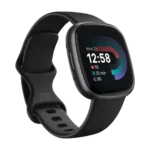
Fitbit Versa 4 Feature Scores
Explore all 55 feature scores for Fitbit Versa 4, organized into pros and cons.
Scores by Feature
Summary
55 reviewed features-
Very positive 4.5-5.011 (20%)
-
Positive 3.5-4.422 (40%)
-
Neutral 2.5-3.413 (24%)
-
Negative 1.5-2.43 (5%)
-
Very negative below 1.56 (11%)
Pros
Sort
-
Sleep tracking was one of the Versa 4's strongest areas, with many reviewers calling it accurate, reliable, detailed, or easy to understand, despite one mixed lab result.
-
Battery life was a major strength, repeatedly lasting several days to about a week, although always-on display and GPS reduced it.
-
The physical button was widely praised as a major usability improvement over the Versa 3's capacitive or squeeze-style controls.
-
Comfort was one of the strongest points, with many reviewers saying the watch was light, comfortable, and wearable day and night.
-
Style and design were widely praised as attractive, sleek, lightweight, and Fitbit-recognizable.
-
Display quality was strong, with reviewers praising the AMOLED screen's color, clarity, and legibility.
-
GPS accuracy was mixed: some reviewers found it quick, precise, or on target, while others reported slow lock-on, vague routes, or inconsistent performance.
-
The user interface was one of Fitbit's strengths, repeatedly described as simple, understandable, and easy to learn.
-
Brightness was a strength, with reviewers saying the OLED display was bright, clear, and easy to read.
-
Water resistance was viewed positively for swimming, showers, and everyday water exposure.
-
Menu navigation was generally easy, with reviewers praising simple, sleek navigation and a straightforward layout.
-
Step tracking was generally dependable in several reviews, though one lab review found the step count consistently short.
-
Pairing and syncing could be easy and seamless in favorable reviews, especially during initial setup.
-
Outdoor visibility was good overall, with reviewers saying the display was readable outdoors or in bright conditions.
-
Reviewers who discussed broad health accuracy were mostly positive, saying health metrics felt solid or convincing, though this was distinct from specific workout heart-rate issues.
-
Build quality was praised in the reviews that discussed it directly, with one calling it exceptional and another high-quality.
-
Band quality was generally comfortable and secure, though one reviewer experienced irritation from constant wear.
-
The expanded workout-mode list was frequently praised for breadth, but multiple reviewers said many modes were shallow or not meaningfully different.
-
Touchscreen responsiveness was split: some reviewers found it zippy and accurate, while others found it laggy, jumpy, or slow to wake.
-
Charging speed was mixed: many reviewers praised 12-minute quick charging, but full charging could still take around two hours.
-
Recovery guidance was considered useful when it worked, especially Daily Readiness, but some reviewers found the scores optimistic or held back by Premium.
-
Overall fitness tracking was seen as good enough for casual use, with solid distance and general activity tracking, but not top-tier for serious training.
-
Automatic activity detection was split, ranging from reliable walk detection to completely missed auto-logged workouts and delayed detection.
-
One review praised Fitbit's nutrition and food-journal support as valuable for people managing their intake.
-
Customization was a plus thanks to many watch faces and color choices.
-
Materials quality was positive in the one review that highlighted improved materials and manufacturing.
-
Fit was mixed: a snug fit helped sensor contact, but the clasp and fit adjustment could be challenging.
-
Workout goal-setting was praised as a helpful way to customize sessions by time, distance, calories, or Active Zone Minutes.
-
Mapping and navigation were useful additions, but reviewers noted phone dependence and limited turn-by-turn or no-map functionality.
-
Notifications were readable and pleasant on the larger screen, but iPhone reply limits kept the feature from feeling fully smart.
-
The operating system was easier to use than before, according to the review that focused on Fitbit OS changes.
-
Blood oxygen tracking was treated as a useful overnight health signal, but reviewers discussed it as part of broader health-metric packages rather than as a standout feature.
-
Contactless payments were useful when supported, with Google Pay working well in one review, but bank support was limited in another.
Cons
Sort
-
Onboard music storage was one of the clearest omissions, with reviewers repeatedly saying music could not be stored, downloaded, or used phone-free.
-
Wi-Fi connectivity was consistently criticized because reviewers noted that Wi-Fi was removed, disabled, dormant, or unavailable.
-
Music controls were a consistent drawback because several reviewers criticized the loss of phone music controls or Spotify-style playback control.
-
The app ecosystem was a major weakness because reviewers repeatedly criticized the lack of third-party app support and reduced app depth.
-
Third-party app support was consistently negative, with reviewers emphasizing that third-party apps had been removed or were unsupported.
-
Heart-rate accuracy was the clearest tracking weakness: several reviewers found lag, undercounts, overestimates, or unreliable high-intensity readings, with only one reviewer strongly satisfied.
-
LTE connectivity was effectively absent; one reviewer said Fitbit watches lack cellular support, forcing users to keep a phone nearby.
-
Smartwatch features were the biggest tradeoff: the Versa 4 has useful basics, but reviewers often described it as closer to a fitness tracker than a true smartwatch.
-
ECG was a limitation because reviewers noted the Versa 4 lacks the Sense 2's ECG heart-health hardware.
-
Safety features were weakened by heart-rate accuracy doubts, which made one reviewer question trust in high and low heart-rate alerts.
-
Stress tracking received mixed treatment: reviewers liked that Fitbit includes stress-oriented scores, but questioned the depth without the stronger EDA hardware.
-
Watch faces were mixed: reviewers liked the broad selection but disliked limited customization on the watch.
-
Value for money was highly divided: some reviewers saw a bargain or fair price, while many said better options existed.
-
Alexa generally worked, but voice-assistant quality was limited by poor speaker output, phone dependence, and missing Google Assistant support.
-
Reliability was mixed, ranging from normal operation after restarts to slow syncing, glitches, and a less polished experience.
-
Bluetooth was mixed, with one reviewer praising improved range and another reporting unreliable iPhone Bluetooth behavior.
-
Call handling was serviceable for occasional use, but speaker quality and setup limitations kept it from being a standout smartwatch feature.
-
Cross-platform support was technically broad, but one review stressed that iPhone integration was much more limited than Android.
-
Software smoothness was mixed: one reviewer saw reduced lag, while another still found scrolling less smooth than Wear OS watches.
-
Wellness insights were valued when available on the watch or in the app, but reviewers repeatedly criticized the Premium paywall.
-
Charging convenience was adequate but not perfect, with a secure magnetic setup but a proprietary USB-A charger.
-
The companion app drew split reactions, from clean, intuitive, and seamless to glitchy, slow-syncing, or overly pushy about Premium.