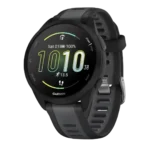
Garmin Forerunner 165 Feature Scores
Explore all 50 feature scores for Garmin Forerunner 165, organized into pros and cons.
Scores by Feature
Summary
50 reviewed features-
Very positive 4.5-5.024 (48%)
-
Positive 3.5-4.417 (34%)
-
Neutral 2.5-3.47 (14%)
-
Negative 1.5-2.42 (4%)
Pros
Sort
-
Display quality was a standout strength thanks to a crisp, vibrant AMOLED screen, though one reviewer still preferred MIP for always-visible use.
-
Value for money was one of the strongest areas, with reviewers repeatedly calling it a high-value or sweet-spot Garmin.
-
Button controls were a major strength, especially for workouts, gloves, sweat, rain, and avoiding touchscreen reliance.
-
GPS accuracy was one of the strongest themes, with most reviewers finding reliable tracks even without dual-band GPS; a few dense-terrain issues remained.
-
Comfort was consistently excellent, with reviewers praising the lightweight feel for all-day wear and sleep.
-
Outdoor visibility was excellent in direct sun and bright conditions.
-
Customization was a strength, from watch faces and widgets to activity screens and data pages.
-
Battery life was generally good for an AMOLED Garmin and daily training, but reviewers flagged limits for long adventures, always-on use, or heavy GPS/music.
-
Heart-rate accuracy was generally praised across runs, rides, and intervals, with only occasional optical-sensor lag or spikes.
-
Touchscreen responsiveness was widely praised, including smooth swiping, reliable taps, and usability with gloves or wet screens.
-
Coaching and structured workouts were praised as approachable, flexible, and valuable for beginner and intermediate runners.
-
Garmin Connect was seen as powerful and useful, with cleaner or comprehensive analysis, though one reviewer found the redesign not much easier.
-
Durability was reassuring, with reviewers reporting no concerns and even real-world abuse without damage.
-
Brightness was strongly praised in sunlight and adaptive lighting conditions.
-
The interface was repeatedly described as simple, approachable, and easy to use.
-
Band quality was mostly comfortable and flexible, but one reviewer warned the stock strap needs frequent washing to avoid irritation.
-
Wellness insights such as Morning Report and Body Battery were considered fun, useful, and sometimes addictive.
-
Mapping and navigation were useful for breadcrumb routes and GPX/course following, but the lack of full maps was a repeated limitation.
-
Fit was strong for many wrists, with secure wear and little slipping, though the single case size remained a caveat.
-
Fitness tracking accuracy was praised for broad data quality and even strength-training rep counting in testing.
-
Water resistance was considered more than enough for rain, sweat, showering, and swimming use.
-
Sleep tracking was mostly viewed as useful and directionally accurate, though one reviewer reported a poor night that the watch missed.
-
Charging speed was praised in the reviews that discussed it, ranging from under two hours to very fast top-ups.
-
Style and design were viewed as slim, low-profile, sleek, and suitable for daily wear, though still sporty.
-
Build quality was viewed as solid and well-made for a lightweight running watch.
-
Workout variety covers most mainstream running, gym, cycling, swimming, and fitness needs, but reviewers consistently noted missing triathlon or backcountry profiles.
-
Reliability was praised in workout use, with one reviewer reporting no issues with stability.
-
Smartphone notifications were described as reliable and easier to read on the AMOLED display.
-
Watch face quality was praised for full customization.
-
Smartwatch features were considered respectable for a training watch, especially notifications, Garmin Pay, music features, and basic phone-linked tools.
-
Reviewers described the Forerunner 165 as having reliable sensors and detailed data collection for general health and fitness tracking.
-
Menu navigation was considered intuitive after a short adjustment period.
-
Software smoothness was praised as simple, fast, and accurate in use.
-
Step counting was reported as close to other tested devices.
-
Blood oxygen tracking was treated as a useful extra by reviewers who valued the reassurance, though broader accuracy was not deeply tested.
-
Bluetooth headphone pairing was reported to work without problems.
-
Garmin Pay was viewed as a straightforward, effective contactless payment feature.
-
The operating experience was familiar and straightforward for Garmin users.
-
Pairing reliability for headphones was described as generally solid.
-
Safety features such as LiveTrack were valued for sharing location during activities.
-
Stress tracking was mentioned as part of the watch's helpful health-glance system for knowing when to ease off.
Cons
Sort
-
Music controls were criticized as unintuitive during runs.
-
Wi-Fi/music setup drew criticism when troubleshooting made the watch appear connected even though playlist syncing failed.
-
Materials quality was mixed: plastic kept it light and affordable but felt less premium.
-
Size options were limited because the watch comes in only one size, though one reviewer liked the in-between fit.
-
The app ecosystem was useful through Connect IQ and Garmin features, but Garmin's broader platform could still feel intimidating.
-
Charging convenience was mixed: secure contacts helped, but the proprietary/short cable was a drawback.
-
Third-party app/widget support was available and sometimes useful for tailoring data, though one reviewer did not find it especially useful.
-
Recovery insights were useful but clearly limited versus higher Forerunners, with some reviewers calling out missing readiness/load tools or odd recovery estimates.
-
Onboard music storage drew split views: handy or smooth for some, but tedious and poor value for others.