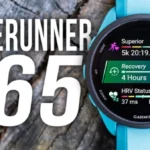
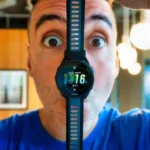
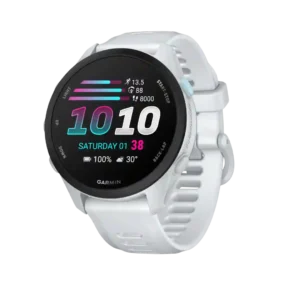
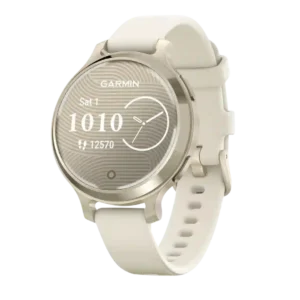
- More expensive: design and missing features The Verge calls the 165 a near clone of the smaller 265S for substantially less money.
- More expensive: training features and price The review frames the 165 as cheaper than the Forerunner 265 but missing several advanced training and sport features.
Garmin Forerunner 165 Review
Bottom Line
Choose the Garmin Forerunner 165 if you want accurate GPS, a bright AMOLED screen, strong Garmin training basics, and good value. Skip it for triathlon, full maps, LTE, ECG, or painless phone-free music.
Best for runners and fitness-focused users who want accurate GPS, reliable heart rate data, Garmin coaching basics, wellness insights, and a bright AMOLED display without paying for a higher-end Forerunner.
Not for triathletes, map-heavy adventurers, LTE seekers, ECG users, or anyone who wants the richest smartwatch app experience or frictionless phone-free music.
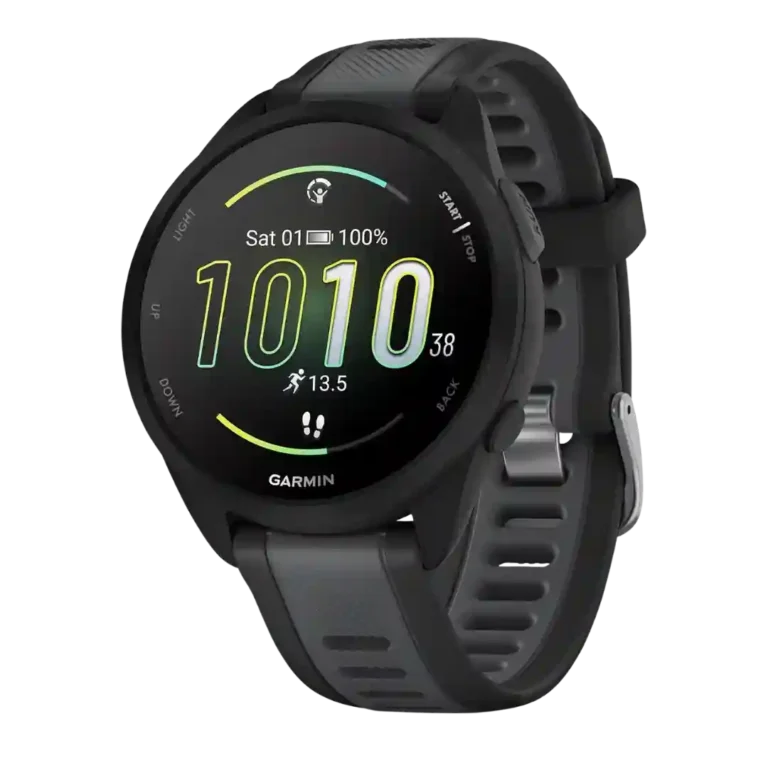
Reviewers consistently frame the Garmin Forerunner 165 as a sweet-spot running watch: light, comfortable, easy to read, and unusually accurate for its price. The AMOLED display, button-plus-touch interface, Garmin Coach, Morning Report, Body Battery, breadcrumb navigation, and reliable GPS/heart-rate performance make it feel much more capable than a barebones tracker. The tradeoff is Garmin’s deliberate feature trimming. It lacks ECG, LTE, dual-band GPS, full maps, triathlon/multisport mode, Training Readiness, Training Load, and some niche sport profiles. Battery life is good for normal training, but AMOLED and music use shorten it, and several reviewers found the Music edition less compelling than the base model.
Compared in Reviews
Products reviewers directly compared with this model, grouped into quick takeaways.
- Alternative: smartwatch features The Apple Watch SE is presented as a better choice for users prioritizing basic tracking plus true smartwatch features.
- Better: music and cellular convenience The reviewer contrasts Garmin's cumbersome music setup with the Apple Watch Ultra's seamless phone-free streaming.
Feature Scorecards
Pros
-
Brightness was a clear strength, especially the bold AMOLED screen and usable bright-display behavior.
-
Comfort was a major point of agreement: reviewers repeatedly described the watch as light, compact, unobtrusive, and easy to wear day and night.
-
Outdoor visibility was a standout strength; reviewers repeatedly said the AMOLED screen was readable in sunlight and bright conditions.
-
Step counting accuracy was positively supported by one review that found it closely matched other tested devices.
-
Display quality was one of the strongest attributes, with reviewers repeatedly praising the vibrant, crisp AMOLED screen.
-
Fitness tracking accuracy was praised across multiple reviews, especially for daily activity data, run metrics, and overall sensor reliability.
-
Customization was strong, with configurable widgets, data fields, watch faces, and training screens noted across reviews.
-
Pairing reliability was specifically praised for Bluetooth headphones in one review, with no broad pairing complaints across the review set.
-
Safety features were positively noted through LiveTrack and incident detection, though the evidence came from one detailed review.
-
The user interface was considered approachable and easy to use, especially with the combined touchscreen and button approach.
-
The five-button layout was one of the most consistently praised usability strengths, especially for workouts, gloves, sweat, and wet conditions.
-
Value for money was one of the strongest consensus points, with many reviewers calling the 165 a strong budget or sweet-spot Garmin.
-
Water resistance was well supported for swimming, rain, sweat, and shallow water, with reviewers noting 5ATM or 50-meter resistance.
-
Wellness insights were strong through Morning Report, Body Battery, HRV, sleep, stress, recovery, and daily health glances.
-
Reliability was praised in long-term and general-use terms, with reviewers describing the watch as dependable and accessible.
-
Health tracking accuracy was supported by the reliable sensor package and detailed data collection, but evidence was less extensive than for GPS and heart rate.
-
Watch face quality was strong thanks to customizable stock faces and Connect IQ options.
-
GPS accuracy was a major strength; most reviewers found it accurate or solid despite the lack of dual-band GPS, with only occasional challenging-environment issues.
-
Touchscreen responsiveness was mostly praised as smooth and useful, though one reviewer noted accidental touches.
-
Coaching features were well supported through Garmin Coach, adaptive plans, structured workouts, daily suggestions, and race-related guidance.
-
Durability evidence was positive overall, including resistance to daily abuse, though not all reviewers considered it a rugged outdoor watch.
-
Fit was generally positive, with the small case sitting neatly on wrists and under layers without feeling oversized.
-
Heart rate accuracy was broadly positive, often matching chest straps or higher-end watches well, with occasional optical-sensor lag or spikes.
-
Reviewers generally liked the soft, adjustable silicone strap and standard strap options, with no major comfort complaints about the band itself.
-
Bluetooth and ANT+ sensor/headphone support were viewed positively, with reviewers noting external sensor support and solid headphone connectivity.
-
Smartphone notifications were considered reliable and readable, with texts, calls, and app alerts working well when paired.
-
Call handling was limited to reliable call-related smartphone alerts rather than full on-watch calling.
-
Menu navigation is flexible because Garmin allows almost everything to be controlled by buttons, reducing reliance on touch.
-
Smartwatch features were solid for a sport watch, including notifications, wallet/payments, Find My Phone, music, and safety tools, but not full smartwatch depth.
-
Charging convenience was mostly fine thanks to secure contacts and Garmin’s familiar proprietary cable, though it is not universal wireless charging.
-
Garmin Pay was consistently mentioned as available and useful for contactless payments across models.
-
Connect IQ gives the watch a modest app ecosystem for watch faces, widgets, data fields, and extras, though it is not framed as a full smartwatch app platform.
-
Style and design were viewed positively for a sporty, compact watch with a bright display that could be worn daily.
-
The watch includes blood oxygen or Pulse Ox tracking, but reviewers treated it as a useful health sensor rather than a headline reason to buy.
-
Garmin Connect was mostly praised for depth, workout analysis, and improving organization, though one reviewer found the redesign not dramatically easier.
-
Charging speed was generally acceptable to good, with reviewers reporting around one hour to just under two hours depending on the source.
-
Battery life was praised as strong for an AMOLED Garmin in normal training use, but several reviewers said always-on display, music, or endurance use reduces its advantage.
-
Stress tracking was present as part of the broader Garmin health and sleep feature set.
-
Navigation is useful but limited: reviewers liked breadcrumb routing, courses, back-to-start, and GPX support, while noting the absence of full maps.
-
Sleep tracking was mostly useful for sleep duration and scores, but opinions were mixed because at least one reviewer found missed restless sleep.
-
Build quality was viewed as dependable for the price, with Garmin durability praised even though the plastic construction feels less premium.
-
Cross-platform compatibility is functional, but one reviewer noted the phone experience differs between iPhone and Android, especially for replies.
-
Software smoothness was acceptable but not premium-watch smooth, with one review noting the refresh rate was not Apple Watch-like.
-
Workout tracking variety covers most common running, cycling, swimming, gym, yoga, and fitness modes, but reviewers repeatedly noted missing triathlon, skiing, and other niche profiles.
-
The operating system experience felt Garmin-like and sport-focused, with solid hybrid smartwatch behavior but limitations versus true smartwatches.
-
Third-party app support exists through Connect IQ widgets, watch faces, data fields, and apps, but reviewers did not portray it as a rich smartwatch store.
-
Onboard music storage is useful on the Music edition, but reviews were split because syncing can be tedious and costs extra.
-
Recovery insights are useful through Recovery Time, Training Effect, HRV, Body Battery, and related tools, but the missing Training Readiness and Training Load limited depth.
Cons
-
Materials quality was a tradeoff: the polymer/plastic body helps weight and price but feels less premium than metal.
-
Wi-Fi connectivity exists mainly for the Music edition and music syncing, but one review reported Wi-Fi troubleshooting friction.
-
Size options were a weakness because reviewers repeatedly noted there is only one case size, despite the size working for many wrists.
-
Calorie tracking received weak support; one reviewer saw calorie burn data in strength mode but did not find that feature very useful.
-
Music controls were a weak spot, with reviewers finding on-run controls unintuitive or limited without the Music model.
-
ECG functionality was consistently absent; reviewers repeatedly stated users need a different or higher-end Garmin for ECG/EKG.
-
Voice assistant quality is effectively absent because one reviewer explicitly noted there is no voice assistant.
Compared With Category Average
Compared with other Smart Watch, this product is above average in contactless payments, call handling, onboard music storage, below average in voice assistant quality, ECG functionality, music controls.
| Attribute | This product | Category average | Difference |
|---|---|---|---|
| voice assistant quality | 1.0 | 2.7 | -1.7 |
| contactless payments | 4.1 | 2.8 | +1.3 |
| ECG functionality | 1.0 | 2.3 | -1.3 |
| music controls | 2.3 | 3.5 | -1.3 |
| call handling | 4.2 | 3.1 | +1.1 |
| onboard music storage | 3.7 | 2.8 | +0.8 |
| calorie tracking usefulness | 2.5 | 3.5 | -1.0 |
| value for money | 4.4 | 3.8 | +0.6 |
FAQ
Is the Garmin Forerunner 165 accurate for running?
Yes. Reviewers repeatedly praised GPS and heart rate accuracy, often saying it stayed close to chest straps, phones, or higher-end GPS watches despite lacking dual-band GPS.
How good is the battery life?
Battery life is good for normal training, with many reviewers seeing several days to more than a week. Always-on display, GPS-heavy use, Pulse Ox, and music reduce it noticeably.
Is the Music edition worth the extra money?
The evidence is mixed. Some reviewers found offline music useful and syncing easy, while others said the setup or controls felt tedious and the $50 upgrade was hard to justify.
Does it have maps or navigation?
It does not have full onboard maps. Reviewers noted breadcrumb navigation, courses, back-to-start, and route-following support, which is useful but less complete than higher-end Garmin mapping.
What training features are missing?
Reviewers repeatedly noted the absence of Training Readiness, Training Load, Training Status, triathlon or multisport mode, dual-band GPS, and some niche sport profiles.
Is it comfortable enough for all-day and sleep tracking?
Yes. Comfort was one of the strongest areas of agreement, with reviewers describing it as light, compact, and easy to wear overnight.
Consider This Instead
If you want better calorie tracking usefulness
Choose Amazfit T-Rex 3 Pro. It scores 5.0 vs 2.5 for calorie tracking usefulness, with a 3.7 overall score.
If you want better size options
Choose Garmin Approach S70. It scores 4.7 vs 2.7 for size options, with a 4.3 overall score.
If you want better workout tracking variety
Choose Amazfit Active 2. It scores 4.9 vs 3.8 for workout tracking variety, with a 3.8 overall score.
If you want better battery life
Choose Suunto Vertical. It scores 4.9 vs 4.0 for battery life, with a 3.8 overall score.
Overall Top Smart Watch Alternatives
Good if you want the most rugged Apple Watch, brighter outdoor screen, better battery, LTE, and top apps. Skip it if you need Garmin-like mapping, recovery analytics, smaller sizing, or...
Pros: display quality, heart rate accuracy
Cons: cross-platform compatibility, recovery insights
Choose the Galaxy Watch 6 for a polished Android smartwatch with a bright screen, strong apps, and broad health tracking. Skip it if battery life, iPhone support, or full non-Samsung...
Pros: outdoor visibility, workout tracking variety
Cons: cross-platform compatibility, battery life
Good if you need a rugged Garmin with deep outdoor, tactical, GPS, training, and battery features. Skip it if you want a cheaper lifestyle watch or do not need the...
Pros: materials quality, durability
Cons: LTE connectivity, value for money
Good if you want premium golf maps, virtual caddie tools, health metrics, music, notifications, and long battery life in one watch. Skip it if you only need basic yardages or...
Pros: pairing reliability, brightness
Cons: software smoothness, user interface