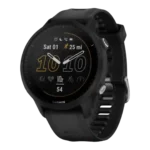
Garmin Forerunner 955 Feature Scores
Explore all 56 feature scores for Garmin Forerunner 955, organized into pros and cons.
Scores by Feature
Summary
56 reviewed features-
Very positive 4.5-5.018 (32%)
-
Positive 3.5-4.427 (48%)
-
Neutral 2.5-3.410 (18%)
-
Negative 1.5-2.41 (2%)
Pros
Sort
-
GPS accuracy was a standout strength, with reviewers repeatedly calling the tracks fast-locking, precise, and among the best they had tested.
-
Battery life was one of the strongest attributes, with reviewers reporting long smartwatch runtimes, solid GPS endurance, and week-plus real-world use.
-
Outdoor visibility was consistently strong, with reviewers repeatedly saying the screen remained easy to read in direct sunlight.
-
Value for money was strongly positive for serious athletes because the 955 delivers many premium Garmin features below Fenix-style pricing.
-
Recovery insights were one of the strongest themes, with Training Readiness and HRV repeatedly praised as useful, clear, and closely aligned with how reviewers felt.
-
Mapping and navigation were repeatedly praised for clear maps, turn-by-turn directions, route planning, and trail usefulness.
-
Customization was a major strength across watch faces, data screens, shortcuts, settings, and app-controlled configuration.
-
Workout variety was praised as extensive, especially for running, triathlon, cycling, swimming, and multisport use.
-
Button controls were a major strength, especially during workouts, gloves, movement, and wet conditions.
-
Comfort was a consistent strength thanks to the light, unobtrusive body, though one reviewer noted irritation after nonstop wear.
-
Touchscreen responsiveness was generally positive and helpful for menus and maps, with minor caveats about accidental touches or preference for buttons.
-
Fitness tracking accuracy was broadly strong across GPS workouts, activity data, calories, and sport sessions, though strength tracking could be occasionally glitchy.
-
Pairing and setup reliability were strong, with reviewers citing fast GPS locks, reliable connectivity, and clear setup.
-
Heart rate accuracy drew mostly positive evidence, especially for running and intervals, with some caveats for high-intensity or strength-style wrist strain.
-
Build quality was praised as light, solid, rugged enough for sport, and well constructed despite its polymer-heavy design.
-
Charging speed was praised where tested, with reviewers reporting fast top-ups and under-an-hour charges.
-
Coaching features were useful for training plans, race widgets, and suggested workouts, but some reviewers found suggested sessions too basic or poorly matched at times.
-
Menu navigation was mostly praised for easy access, fewer button presses, and intuitive control, with one complaint about extra shutdown confirmation.
-
Reviewers generally trusted the broader health data, citing consistent sensors, solid 24/7 tracking, and useful guidance, while still treating some metrics as wellness signals rather than medical-grade data.
-
Sleep tracking was mixed: several reviewers found bed and wake times accurate, while others warned wrist-only sleep data can be unreliable.
-
Band quality was generally praised for comfort, flexibility, and secure fit, with one moisture-trapping caveat.
-
Durability was mostly positive, with strong case and strap reports, though one reviewer scratched the glass.
-
Water resistance evidence was positive, with reviewers using it for swimming and describing the watch as fine in water.
-
Safety features were useful for solo training and incident/live tracking, but reviewers noted phone dependency.
-
Music controls were useful and smooth in several accounts, especially with touchscreen support.
-
Stress tracking was viewed as useful for trends and breathing prompts, especially when it matched fatigue, illness, or high-stress moments.
-
Step counts were considered reliable and consistent in the limited reviews that discussed them.
-
Display quality was generally good for training readability, though reviewers noted the MIP screen is not as vivid or sharp as AMOLED options.
-
Wellness insights were generally useful for understanding body state and recovery, though one reviewer warned some notifications could increase anxiety.
-
The companion app was split: Garmin Connect was praised for data depth and clarity by some, while others found it dated or complicated.
-
The operating system experience was mixed-to-positive: reviewers liked Garmin’s familiar UX and smoother operation but still called some software clunky.
-
Fit was positive in limited evidence, with the watch fitting under gear and avoiding bulky feel for reviewers.
-
The Garmin ecosystem was praised for breadth and data continuity, though one reviewer sharply criticized the on-watch Connect IQ store experience.
-
Smartphone notifications were useful for glanceable information, but iOS reply limitations and basic interaction kept scores moderate.
-
Style and design were mixed: reviewers liked the understated sport look, but some found it less premium or stylish than metal models.
-
Software smoothness improved over earlier models, though some lag and quirks remained.
-
Brightness evidence was positive overall: the display was crisp and clear, though not the brightest.
-
Auto-detection evidence was limited but positive for pool tracking, where automatic length and interval detection was described as working well.
-
Bluetooth connectivity had limited but positive evidence around smooth headphone/music use.
-
Calorie tracking had limited but positive evidence, with one reviewer saying calories burned matched comparison data well.
-
Cross-platform compatibility was positive at the basic app level, with Garmin Connect available for both iOS and Android.
-
Watch face quality had limited but positive evidence, with Garmin’s data screens and Forerunner faces praised.
-
Reliability was mostly acceptable but not flawless, with reviewers seeing some quirks while also reporting no major systematic problems.
-
Materials quality was a tradeoff: lightweight polymer and Gorilla Glass were acceptable, but reviewers missed metal or sapphire-level materials.
-
Blood oxygen tracking was treated as useful when measured carefully, but movement and battery impact limited confidence.
Cons
Sort
-
LTE connectivity was a clear weakness because reviewers noted the lack of LTE, microphones, speakers, or standalone communication options.
-
Call handling was limited because reviewers noted the lack of true on-watch calling.
-
Running power was criticized because the feature still falls short of expectations without wrist-native support.
-
Contactless payments were helpful where supported, but bank availability and regional support were recurring limitations.
-
Smartwatch features were consistently behind Apple, Samsung, or Pixel-style watches, though reviewers still found the basics useful.
-
Third-party app support was mixed: reviewers liked the app selection, but felt Connect IQ still needed growth and better payment support.
-
Wi-Fi was useful for map downloads, but reviewers found map downloads slow over Wi-Fi.
-
Size options were mixed because reviewers liked the light wrist feel but noted the single larger case may not suit everyone.
-
Onboard music storage was mixed: offline playback is valued, but setup issues, service limits, and battery drain frustrated reviewers.
-
The user interface was powerful but mixed: reviewers liked added touch and structure, yet warned the feature depth can create a steep learning curve.
-
Charging convenience was mixed: long battery life reduced charging friction, but solar’s added cost and limited gains drew skepticism.