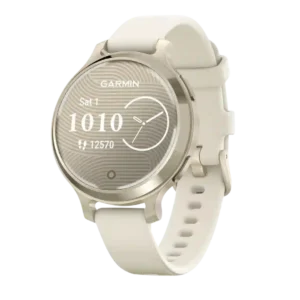
- More expensive: training and health features The reviewer notes the cheaper Forerunner 255 offers many similar training and health features.
- More expensive: running features and price Wareable notes the 255 offers much of the same feature set for less money.
- Alternative: price and recovery features The Forerunner 255 is suggested as a cheaper alternative for runners, cyclists, swimmers, and triathletes.
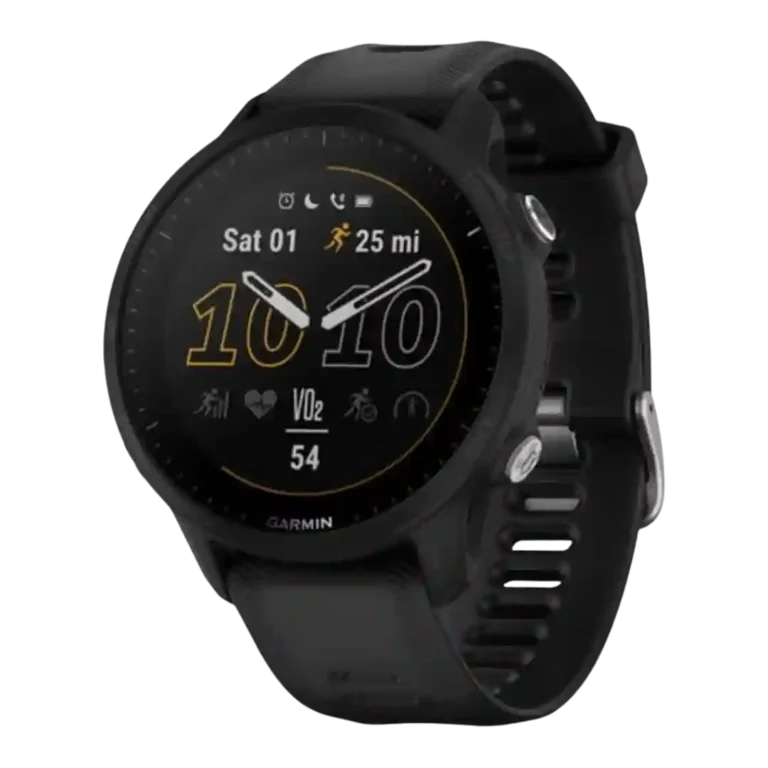
Garmin Forerunner 955 Review
Bottom Line
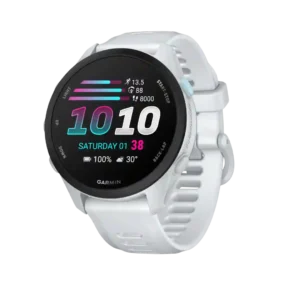
Choose the Garmin Forerunner 955 for elite GPS, long battery life, deep training/recovery tools, and a light sports-first build. Skip it if you need LTE, calls, voice assistants, ECG, AMOLED polish, or a smaller premium-looking smartwatch.
Best for runners, triathletes, cyclists, swimmers, hikers, and data-driven endurance athletes who want accurate GPS, long battery life, rich recovery guidance, and broad sport tracking in a lighter package than Garmin’s rugged lines.
Not for buyers who mainly want a polished smartwatch with LTE, wrist calls, voice assistant support, ECG, AMOLED-style visuals, or a smaller/premium metal design.
Across the reviews, the Garmin Forerunner 955 comes across as a serious training watch first and a smartwatch second. Its clearest strengths are multi-band GPS accuracy, long battery life, broad sport support, comfortable lightweight wear, and Garmin’s recovery stack, especially Training Readiness, HRV, Body Battery, and Morning Report. The tradeoff is that its practical MIP display, polymer build, and Garmin software feel less premium or fluid than AMOLED, metal-bodied, or app-rich smartwatch rivals. It also gives up LTE, voice assistant support, ECG, and real call handling. For endurance athletes, runners, triathletes, and data-driven users, reviewers consistently treat those omissions as acceptable; for smartwatch-first buyers, they matter more.
Compared in Reviews
Products reviewers directly compared with this model, grouped into quick takeaways.
- Better: smartwatch features The review says the Garmin is less smartwatch-like than Apple options while still ranking highly overall.
Garmin Fenix 7
- Better: ruggedness and materials The Fenix 7 is described as more rugged, while the 955 keeps a lighter sports-watch design.
- More expensive: feature set versus price The review says the 955 brings most Fenix 7 features at a lower price.
- Alternative: comfort and style The Forerunner is presented as slimmer and more unobtrusive than the Fenix 7, though less stylish.
Feature Scorecards
Pros
-
Workout tracking variety is excellent, with broad sport modes, triathlon support, swimming/cycling/running profiles, custom workouts, and robust activity options.
-
Charging speed is praised, with reviewers reporting very quick top-offs such as full charging in about 30 minutes or meaningful charge recovery in minutes.
-
GPS accuracy is a standout attribute, with near-universal praise for multi-band GPS, fast lock, reliable tracks, strong performance in canyons, cities, trees, and benchmark comparisons.
-
Outdoor visibility is excellent; reviewers repeatedly note sunlight legibility, direct-sun readability, and visibility under many lighting conditions.
-
Customization is extensive across watch faces, data fields, shortcuts, sport screens, and settings, with several reviewers emphasizing how deeply the watch can be configured.
-
Bluetooth support is strong for headphones and sensors, with reviewers citing Bluetooth headphones and broad ANT+/Bluetooth Smart sensor compatibility.
-
Reviewers strongly like the five-button control scheme, especially because it works with gloves, wet hands, workouts, and users who prefer not to depend on the touchscreen.
-
Recovery insights are one of the watch’s strongest attributes, with Training Readiness, HRV Status, recovery time, Morning Report, and readiness feedback repeatedly called useful.
-
Value for money is highly rated because the 955 delivers many Fenix-level sports, GPS, mapping, and recovery tools at a lower price than Garmin’s premium lines.
-
Water resistance is strong for swimming and wet use, with 5ATM ratings and multiple reviews reporting pool/open-water suitability.
-
Step counting accuracy is good in the cited reviews, with reliable step counts and repeatable daily route step/distance results.
-
Watch face quality is strong, with reviewers liking Garmin’s data screens, built-in faces, Connect IQ downloads, and customization options.
-
Reliability evidence is positive where discussed, including no satellite drops and enjoyable, dependable training use, though this attribute has fewer direct mentions than GPS or battery.
-
The operating system experience is described as classic Garmin and feature-rich, with one review praising the UX rather than treating it as a smartphone-like platform.
-
Software smoothness is positive in the cited evidence, especially compared with older Forerunners, with faster and smoother use called out.
-
Battery life is one of the strongest points: reviewers repeatedly reported roughly two weeks or more in smartwatch use, strong GPS runtimes, and only context-specific drains from multi-band GPS, music, notifications, and heavy use.
-
Comfort is broadly positive, with reviewers repeatedly describing the watch as light, comfortable, unobtrusive, and suitable for long runs and daily wear.
-
Fitness tracking accuracy is strong overall, with reviewers finding accurate run metrics, distance tracking, calorie alignment, and reliable workout data in normal training.
-
Pairing and setup reliability are good, with quick GPS lock, clear setup, and no reported phone connectivity/setup issues in the cited reviews.
-
Wellness insights are robust, with Body Battery, Morning Report, HRV, stress, sleep, recovery, and health metrics used to guide training and daily decisions.
-
Fit is mostly positive: reviewers report a snug wrist fit and good sensor contact, though one reviewer found the larger case can trap moisture.
-
Coaching features are a strength: reviews cite Garmin Coach, training plans, daily suggested workouts, race tools, training feedback, and readiness-guided workout suggestions.
-
Touchscreen responsiveness is well received overall, with reviewers finding it useful, accurate, sweat/rain tolerant, and optional, though many still rely on buttons.
-
Charging convenience is helped by long battery life and quick top-offs, though the watch still uses Garmin’s proprietary charging cable.
-
Health tracking accuracy is considered solid and consistent, with reviewers noting stable metrics, continuous sensor data, and broad health tracking, while some advanced metrics remain harder to verify directly.
-
Stress tracking is a useful part of Garmin’s health/recovery system, with HRV/stress tools, breathing prompts, and readiness calculations linked to stress levels.
-
Cross-platform compatibility is positive where reviewed, with Garmin Connect available for iOS and Android and data syncing across Garmin’s platform.
-
The user interface is generally improved, logical, and precise, though some reviewers still describe Garmin software as clunky or learning-curve heavy.
-
Heart rate accuracy is mostly strong, especially for running and steady efforts, though several reviewers still prefer chest straps for high-intensity or rough cycling conditions.
-
Safety features are strong but phone-dependent: reviewers cite incident detection, assistance, emergency contact notifications, and LiveTrack-style functions.
-
Durability is generally good, with tough resin, Gorilla Glass, and months of scratch resistance reported, though one reviewer did manage to scratch the glass.
-
Build quality is consistently praised as light but solid, with a tough resin or fiber-reinforced polymer case and durable glass, though it is not positioned as a luxury metal watch.
-
Reviewers found useful automatic or semi-automatic detection in specific contexts, including ski runs, strength movements, and swim rest/stroke detection, though the evidence centers on sport-specific recognition rather than broad passive workout detection.
-
Sleep tracking is generally useful and improving, with reviewers citing accurate sleep/wake times and recovery integration, but also noting nap limitations and occasional inconsistent nights.
-
Display quality is practical and readable, with strong clarity outdoors and enough resolution for training data, but several reviewers note it is not as vivid or sharp as AMOLED displays.
-
Blood oxygen tracking is well represented through Pulse Ox, sleep/altitude use cases, Health Snapshot, and sensor descriptions, but reviewers also note battery drain and that readings require proper conditions.
-
The strap setup is generally comfortable and durable, with reviewers noting snug flexible fit, soft silicone, metal buckles, and standard 22mm compatibility, but one reviewer said the band and case can trap water.
-
One review found calorie estimates aligned well with phone/GPS app data, but calorie-specific evidence is limited compared with GPS, heart rate, and training metrics.
-
Smartphone notifications are useful for viewing alerts, messages, and call information, but replies are limited by phone platform and smartwatch depth remains basic.
-
Music controls are useful for controlling phone playback and workout listening, helped by touchscreen interaction, but they are not the product’s strongest or most universally praised feature.
-
Brightness is acceptable rather than class-leading; one review says the display is crisp and readable in sun but not the brightest.
-
Onboard music storage is useful for offline Spotify, Deezer, Amazon Music, and stored tracks, but reviewers also report service limitations and setup/sync frustrations.
-
Menu navigation is improved and logically structured for many reviewers, but still has a learning curve and can require digging through menus.
-
Third-party app support is useful through Connect IQ apps, data fields, faces, and widgets, but reviewers also say the platform needs growth or is not Apple-like.
-
Wi-Fi connectivity is useful for map downloads and Wi-Fi-enabled features, but reviewers note map downloading can be slow.
-
Style and design are functional and understated rather than premium or flashy, with lightness and daily wearability outweighing luxury styling.
-
The companion app is useful and data-rich, with clear graphs and easier configuration, but reviews also call Garmin Connect dated, complicated, or easier to digest than the watch rather than effortless.
-
Materials quality is mixed: the polymer/Gorilla Glass construction is light and functional, but reviewers also note plastic/resin materials and lack of premium metal or sapphire feel.
-
Contactless payment support is useful through Garmin Pay and regional payment options, but bank/payment availability varies and support is not universally strong.
-
The Garmin ecosystem is seen as deep and expandable through sensors, Connect IQ, and watch/app services, but one reviewer called the on-watch app store experience limited and another found Garmin Connect dated.
Cons
-
Smartwatch features are adequate for notifications and basic extras but reviewers repeatedly frame them as behind Apple, Samsung, Pixel, or full smartwatch experiences.
-
Size options are limited; reviewers repeatedly note one main case size or a larger watch body, with solar/non-solar versions rather than smaller size choices.
-
Call handling is limited: reviewers note no hands-free calling, no Bluetooth calling, no microphone/speaker experience, and only basic alerts or call-related notifications.
-
ECG functionality is weak or absent in the review evidence; reviewers explicitly note no ECG, with only speculative or future-support language elsewhere.
-
LTE connectivity is a clear limitation because multiple reviews state there is no LTE version of the Forerunner 955.
-
Voice assistant quality is poor because reviewers repeatedly state there is no voice assistant support or no mic/speaker interaction.
Compared With Category Average
Compared with other Smart Watch, this product is above average in GPS accuracy, onboard music storage, contactless payments, below average in voice assistant quality, call handling.
| Attribute | This product | Category average | Difference |
|---|---|---|---|
| voice assistant quality | 1.4 | 2.7 | -1.3 |
| call handling | 2.0 | 3.1 | -1.1 |
| GPS accuracy | 4.7 | 4.0 | +0.7 |
| onboard music storage | 3.8 | 2.8 | +1.0 |
| contactless payments | 3.7 | 2.8 | +0.8 |
| recovery insights | 4.6 | 3.9 | +0.7 |
| value for money | 4.6 | 3.8 | +0.7 |
| button controls | 4.6 | 3.9 | +0.7 |
FAQ
Is the Garmin Forerunner 955 accurate for GPS tracking?
Yes. Reviewers repeatedly praised the multi-band GPS for fast locks, very accurate routes, and strong performance in harder environments like forests, canyons, built-up areas, and open-water testing.
How good is the battery life?
Battery life is one of the strongest points. Reviews commonly reported around two weeks of smartwatch use, strong GPS runtimes, and only heavier drain when using multi-band GPS, music, notifications, or intensive settings.
Is the Forerunner 955 a good smartwatch?
It is a capable sports smartwatch, but not a full Apple Watch, Galaxy Watch, or Pixel Watch replacement for smart features. Reviews cite useful notifications, music, Garmin Pay, and apps, but also no LTE, no voice assistant, and limited call handling.
Is the touchscreen useful?
Reviewers generally found the touchscreen responsive and helpful for menus, widgets, notifications, and maps. The bigger advantage is that it remains optional because the five-button controls still handle core use, especially during workouts.
Is the solar version worth it?
Reviews were mixed. Solar can extend battery life in the right outdoor conditions, but several reviewers felt the standard battery life is already strong enough and the extra cost only makes sense for long sunny outdoor efforts.
Who should avoid the Forerunner 955?
Avoid it if your priority is a premium-looking smartwatch, AMOLED display, LTE, wrist calls, ECG, or voice assistant support. Reviewers frame it as a training-first watch rather than a fashion or app-first device.
Consider This Instead
If you want better call handling
Choose Apple Watch Series 10. It scores 4.6 vs 2.0 for call handling, with a 4.2 overall score.
If you want better size options
Choose Garmin Approach S70. It scores 4.7 vs 2.7 for size options, with a 4.3 overall score.
If you want better display quality
Choose Apple Watch Ultra 2. It scores 5.0 vs 4.0 for display quality, with a 4.3 overall score.
If you want better contactless payments
Choose Apple Watch SE 3. It scores 4.8 vs 3.7 for contactless payments, with a 4.1 overall score.
Overall Top Smart Watch Alternatives
Good if you want the most rugged Apple Watch, brighter outdoor screen, better battery, LTE, and top apps. Skip it if you need Garmin-like mapping, recovery analytics, smaller sizing, or...
Pros: display quality, heart rate accuracy
Cons: cross-platform compatibility, recovery insights
Choose the Galaxy Watch 6 for a polished Android smartwatch with a bright screen, strong apps, and broad health tracking. Skip it if battery life, iPhone support, or full non-Samsung...
Pros: outdoor visibility, workout tracking variety
Cons: cross-platform compatibility, battery life
Good if you need a rugged Garmin with deep outdoor, tactical, GPS, training, and battery features. Skip it if you want a cheaper lifestyle watch or do not need the...
Pros: materials quality, durability
Cons: LTE connectivity, value for money
Good if you want premium golf maps, virtual caddie tools, health metrics, music, notifications, and long battery life in one watch. Skip it if you only need basic yardages or...
Pros: pairing reliability, brightness
Cons: software smoothness, user interface