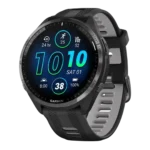
Garmin Forerunner 965 Feature Scores
Explore all 58 feature scores for Garmin Forerunner 965, organized into pros and cons.
Scores by Feature
Summary
58 reviewed features-
Very positive 4.5-5.014 (24%)
-
Positive 3.5-4.427 (47%)
-
Neutral 2.5-3.410 (17%)
-
Negative 1.5-2.45 (9%)
-
Very negative below 1.52 (3%)
Pros
Sort
-
GPS accuracy was one of the strongest points, repeatedly described as highly accurate, reliable, and often best-in-class.
-
Workout variety was a major strength, with reviewers praising the large sport-mode library and deep multisport functionality.
-
Mapping and navigation were major strengths, with detailed AMOLED maps, turn prompts, trail help, and strong route-following support.
-
The AMOLED display drew very strong praise for color, legibility, sharpness, maps, and overall upgrade value.
-
Battery life was broadly praised as strong for everyday training and most races, with caveats around always-on AMOLED, GPS-heavy use, and ultra-distance events.
-
Heart-rate accuracy was generally strong and often close to chest straps, though high-intensity intervals could show lag or spotty readings.
-
Outdoor visibility was praised in sun, water, and all-light conditions, despite AMOLED battery tradeoffs.
-
Recovery insights were a standout, especially Training Readiness, which reviewers found actionable, digestible, and useful.
-
Fitness tracking accuracy was broadly praised across distance, elevation, running dynamics, and sports metrics, with gym heart-rate caveats.
-
Style and design were praised as sporty, premium, modern, and among the better-looking Forerunner designs.
-
Water resistance was strong in swim/shower-style use, with no accidental toggles and 50m/5ATM confidence noted.
-
Suggested workouts, interval tools, race guidance, and on-wrist coaching were repeatedly described as helpful for training.
-
The interface was widely praised as easier, cleaner, more modern, and dramatically improved by AMOLED.
-
Health tracking was praised for the breadth and quality of Garmin’s metrics, especially for active users.
-
Buttons were consistently praised as tactile, easy to use during workouts, and a dependable alternative to touch controls.
-
The stock silicone/removable straps were generally praised as flexible, comfortable, good-looking, and easy to swap.
-
Comfort was mostly positive because the watch is light and wearable 24/7, though some reviewers found it bulky or heavy at first.
-
Charging speed was praised as fast or at least on the better side, with reviewers noting quick top-ups.
-
Software smoothness was praised, with the UI described as smoother, faster, and free of lag in normal use.
-
Onboard music was praised for Spotify/offline support and 32GB storage for music and maps.
-
Customization was a clear strength, from data screens and watch faces to app and watch settings.
-
Reliability was generally positive, with only minor bugs noted and one long-term reviewer saying it performed well in demanding use.
-
Safety-related features were praised through navigation alerts, LiveTrack, and situational-awareness benefits.
-
Value was context-dependent: reviewers praised the feature set and later discounts, but questioned the price for casual users or 955/265 owners.
-
Reviewers liked Garmin’s cloud sync, Strava/Apple Health integration, Connect IQ options, and lack of a required subscription, though it remains sports-first.
-
Wellness insights were valued for health, fitness, stress, body battery, and sleep context, though one reviewer ignored some metrics.
-
Materials were mostly praised for high-quality straps and a premium titanium bezel, though not all durability concerns disappeared.
-
Menu navigation was generally easy once learned, with reviewers calling controls frictionless or easy to get used to.
-
Reviewers found the AMOLED display bright enough indoors and at low settings, with clear improvements over older displays.
-
Pairing and syncing were positive, with quick phone pairing and seamless Strava syncing noted.
-
Touch controls were useful and optional, with reviewers appreciating that buttons can replace touch during workouts.
-
Garmin Connect was viewed as powerful and data-rich, but some reviewers found its organization confusing or dated.
-
Sleep tracking was mixed: several reviewers found it excellent or improved, while others criticized sleep phases or felt results were off.
-
Watch faces benefited from AMOLED and were sometimes called stunning, though one reviewer noted fewer choices than before.
-
Cross-platform use was positive overall, with Android offering more watch interaction and Apple Health integration appreciated.
-
The OS experience was viewed as effective and more fun with the refreshed AMOLED-era interface.
-
One reviewer found blood oxygen readings close to a pulse oximeter, supporting strong SpO2 tracking confidence.
-
Sensor connectivity was viewed as a strength because the watch supports broad ANT+ and Bluetooth Smart pairing.
-
Step counting was tested as accurate, with a very low error rate in one review.
-
Stress tracking was included in useful readiness and health context rather than treated as a standalone killer feature.
-
Fit was positive for users comfortable with Garmin sizing, but the larger case was not ideal for smaller wrists.
Cons
Sort
-
ECG was a recurring missing feature and was called disappointing or expected by several reviewers.
-
LTE was a clear omission; reviewers called Garmin’s lack of cellular connectivity a shame or noted it was not added.
-
Voice assistant support was weak because the watch lacks true assistant, microphone, and call-smarts expected from fuller smartwatches.
-
The missing dedicated flashlight was repeatedly framed as a disappointment, especially compared with higher-end Garmin models.
-
Charging convenience was a repeated weakness due to Garmin’s proprietary connector, loose cable complaints, and lack of wireless charging.
-
Garmin Pay was treated as useful in concept but limited by inconsistent bank support, especially outside the US.
-
Size options were a weakness because the 965 comes in only one size and can feel large on small wrists.
-
Call handling was mixed to weak: one review listed calls among lifestyle features, while others noted missing wrist-call or hands-free functionality.
-
Exercise auto-detection was criticized because training features require manually starting activities.
-
Wi-Fi was a weak point for large map downloads because the watch-side transfer was described as slow.
-
Build quality was mixed: reviewers liked Garmin durability in general but noted the flatter screen and bezel can be easier to hit or scratch.
-
Smartwatch features were the main compromise: useful basics exist, but reviewers repeatedly called the experience barebones or limited.
-
Calorie usefulness was split between helpful fueling alerts and weak diet/caloric-consumption tracking.
-
Music controls were adequate for basic use, but one reviewer noted playback issues when skipping or changing playlists.
-
Durability was mixed: some reviewers saw scratch resistance and solid materials, while several reported scratches or durability concerns.
-
Third-party app support was mixed: Strava and Connect IQ are useful, but Garmin apps can feel clunky or less polished.
-
Notifications were useful and more readable, but iOS limitations and limited message handling held them back.