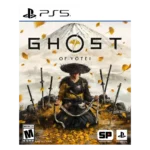
Ghost of Yōtei Feature Scores
Explore all 80 feature scores for Ghost of Yōtei, organized into pros and cons.
Scores by Feature
Summary
80 reviewed features-
Very positive 4.5-5.035 (44%)
-
Positive 3.5-4.431 (39%)
-
Neutral 2.5-3.411 (14%)
-
Negative 1.5-2.43 (4%)
Pros
Sort
-
Visuals receive near-universal praise, from stunning fidelity and landscapes to screenshot-worthy environments and color.
-
Combat is the most broadly praised system, with fluid parries, weapon-swapping, violent impact, and strong duels; criticisms focus on rigidity or fatigue in the rock-paper-scissors weapon setup.
-
Navigation is strongly praised for wind guidance, readable maps, organic discovery, spyglass/map ideas, and low UI clutter.
-
Atsu is widely praised as a compelling, complex, fiery, and memorable lead who gives the sequel a stronger identity.
-
Exploration is one of the strongest areas, often called rewarding, organic, and meaningful, though one dissenting review finds it over-guided.
-
The narrative is generally praised as emotional, well-executed, and compelling, but some reviewers criticize predictability, structure, or linear revenge beats.
-
Reviewers repeatedly describe the game as enjoyable, addictive, and fun from start to finish, even when noting formulaic elements.
-
The open world is widely praised for beauty, density, organic discovery, and restraint, with dissenting notes about repetition, over-guidance, or familiar structure.
-
Voice acting receives strong praise, especially Erika Ishii’s performance and the English/Japanese voice casts.
-
The soundtrack receives strong praise for atmospheric Japanese instrumentation, shamisen motifs, memorable songs, and cinematic tension.
-
Quest design is a major strength in many reviews thanks to memorable tales, bounties, organic side stories, and worthwhile rewards, though Eurogamer sharply dislikes the formulaic sidequests.
-
Environmental detail earns strong praise for realistic items, dense foliage, weather, light, and painstakingly crafted spaces.
-
Load times are one of the clearest technical wins, with reviewers calling travel and boot-to-game transitions near-instant.
-
Performance feedback is very positive overall, with strong PS5/PS5 Pro stability, polished execution, and few performance complaints.
-
Reviewers strongly praise the painterly visual identity, lighting, color, and intentional environmental effects, with only mild familiarity concerns.
-
Reviewers frequently describe the story as moving, affecting, and emotionally rich, including moments that brought tears or strong sympathy.
-
Sound design is consistently praised for environmental audio, combat effects, and the way it supports immersion.
-
Reviewers praise the amount of meaningful activities and handcrafted diversions, while a few note that repeated open-world tasks can become chores.
-
Progression is praised for tying upgrades to exploration and skill shrines, though some reviewers want more depth or nuance.
-
Polish is a recurring strength, with reviewers calling the release premium, cinematic, and impressively crafted despite a few bugs or animation rough edges.
-
DualSense haptics and touchpad integrations are widely praised, especially wind, riding, rain, music, and activity feedback.
-
Weapon balance is praised for distinct tools and effective counters, but mixed overall because several reviewers find weapons too situational or favorite weapons underpowered outside matchups.
-
Atsu’s arc is praised for emotional clarity, redemption, growth, and a more intimate character focus than the predecessor.
-
Most reviewers report few or no serious bugs, though some mention an odd freeze, minor technical issues, or rare late-game disruptions.
-
Yōtei is viewed as a worthy successor that preserves Ghost of Tsushima’s best ideas while refining them around Atsu.
-
PS5-specific features are mostly praised, especially PS5 Pro modes and DualSense use, though some touchpad/motion gimmicks are considered distracting.
-
Stealth is enjoyable and viable, especially with chain assassinations and tools, but several reviewers call it basic or largely unchanged.
-
The atmosphere is consistently framed as a major strength, emphasizing contemplative tone, environmental mood, and cinematic immersion.
-
Frame-rate evidence is very positive, including stable pacing, smooth transitions, and rock-solid 60 FPS in PS5 Pro modes.
-
The supporting ensemble is viewed positively in several reviews, though some reviewers find side figures underused or shallow.
-
Upgrades are praised for being tied to exploration, weapons, armor, charms, and mastery activities rather than pure XP grinding.
-
General mechanics are praised as refined and improved, though some reviewers call them reused rather than evolutionary.
-
Duels and boss-style encounters are usually exciting and memorable, though one reviewer criticizes duel advantages as artificial.
-
The core loop is repeatedly described as compelling, hard to put down, and more fruitful than Tsushima for some reviewers.
-
HUD and marker restraint are praised for keeping the view clear and helping exploration feel less like a checklist.
-
Value sentiment is positive where reviewers call the game worth buying or a must-play, supported by long playtime and substantial content.
-
Parrying, quick selection, and combat inputs are praised, but one review flags the overall control system as demanding.
-
Difficulty is mostly praised for rewarding patience and offering customization, though critics cite easy challenge, high damage, or artificial duel constraints.
-
Facial animation is praised in cutscenes and Atsu’s expressions, with reviewers noting visible emotion and strong performance capture.
-
Replay value is supported by a large map, many activities, and difficulty-based return reasons, but lack of new game plus limits the endgame.
-
Skill depth is praised where charms, loadouts, weapon skills, and spirit attacks allow specialized builds and granular tuning.
-
Combat animation is often praised for brutality and style, but several reviewers note repetition or less-polished NPC/casual dialogue animation.
-
The wolf companion is generally appreciated as a useful and flavorful aid, but some reviewers expected it to be more impactful or frequent.
-
Pacing is divisive: Game Informer praises it as a triumph, while several reviewers cite predictability, prolonged beats, or odd act structure.
-
Enemy variety is positively noted through more weapon matchups, multiple factions, and a better range of enemies than before.
-
Mission design is generally positive for diverse objectives and strong campaign structure, though some side mission design is criticized elsewhere.
-
Writing is praised for creative freshness and emotional ambition, but one dissenting review calls it conventional blockbuster material.
-
Side character depth is mixed, with praise for strong companions and villains but criticism that many allies or supporting figures lack involvement.
-
Fast travel is strongly praised as instantaneous or highly respectful of the player’s time.
-
Movement is praised for fluidity, especially in combat flow and traversal compared with the predecessor.
-
Immersion is a major strength through world navigation, sound, and minimal HUD, though occasional technical or duel design issues can break it.
-
Platforming and climbing are mixed: one review says climbing is improved, while others call it awkward or overly gamified.
-
Enemy perception receives positive attention where stealth is described as sound-driven, with enemies reacting to audio as well as sight.
-
Resource balance is praised where simplified material categories and less strict upgrade paths encourage more engagement.
-
Loot evidence is positive where quests and conflicts reward Atsu with valuable loot, information, and clues that feed exploration.
-
Lore depth receives positive but limited support through mythic tales and storytelling sequences that expand the world’s legends.
-
Freedom is moderate: reviewers appreciate loose target order and player-directed wandering, but note that some freedom is an illusion.
-
World-building is mixed-to-positive: Ezo’s culture and social context are compelling, but some reviewers wanted broader supporting context.
-
Checkpoint evidence is limited but positive for convenience, with one reviewer noting instant respawns and mid-fight boss checkpoints that reduce punishment.
-
Crafting/resource gathering is lightly but positively scored because materials are more generalized, making upgrades easier to engage with.
-
Learning curve evidence is positive but modest, emphasizing learn-by-doing design that mirrors Atsu’s practice and attention rather than heavy explanation.
-
Mission variety is lightly positive, with praise for varied missions in different places and diverse objectives.
-
Onboarding is initially intimidating for some, but reviewers say the discovery and indicator systems become enjoyable once learned.
-
Tutorial/onboarding evidence is modestly positive, praising learn-by-doing design and seamless early teaching.
-
Visual-effects evidence is positive but limited, with reviewers appreciating enhanced particles, blood, mud, wind, and cinematic environmental effects.
-
UI evidence is mixed: restrained maps and menus are praised, but one reviewer reports low-contrast text and hard-to-see map elements.
Cons
Sort
-
Puzzle design receives a low score from a reviewer who calls several puzzles overly simple and almost pointless.
-
The only explicit age-appropriateness judgment warns against younger players because of bloody violence, mature themes, language, drug use, frightening scenes, and slight nudity.
-
The family-friendliness score is low because the only explicit family guidance warns against younger gamers due to violence and mature content.
-
The only scored aiming-related evidence is negative, with one reviewer saying auto-targeting hindered them and contributed to deaths.
-
The only scored level-design evidence is critical, describing certain mission spaces as single-route and overly linear.
-
Menu usability has a specific criticism around a hard-to-see reticule and low-contrast text.
-
Dialogue and delivery are mixed: some conversations carry emotion well, but several reviewers call line delivery stilted or conversations dated.
-
Grind sentiment is mixed-to-negative where repeated side activities, collectibles, or checklist tasks create fatigue over time.
-
Accessibility evidence is limited and mixed: TechRadar notes helpful subtitles, visibility, control simplification, and combat assists, but says the suite is lighter than some PS5 peers and lacks colorblind options.
-
Crash evidence is limited to one reviewer reporting two late-game crashes, while most other technical impressions lean stable.
-
Originality is moderate: reviewers repeatedly say Yōtei does not revolutionize the formula, but many accept that as focused refinement.
-
Innovation scores trend moderate because reviewers describe Yōtei as refinement rather than reinvention, with familiar systems made better.
-
Endgame evidence is mixed: there are post-story tasks and challenge reasons to return, but one review notes no new game plus and another says late content can feel samey.
-
Camera feedback is mixed: one reviewer says it is improved, while others cite visibility problems or off-screen/camera-management friction.