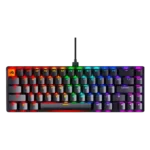
Glorious GMMK 2 Feature Scores
Explore all 47 feature scores for Glorious GMMK 2, organized into pros and cons.
Scores by Feature
Summary
47 reviewed features-
Very positive 4.5-5.020 (43%)
-
Positive 3.5-4.424 (51%)
-
Neutral 2.5-3.43 (6%)
Pros
Sort
-
Customization options were one of the broadest strengths, spanning switches, keycaps, software, RGB, firmware, and modding.
-
Build quality was widely praised; reviewers repeatedly described the board as solid, sturdy, weighty, well-built, or premium for the price.
-
Value for money was strongly positive, with many reviewers calling the GMMK 2 compelling, budget-friendly, or excellent for its price.
-
RGB lighting quality was a major highlight, often described as vivid, bright, attractive, or unusually impressive for the class.
-
Hot-swappable switches were a standout feature, letting users swap switches without soldering and making the board beginner-friendly.
-
Reviewers consistently liked the Fox linear switches for smooth, soft, quiet, or satisfying feel, though a few noted break-in time or wanted other switch types.
-
Gaming performance was broadly positive, with reviewers reporting responsive, enjoyable, and reliable play across casual and competitive use.
-
Frame rigidity scored strongly because reviewers found little to no flex, sturdy aluminum framing, and a case that resisted twisting.
-
RGB customization was praised for software effects, presets, layers, and per-key or individual color control, with some platform limitations noted separately.
-
Materials quality was generally strong, with praise for aluminum, weight, and sturdiness, while some reviewers noted the plastic lower case as a tradeoff.
-
Sound dampening was praised because the foam reduced noise, improved sound, and helped avoid hollow or high-pitched acoustics.
-
Design aesthetics were usually praised for attractive colors, clean styling, and strong RGB presentation, though some disliked exposed switches or specific colors.
-
Ease of switch replacement was praised as simple, quick, and accessible with included tools and hot-swap support.
-
Typing comfort was strong, with reviewers citing low fatigue, smoothness, and easy adjustment during long writing or daily use.
-
Typing feel was one of the strongest areas, with reviewers calling it sublime, smooth, excellent, or otherwise pleasing.
-
Acoustics were generally praised as satisfying, full-bodied, or surprisingly good, though one reviewer heard some hollow sound.
-
Backlight brightness was mostly praised as bright and vivid, though one reviewer found the ABS caps slightly subdued the effect.
-
Noise level was usually considered quiet or controlled, though one reviewer found the board a bit louder than a HyperX board.
-
Latency control was viewed positively, especially when reviewers lowered input latency for more responsive or more competitive gaming.
-
Software quality was split: reviewers liked Core's ease and flexibility, but criticized Windows-only support, bugs, and cheap-feeling polish.
-
Reviewers who discussed responsiveness found the keys fast and dependable in gaming and typing, with no missed inputs in tested use.
-
Size and form factor were generally praised for compactness and retained functionality, but reviewers mentioned learning curves or compressed key clusters.
-
Layout options were mostly appreciated for 65% and 96% choices, although some reviewers wanted a tenkeyless option or noted compressed layouts.
-
Polling-rate adjustment was treated as a useful performance-tuning feature, though most praise came as part of the broader software/performance controls.
-
Macro customization was a useful strength, with reviewers praising macro creation, layers, shortcuts, and programmable keybinds.
-
Legend visibility was praised because shine-through legends and side/front markings made the keyboard easier to use in dim settings.
-
Durability evidence was positive, including drop survival, expected long life, and ease of long-term repair.
-
Profile management was praised where tested, especially saving multiple profiles for different uses through software or onboard memory.
-
Desk space efficiency was a clear strength for the compact 96% and 65% layouts, especially for users who need mouse room.
-
Per-key lighting control was viewed as a strong customization advantage, especially through software and individual-key lighting options.
-
Key stability was generally strong, with comments about stable keys, reduced wobble, and a smoother switch feel.
-
Keycaps drew mixed reactions: reviewers liked the feel, legends, and higher-than-usual ABS quality, but many wanted thicker or PBT caps.
-
Reliability evidence was positive but limited, with reviewers noting perfect macOS operation and a reliable, enjoyable overall experience.
-
Cable quality was mixed, with praise for decent or compatible cables but criticism of stiffness and packaging kinks.
-
Portability was positive for the 65% model and compact weight, although it was not presented as an ultra-light travel board.
-
Stabilizer quality was mixed: some reviewers praised lubed or rattle-free stabilizers, while others complained about scratchiness, mushiness, or spacebar issues.
-
Connectivity was mixed: wired USB connections worked reliably, but one reviewer treated wired-only operation as a downside.
-
Onboard memory was positively mentioned for saving profiles and settings, but evidence was limited to a few reviews.
-
Ergonomics were mixed: some liked the angle and long-use comfort, while others found the height, legs, or lack of wrist support uncomfortable.
-
Compatibility evidence was positive but limited, with one reviewer reporting smooth use across Windows, Mac, consoles, and Android.
-
Switch choice was praised through barebones and hot-swap flexibility, but several reviewers criticized the limited prebuilt factory option.
-
Volume control was usable through function-key commands, though the same review noted no physical volume roller or knob.
-
Media controls were functional but somewhat limited because control relies on function shortcuts rather than a physical knob or roller.
-
Extra gaming features were present but described as standard rather than exceptional in the tested review evidence.
Cons
Sort
-
Wrist support drew mixed evidence: one reviewer wanted a wrist rest included, while another liked the separate wrist-rest accessory.
-
Actuation consistency was mixed: reviewers liked the switches after use, but several noted they needed break-in time before feeling consistent.
-
Key spacing was mixed because the compact layouts were usable for some reviewers but caused accidental presses or adjustment for others.