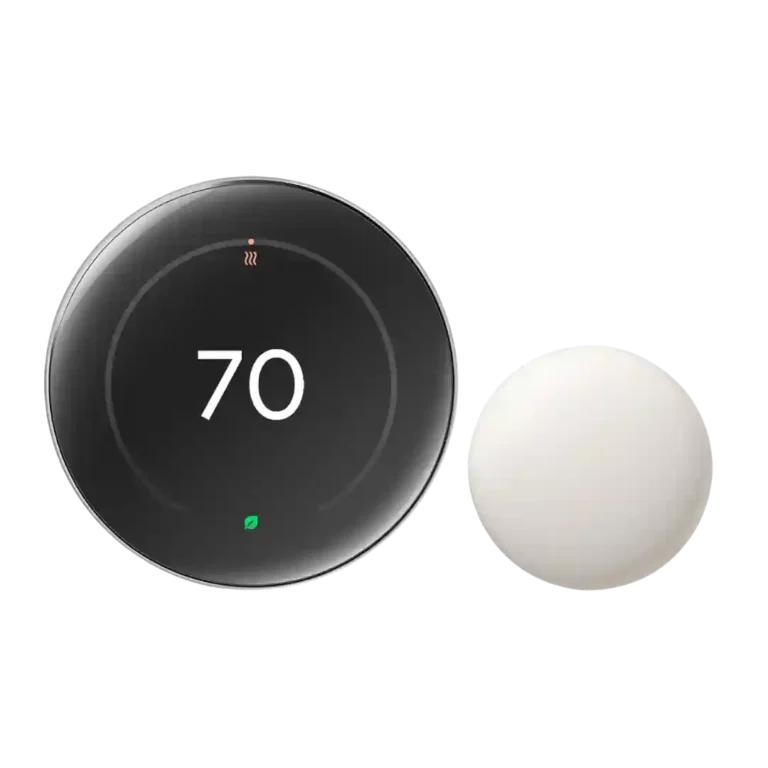
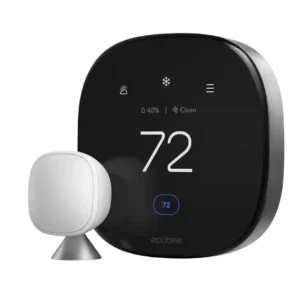
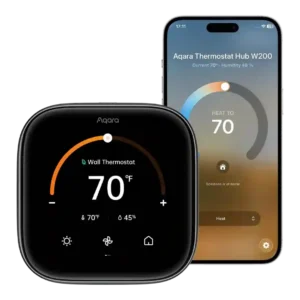
- Similar: price tier and category position The Ecobee Smart Thermostat Premium is presented as a similarly priced high-end smart thermostat alternative.
Google Nest Learning Thermostat 4th Gen Review
Bottom Line
Choose it if you want a premium-looking thermostat with Matter, strong learning, room sensors, and polished controls. Skip it if the price, Google-account dependence, or occasional setup/presence-sensing hiccups outweigh the smart features.
Best for smart-home users who want a premium wall display, Matter/Apple Home flexibility, Google Home control, learning automation, and room-sensor comfort tuning. It especially fits buyers willing to let the thermostat adapt over time.
Not for budget-focused buyers, people avoiding Google Home or a Google account, or homes where precise manual schedules matter more than learning automation. It is also less compelling if presence sensing or setup issues would be deal-breakers.
Reviewer evidence points to a premium smart thermostat that earns its reputation mostly through design, learning features, Matter support, and the included room sensor. The strongest praise centers on the polished display, satisfying dial controls, easy Google Home scheduling, and the way sensors and AI can adjust comfort across rooms. The tradeoff is that some reviewers ran into setup friction, Wi-Fi/account requirements, or presence sensing that was less reliable unless phone location was used. Value is also context-dependent: several reviewers felt the features and finish justified the cost, while others called it spendy or unnecessary if you will not use the advanced automation.
Compared in Reviews
Products reviewers directly compared with this model, grouped into quick takeaways.
Braeburn thermostat
- Worse: design and controls The reviewer portrays the Nest as a major aesthetic and functional upgrade over the old Braeburn thermostat.
Ecobee smart thermostat
- Compared: energy savings The reviewer compared bills against an Ecobee smart thermostat but could not make a firm savings conclusion.
Feature Scorecards
Summary
39 reviewed features- Very positive 4.5-5.0 46% 18 features
- Positive 3.5-4.4 41% 16 features
- Neutral 2.5-3.4 13% 5 features
- Negative 1.5-2.4 0% 0 features
- Very negative below 1.5 0% 0 features
Pros
-
Temperature accuracy was excellent in lab testing, with the measured difference described as too small to notice.
-
Apple Home/HomeKit support was a clear win for Apple-focused reviewers, with reliable Apple Home control noted after setup.
-
Matter support was repeatedly treated as a standout upgrade that broadened platform choice and future-proofing.
-
Voice control was praised as convenient and immediate, especially through Google speakers and voice assistants.
-
Design and finish quality received the strongest agreement, with reviewers repeatedly calling it sleek, beautiful, premium, or art-like.
-
Learning and auto-schedule features were consistently praised for adapting to preferences, routines, and temperature changes.
-
The Google Home app was generally considered easy for scheduling, setup, and adjustments, with praise for clear controls.
-
The included Room Sensor was a recurring highlight for tracking or prioritizing rooms away from the main thermostat.
-
On-device controls were widely liked for the intuitive dial, smooth turning, satisfying press/twist interaction, and premium feel.
-
Smart-home ecosystem compatibility was a major strength, especially through Matter and cross-platform flexibility, though Google ecosystem commitment remained a caveat.
-
Scheduling flexibility was a strength, with reviewers citing plentiful temperature events, manual schedule options, and suggestion/auto modes.
-
Adaptive intelligence was praised for using weather, humidity, sun, and behavior context to adjust comfort more intelligently.
-
C-wire flexibility was praised as a practical installation advantage because the thermostat can work without a common wire in some setups.
-
Multi-room balancing was praised for helping reduce hot/cold room differences and fine-tuning whole-home comfort.
-
Display feedback was strongly positive, with reviewers praising readability, a larger screen, Farsight behavior, and animated/weather views.
-
Remote control was viewed as reliable and convenient through apps and Apple Home, with only minor lag or update delay mentioned.
-
Alexa support had limited but positive evidence through Matter-based cross-platform control and voice-assistant flexibility.
-
Manual override flexibility was positive, with reviewers liking approval/rejection of suggestions and full manual control.
-
Equipment diagnostics were viewed positively for potentially spotting HVAC problems before they become costly.
-
Reviewers saw broader system support as a plus, especially the expanded backplate compatibility noted against older Nest models.
-
Google Home support was positive where reviewers valued integration with Google smart-home devices and Google voice control.
-
Room prioritization controls were valued for scheduling around specific sensors or zones during different parts of the day.
-
The included mounting/back plate was useful for fitting existing holes or covering wall imperfections during installation.
-
HVAC maintenance alerts had limited positive evidence, with one reviewer calling system-health monitoring nice and preventative.
-
Setup guidance was usually praised for app prompts, visual aids, and wiring help, but one reviewer reported opaque errors and failed setup attempts.
-
Energy-saving recommendations were a major positive, though one reviewer stressed savings depend on habits and may take time to show.
-
Comfort consistency was generally positive, especially with AI and sensors, but default eco-leaning presets could feel uncomfortable.
-
Most reviewers found installation approachable and well-guided, though one reviewer had a notably poor setup experience that took hours.
-
Energy reporting was useful but lightly covered, with evidence around informed energy choices and dashboard data.
-
Value was context-dependent: reviewers liked the premium features, but price was repeatedly framed as high or only worth it for the right user.
-
Geofencing was mixed: phone-location presence was described as more reliable, but Away mode initially took longer for one reviewer.
-
Presence automation was useful when it worked, but reviewers noted imperfections with motion sensing and household phone-based detection.
-
Away mode was split: some reviewers liked automatic away behavior, while others found delays or false eco switching.
-
Humidity sensing/helper features were useful, but one reviewer warned the dehumidifying behavior could be costly or overcool the home.
Cons
-
Wi-Fi stability had limited evidence; one reviewer only reported a minor connection hiccup during setup.
-
Occupancy detection was mixed, with one reviewer praising distance sensing and another finding thermostat-only motion detection ineffective.
-
Utility demand-response/Nest Renew support was only lightly covered and received a mixed note about limited peak-hour time-frame setup.
-
Physical press feedback was praised in one review, but other reviewers criticized the lack of a true touchscreen.
-
Shared household access had limited mixed evidence, mainly around presence detection when one app owner leaves while someone remains home.
Compared With Category Average
Compared with other Smart Thermostats, this product is above average in Matter support, HVAC system compatibility depth, multi-room balancing effectiveness, below average in touchscreen responsiveness, occupancy detection accuracy.
Summary
8 compared features- Above average 0.4+ pts higher 75% 6 features
- Same as average within 0.3 pts 0% 0 features
- Below average 0.4+ pts lower 25% 2 features
| Attribute | This product | Category average | Difference |
|---|---|---|---|
| touchscreen responsiveness | 3.2 | 4.6 | -1.4 |
| Matter support | 4.7 | 3.5 | +1.3 |
| HVAC system compatibility depth | 4.4 | 3.4 | +1.0 |
| multi-room balancing effectiveness | 4.5 | 3.7 | +0.8 |
| occupancy detection accuracy | 3.4 | 4.2 | -0.9 |
| C-wire requirement flexibility | 4.5 | 3.6 | +0.9 |
| Room Sensor | 4.6 | 3.9 | +0.7 |
| wall-mount fit and footprint | 4.4 | 3.6 | +0.8 |
FAQ
Is the Nest Learning Thermostat 4th Gen easy to install?
Most reviewers found installation straightforward with app guidance, visual aids, and wiring prompts. One reviewer had a much worse experience with opaque errors and a setup that took hours, so installation confidence may depend on the home and account setup.
Does it work well with Apple Home?
Yes, reviewers highlighted Apple Home support through Matter as a major upgrade. One Apple-focused reviewer found Apple Home control reliable and fast, though Nest room sensors did not appear in Apple Home.
How useful is the included Room Sensor?
Reviewers repeatedly treated the Room Sensor as a standout feature. It helps the thermostat account for rooms away from the main device, supports room-based scheduling, and can improve whole-home temperature balance.
Does the thermostat really learn your schedule?
Reviewers generally said the learning and smart schedule features worked well, adapting to manual adjustments, routines, weather, and other conditions. Some still preferred suggestion or manual modes for more control.
Are there drawbacks to Away mode or presence sensing?
Yes. One reviewer liked automatic away behavior, but another found Away mode slow at first, and a different reviewer said thermostat-only motion sensing could switch to eco while someone was still home.
Is it worth the higher price?
Reviewers were split by use case. It was considered worth it for buyers who value the design, Matter support, learning features, room sensors, and automation, but several reviewers described the price as high or only justified for premium-feature users.
Consider This Instead
If you want better touchscreen responsiveness
Choose Ecobee Smart Thermostat Premium. It scores 5.0 vs 3.2 for touchscreen responsiveness, with a 4.4 overall score.
If you want better Wi-Fi stability
Choose ecobee Smart Thermostat Enhanced. It scores 5.0 vs 3.4 for Wi-Fi stability, with a 4.3 overall score.
If you want better humidity sensing
Choose ecobee Smart Thermostat Essential. It scores 4.8 vs 3.6 for humidity sensing, with a 4.0 overall score.
Overall Top Smart Thermostats Alternatives
Best for polished design, easy controls, strong sensors, and useful energy data. Skip it if you want the cheapest thermostat or do not need premium extras like air quality, voice...
Pros: conventional HVAC compatibility, touchscreen responsiveness
Cons: presence-based automation
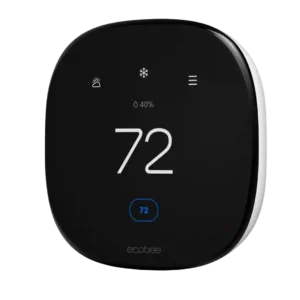
Good if you want an easy, clear smart thermostat with strong app, display, scheduling, and ecosystem support. Skip it if you need Premium-only sensors, built-in Alexa, air-quality monitoring, or deeper...
Pros: Wi-Fi stability, Apple Home/HomeKit support
Cons: utility demand-response support, HVAC system compatibility depth
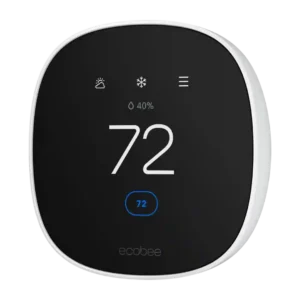
Choose it if you want a premium-looking thermostat with Matter, strong learning, room sensors, and polished controls. Skip it if the price, Google-account dependence, or occasional setup/presence-sensing hiccups outweigh the...
Pros: temperature accuracy, Apple Home/HomeKit support
Cons: shared household access, touchscreen responsiveness
Best for easy controls, strong smart-home support, and budget value. Skip it if you need Matter, bundled room sensors, advanced learning, or a no-C-wire install without extra parts.
Pros: temperature accuracy, humidity sensing
Cons: included C-wire adapter, Matter support