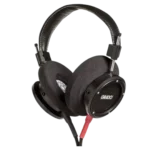
Grado Signature S750 Feature Scores
Explore all 42 feature scores for Grado Signature S750, organized into pros and cons.
Scores by Feature
Summary
42 reviewed features-
Very positive 4.5-5.020 (48%)
-
Positive 3.5-4.410 (24%)
-
Neutral 2.5-3.46 (14%)
-
Negative 1.5-2.45 (12%)
-
Very negative below 1.51 (2%)
Pros
Sort
-
Midrange performance is a standout across the board, with vocals described as vivid, tangible, crisp, and highly intelligible. Acoustic instruments also benefit from strong presence and clean articulation.
-
The S750 is consistently praised for exceptionally revealing, natural sound with strong musical engagement. Even the more critical takes on fit and hardware still describe the listening performance as a major strength.
-
Build quality is usually a strength, thanks to aluminum construction, solid hardware, and careful finishing. Most reviewers describe it as rugged or beautifully built, although one felt some headband details looked and felt cheaper than expected.
-
Fine detail retrieval is one of the most consistent strengths, revealing low-level textures, room cues, vocal nuances, and layers in familiar recordings. The presentation is highly informative without always becoming clinical.
-
Detachable mini-XLR cabling is widely treated as a major Grado improvement. Swappable lengths and balanced terminations make the S750 far easier to adapt to different amplifiers and listening positions.
-
Complex mixes stay exceptionally easy to untangle, with instruments and voices given clear space and localization. Dense orchestral, jazz, and rock passages remain layered rather than collapsing together.
-
A broad, open soundstage is one of the S750’s defining strengths, often described as huge, airy, lifelike, or extending well beyond the earcups. One reviewer found the stage less expansive, but still accurate and breathable.
-
The S750 handles both large dynamic swings and subtle microdynamics with unusual speed and control. Rhythm, transient attacks, and changing intensity stay composed even in dense music.
-
Imaging is exceptionally precise, with stable placement and clear localization across the stage. Reviewers repeatedly describe instruments and voices as easy to position in a convincing three-dimensional space.
-
Overall satisfaction is high because the S750 repeatedly delivers memorable, engaging sound. The strongest reservations center on physical comfort and premium-price ergonomics rather than the core audio performance.
-
Mini-XLR connections and optional cable lengths or balanced terminations give the S750 unusually flexible wired connectivity. Reviewers liked being able to tailor the cable setup to different sources and room layouts.
-
Recommendations are strong for dedicated audiophile use, especially for listeners who prize detail, openness, and spatial precision. Fit, source matching, and price make an audition advisable before buying.
-
Reviewers who focused on tonal accuracy heard a lifelike, uncolored, and convincing balance with precise timbre. The S750 favors faithful presentation over added warmth or bass emphasis.
-
Bass is generally tight, articulate, and well controlled rather than boosted for impact. Most reviewers call it lean or restrained for bass-heavy music, though one heard unusually deep, powerful sub-bass when the recording demanded it.
-
Treble is detailed, airy, and extended, but opinions depend on tolerance for brightness. Several reviewers found it controlled and clean, while others warned that hot recordings or louder listening can make the upper range harsh.
-
The industrial Grado look remains distinctive, with several reviewers praising its retro, minimalist, or elegant execution. A dissenting view felt the physical appearance did not match the premium price.
-
Extra headband padding is generally seen as a meaningful improvement over older Grados. Most reports are positive, but one reviewer still found the padding meager and insufficient for the price.
-
The S750 is not uniformly source-agnostic: several reviewers heard clear gains with capable amplification, while one pairing lost clarity and openness. Good amplification can unlock more resolution, but system matching matters.
-
The restrained swivel range and reinforced metal hardware are designed to reduce wear over time. Reviewers discussing the assembly viewed it as rugged and well suited to regular use.
-
Value depends on what you prioritize: $1,695 is repeatedly called expensive, yet several reviewers think the sonic performance competes above its price class. Buyers paying for comfort, accessories, or luxury finish may find the equation less convincing.
-
One publication gave the S750 a Product of the Year Award before its full review, reflecting unusually strong enthusiasm for its sonic performance. That recognition reinforces how highly its sound was regarded there.
-
With the right source, the S750 can sound deeply immersive as well as analytical. Its vivid vocals, speed, and spacious presentation can make well-recorded music feel immediate and involving.
-
The aluminum construction can feel appropriately premium, but luxury impressions are not unanimous. One reviewer thought the materials justified the positioning, while another said the pads and headband did not feel luxurious at all.
-
Stability depends heavily on fit and movement. The reinforced hardware is described as secure, but one wearer found the headphones would not stay put while moving their head at a desk.
-
The S750 keeps Grado’s recognizable identity while cleaning up the presentation into a more modern, minimalist profile. The look is distinctive without becoming ornate.
-
The limited 105-degree cup rotation is presented as a sensible durability choice, preserving useful flexibility while reducing wear. It favors controlled movement rather than full swivel freedom.
-
The S750 responds well to external EQ, with one reviewer adding low-end weight through Roon without damaging speed or articulation. That makes subtle tonal correction more viable than on some earlier Grados.
-
The stock B cushions are not the only fit option. Compatibility with Grado G, F, and L cushions gives owners a practical route to change how the S750 sits on the head.
-
Owners can swap the stock B cushions for other compatible Grado pad shapes to change fit. That flexibility is useful for listeners who do not get along with the default on-ear geometry.
-
High-volume behavior is mixed: some listeners heard clean, glare-free treble at significant levels, while another found the brightness increasingly harsh as volume rose. The result appears especially dependent on recording quality and treble sensitivity.
Cons
Sort
-
These are poor travel headphones: the open-back leakage, substantial weight, and insecure movement reported by some listeners work against commuting. Their strengths are much better suited to stationary home listening.
-
Sound leakage is an unavoidable downside of the open-back design and is serious enough to rule out many shared or public spaces. Quiet private listening is the intended environment.
-
The package is sparse for the asking price. Reviewers specifically criticized the lack of a case and the absence of multiple cable choices in the box.
-
The open-back construction offers little practical isolation from noisy surroundings. It is better suited to quiet home listening than portable use in busy environments.
-
Practical portability is poor despite the detachable cable. Open-back leakage, weight, and the lack of suitability for noisy environments keep the S750 focused on stationary listening.
-
The raw foam pads can hold noticeable body heat. That may become uncomfortable during warmer or more active use, even though the headphone is primarily intended for stationary listening.
-
Clamp is inconsistent across head shapes rather than universally comfortable. One reviewer found it overzealous and tiring, another described the design as firm, while another thought the fit was too loose.
-
The Signature Gold cable is lighter and softer than older Grado designs, but cable ergonomics remain divisive. Critics still found it heavy, stiff, or awkwardly sized for common listening setups.
-
The familiar friction-rod headband adjustment works effectively, but its presentation divides opinion. One reviewer preferred its simple function to ornate mechanisms, while another thought it felt crude for the price.
-
The new B cushions improve comfort for some listeners but are strongly fit-dependent. They can distribute pressure well, yet the flat on-ear foam felt poorly fitting or uncomfortable to others.
-
At about 460 g, the S750 is lighter than some Signature siblings but still feels heavy to several reviewers. The reduced mass helps versus larger models, yet weight can undermine stability and long-session comfort.
-
Long-session comfort is the biggest point of disagreement. Some listeners wore the S750 for hours comfortably, while others found the on-ear pressure, foam, weight, or fit tiring within a short period.