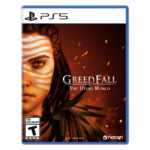
GreedFall: The Dying World Review Feature Scores
Explore all 83 feature scores for GreedFall: The Dying World Review, organized into pros and cons.
Scores by Feature
Summary
83 reviewed features-
Very positive 4.5-5.019 (23%)
-
Positive 3.5-4.421 (25%)
-
Neutral 2.5-3.417 (20%)
-
Negative 1.5-2.417 (20%)
-
Very negative below 1.59 (11%)
Pros
Sort
-
World-building is the clearest consensus strength. Distinct factions, cities, cultures, political tensions, languages, and historical parallels give Gacane and Teer Fradee a rich identity.
-
Cities, forests, tribal spaces, ambient audio, and dense environmental detail create a strong sense of place. The setting is often more compelling than the systems layered on top of it.
-
Quests are frequently at their best when multiple talents, companions, or approaches can solve the same problem. Some companion and side quests are excellent, though repetitive errands and obvious solutions weaken the overall consistency.
-
The orchestral score is a standout, repeatedly praised for atmosphere, emotional weight, and its fit with the 17th-century-inspired setting.
-
Difficulty sliders, combat profiles, and even invincibility earn broad praise for letting players reshape the experience. A few limitations remain, but this is one of the game’s most consistently liked systems.
-
Towns, forests, architecture, lighting, and distant vistas are frequently praised for density and detail. Environments are often the strongest part of the presentation.
-
Several players find the opening effective at establishing culture, mechanics, and stakes, while others think it runs far too long. As an introduction to the world it is rich, but patience is required.
-
Faction standing, companion loyalty, quest resolutions, and the ending can respond meaningfully to decisions. The freedom is not absolute, though, and some major narrative situations feel more constrained than the game initially suggests.
-
Lore remains a major strength, with factions, cultures, history, languages, and political tensions giving the world a depth that keeps players invested even when other systems falter.
-
Exploration is generally rewarding, with larger regions, distinctive cities, side paths, loot, and multiple quest routes. Backtracking, sparse stretches, or scripted paths can make traversal drag in weaker sections.
-
The story has strong ideas, a compelling perspective shift, and memorable companion material, but opinions split on execution. Slow pacing, simplistic villains, constrained agency, and uneven follow-through keep the narrative from matching its ambition for everyone.
-
The strongest role-playing moments let players combine talents, companions, dialogue, stealth, and combat to forge their own route through a problem.
-
The 17th-century-inspired look, architecture, lighting, and regional styling give the game a distinctive visual identity, even when its brown-heavy palette wears thin.
-
The strongest companion stories and late-game narrative beats can land with real emotion, especially when the game focuses on displacement, loyalty, and personal consequences.
-
Companions are often one of the game’s best features, with faction-specific perspectives and personal quests that add texture to the world. The roster is uneven, however, and a few characters feel rushed or unfinished.
-
The environments, lighting, costumes, and overall visual upgrade can look impressive, but texture issues, dated character work, and uneven performance keep the presentation from feeling consistently modern.
-
The deeper mix of talents, attributes, tactical profiles, party roles, and build options gives mechanically minded players a lot to experiment with.
-
The core cast is generally strong and helps sell the setting’s languages and political drama. Secondary performances and accent consistency are more uneven.
-
There is substantial build freedom across weapons, roles, attributes, talents, and companion trees. That depth is rewarding for tinkerers but can become confusing or overly specialized for others.
-
Crafting can meaningfully improve armor, gear, potions, and builds, and several players enjoyed its depth. Others found it overly complicated, mandatory, or burdensome when paired with weak inventory tools.
-
Character creation and build freedom are much improved and can support very different play styles. Cosmetic options are less consistent, with some reviewers finding faces, hair, or beard choices too limited.
-
The class framework supports tanks, damage dealers, healers, ranged builds, magic, and hybrids with useful flexibility. Some builds are more awkward or less rewarding than others.
-
There is plenty to do across exploration, side quests, faction work, party management, and combat, although some areas and activity types feel more repetitive than the overall scope suggests.
-
Playing a Teer Fradeean native gives the story a fresh point of view, and the protagonist can be a compelling vehicle for the game’s themes and role-playing choices.
-
Controller mapping can make a complex tactical system surprisingly manageable, but unresponsive skills and awkward inputs show up often enough to keep controls from feeling uniformly polished.
-
Cities and regions are larger and more distinctive than before, and some quest spaces reward alternate routes. Other areas feel linear, repetitive, or visually under-varied.
-
Branching approaches, faction outcomes, relationships, and build choices create reasons to replay, although technical friction may make some players reluctant to start over.
-
Ambient effects and general audio work help sell the world, though the soundscape is praised less consistently than the music or voice cast.
-
The different combat profiles make tactical complexity adjustable, letting players decide how much direct party management they want.
-
Companion questlines can give party members full character arcs, making relationship-building one of the more rewarding parts of the adventure.
-
The large, varied companion roster stands out for its different personalities, faction ties, and roles, even if individual characters are not equally developed.
-
Generous autosaves soften the impact of technical problems by keeping forced reloads from costing much progress.
-
The perspective shift and willingness to build an entire RPG around colonialism, displacement, and tactical party play make the game feel unusually ambitious and distinctive.
-
Talents and role-playing skills can open genuinely different ways through missions, rewarding diplomacy, stealth, mechanics, or direct confrontation.
-
Gear upgrades are satisfying because they visibly and statistically strengthen the party, adding another useful layer to equipment customization.
-
Lighting and effects can be striking, adding polish to environments and combat even when the broader presentation has rough edges.
-
Enemy groups can create useful tactical pressure by having melee units rush the party while ranged foes take positions behind them.
-
Outside combat, the semi-open loop of exploration, investigation, conversations, and quest-solving is solid and gives the RPG a stronger rhythm.
-
Looted materials feed directly into crafting and upgrades, giving resource gathering a useful purpose rather than making it feel purely collectible.
-
Its character-focused political RPG structure occupies an uncommon niche, pairing old-school role-playing with a setting and thematic focus that feel different from most fantasy games.
Cons
Sort
-
Bugs are one of the clearest problems at launch, ranging from missing prompts and broken quests to combat glitches, visual errors, and characters behaving incorrectly.
-
The launch feels under-polished to many reviewers, with bugs, crashes, typos, awkward UI, animation problems, and unfinished-feeling content recurring throughout otherwise ambitious work.
-
Menus are a consistent source of frustration. Inventory comparison, sorting, skill management, and party upgrades can be clunky enough to make routine maintenance tedious.
-
Pacing is one of the most common complaints. Long prologues, slow tactical fights, exposition, and stop-start quest progression can make the game feel far more sluggish than its best moments deserve.
-
The interface struggles under the weight of the game’s systems. Cluttered combat screens, weak comparison tools, and awkward skill or inventory layouts make information harder to manage than it should be.
-
Crashes appear across PC and console experiences, sometimes only occasionally and sometimes often enough to interrupt progress. A few players had relatively stable runs, but launch stability is clearly uneven.
-
The world can look busy without behaving convincingly. Looting in plain sight, passive NPCs, and scripted interactions often make inhabitants feel more like scenery than participants.
-
Camera problems frequently get in the way, including lockups, awkward tactical framing, motion blur, and moments where positioning becomes hard to read.
-
Animations are a recurring weak point. Movement and combat often look stiff or dated, undercutting otherwise stronger environments and character models.
-
Enemy variety is thin for a long RPG. Human factions dominate many encounters, and repeated animals or similar combat roles make battles feel familiar well before the campaign ends.
-
Tutorials are a major weak point for a system-heavy RPG, often explaining only the basics while leaving players to untangle complex combat, UI, talents, and party mechanics themselves.
-
Faces often struggle to sell emotion, with rigid expressions and weak lip-sync making dramatic scenes look oddly lifeless.
-
Targeting can be frustratingly unreliable, with attacks or selected targets sometimes shifting in ways that make combat feel imprecise.
-
Performance varies sharply by platform and mode. Some runs stay mostly steady, while others report visible slowdowns, frame drops, or major compromises between resolution and smoothness.
-
Several reviewers think the full launch price is hard to justify in such a buggy, unfinished state and recommend waiting for a sale. More positive takes point to the large RPG scope and long playtime.
-
Difficulty is highly uneven. Flexible settings help, but reviewers repeatedly describe punishing spikes, spongey enemies, and encounters that can feel mismatched with nearby fights.
-
Navigation tools are undercooked, with limited markers and quest-location issues making it harder than necessary to manage a large world.
-
Stealth can open alternate quest routes, but it is underdeveloped and inconsistent. Limited tools, weak feedback, and odd companion behavior make sneaking less satisfying than diplomacy or direct combat.
-
Romance is one of the more uneven relationship systems: one take praises fully fleshed-out paths, while several others call the arcs thin, formulaic, or lacking meaningful follow-up.
-
Technical performance is inconsistent across platforms and modes. Some systems run the game cleanly, while others suffer blur, stutter, frame drops, texture problems, or poor resolution tradeoffs.
-
Loading is excellent in some runs and painfully slow in others. Fast travel can be nearly instant, yet late-game or console transitions can stretch long enough to disrupt the experience.
-
The PS5 release does not use DualSense haptics or adaptive triggers, a conspicuous omission for a full-price console game.
-
Character movement can look and feel awkward, with running animations described as stiff and unnatural.
-
On PS5, the absence of DualSense-specific features makes the console implementation feel less complete than expected.
-
Combat is the game’s biggest dividing line. Some enjoy the deeper real-time-with-pause tactics and party control, while many others find fights slow, clunky, repetitive, or less satisfying than the first game’s action combat.
-
Party automation is inconsistent: some players found allies sensible about healing and skill use, while others saw companions lag behind, pick bad targets, or fail to attack.
-
There are many overlapping systems to absorb, and the opening can feel overwhelming or clunky. Once the mechanics click, the flexibility becomes easier to appreciate.
-
Progression can force extra fighting or leveling before difficult encounters, and that grind becomes especially frustrating when combat itself is not clicking.
-
The scope is large, but side missions can become scarce or formulaic after the opening, leaving parts of the world feeling less populated with meaningful diversions.
-
The semi-open structure has appealing regions and freedom once it opens up, but some reviewers find the world too scripted, sparse, or restrictive to fully deliver on its open-ended promise.
-
Autosaves can be generous and protective, but some players still encountered save-related or progression problems that make manual saving feel important.
-
Build progression offers meaningful stat, talent, skill, and gear choices, but uneven XP rewards and lots of manual party management can make leveling feel inconsistent or tedious.
-
The setting, language, atmosphere, and world detail can be absorbing, but bugs, passive NPCs, companion oddities, and technical hiccups repeatedly break the illusion.
-
A few environmental riddles and dungeons provide welcome variety, but some puzzles are so heavily signposted that they barely require deduction.
-
The broad weapon roster encourages experimentation, though certain weapon types or builds feel more useful and smoother than others.
-
The final act responds to faction and companion choices, but its momentum can sag just before the credits, leaving the ending more mixed than the build-up suggests.
-
Guardian encounters can be striking and tactically demanding, but human bosses are often much less memorable and can feel easier than ordinary mobs.
-
Dialogue ranges from strong character moments to exposition-heavy or overly simple exchanges. The best conversations deepen companions and politics, while weaker scenes can feel blunt or underwritten.
-
Gear drops are satisfying when they feed customization and visible outfit changes, but poor level matching and inventory friction can make much of the loot feel useless.
-
Writing swings from thoughtful, mature political and companion material to blunt exposition, simplistic villains, and awkward thematic handling. Its ambitions are strong, but execution is uneven.
-
Fast travel can be quick and useful once points are unlocked, but late-game backtracking, ship transitions, and long loads on some platforms can turn routine travel into a chore.
-
The world, lore, companions, and role-playing DNA still feel recognizably GreedFall, but the combat overhaul is a major break from the first game and remains a point of contention for returning fans.
-
Enjoyment depends heavily on tolerance for the new combat and technical roughness. Players who click with the world and RPG systems can have a great time, while others find the friction exhausting.