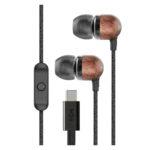
House of Marley Smile Jamaica Feature Scores
Explore all 31 feature scores for House of Marley Smile Jamaica, organized into pros and cons.
Scores by Feature
Summary
31 reviewed features-
Very positive 4.5-5.08 (26%)
-
Positive 3.5-4.414 (45%)
-
Neutral 2.5-3.45 (16%)
-
Negative 1.5-2.43 (10%)
-
Very negative below 1.51 (3%)
Pros
Sort
-
Wood, aluminum, braided fabric, and colorful finishes give these earbuds a distinctive look that feels more premium than the price suggests. Appearance is one of the most consistently praised qualities.
-
Certified wood, recycled PET, recyclable aluminum, and low-plastic design make these stand out among cheap earbuds. Reviewers consistently value the eco-conscious materials and brand mission.
-
Sound, comfort, style, and materials frequently exceed expectations at the low asking price. The value drops sharply when a unit suffers early cable or connector failure.
-
Most reviewers find the small, rounded, lightweight earbuds comfortable, including during hours of listening. Users who dislike deep in-ear tips may experience pressure or pain after extended wear.
-
Most listeners find the sound clear, lively, and unusually enjoyable for the price across many genres. A smaller group reports thin, noisy, defective, or less-refined playback, so consistency is not perfect.
-
The in-ear seal does a good job reducing office chatter, gym noise, and higher-frequency distractions. Deep rumbles still pass through, but isolation is strong for an inexpensive wired earbud.
-
Several tests found the earbuds remain controlled at high volume, with little distortion and no obvious harshness or tinniness. That is an impressive strength for this price class.
-
Call quality is usually clear and easy to understand, and several buyers describe the microphone as excellent for the price. A few units produce feedback or perform poorly for calls.
-
USB-C versions are convenient, adapter-free, and immediately usable with many modern phones and devices. A few buyers report connector failure or audio dropping back to the phone, raising consistency concerns.
-
The compact, lightweight housings sit comfortably without adding noticeable weight. Their low mass is especially helpful for longer listening sessions.
-
Vocals and instruments are usually clean and easy to follow, especially for inexpensive earbuds. Heavy bass can push lower vocals backward or reduce definition in some tracks.
-
Many users get a snug, secure seal, including people with small ears, and some wear them confidently at the gym. Others need deeper insertion or report that the earbuds fall out easily.
-
Most buyers and experts consider these attractive, comfortable, good-sounding earbuds that deliver excellent value. Satisfaction becomes sharply negative when fit, cable noise, connector reliability, or early failure problems appear.
-
The small wired design is easy to carry in a pocket or bag and works well for travel. The cable also prevents either earbud from being easily lost.
-
The braided cable is widely praised for resisting tangles, looking good, and sometimes surviving rough use. Complaints center on cable-borne noise, thin or fragile wires, tangling on some units, and failures near the connector.
-
Leakage is generally well controlled for normal listening and busy environments. In very quiet places, sound may still escape at levels some people find noticeable.
-
The USB-C version connects easily to smartphones and many modern devices. Its broad plug-and-play compatibility is a practical advantage.
-
The wired connection is genuinely plug-and-play, with no pairing, app setup, or charging routine. It is a straightforward backup for users tired of wireless maintenance.
-
Individual instruments remain reasonably distinct for budget earbuds, and guitar lines can stay clean instead of blending together. Fine separation and intricate detail still trail more expensive models.
-
The tuning is generally clean and consumer-friendly rather than studio-neutral. Depending on the version and listener, elevated bass can make the balance feel less accurate.
-
One older remote is reported to work with both iOS and Android, but the USB-C instructions restrict some commands to iPhone. Android users should expect basic audio support but potentially limited controls.
-
The earbuds can create a pleasing sense of space with percussion and simpler arrangements. Larger or more symphonic recordings may feel somewhat constrained.
Cons
Sort
-
The basic play, pause, track, and call functions are usable, but the missing volume buttons are a repeated frustration. Some versions also limit commands by phone platform.
-
Fit stability depends heavily on ear shape and tip choice. Some users report a secure gym-ready seal, while others say the earbuds repeatedly fall out.
-
One customer reported the earbuds sent shocks into their ears on first use, making that unit unusable. This is an isolated but serious safety complaint.
-
The USB-C package reviewed here includes no carry case, leaving the earbuds to travel loose in a pocket or small bag.
-
Experts often praise the solid wood-and-aluminum construction, reinforced plugs, and premium feel. Customer durability is much more mixed, with reports of separated wires, dead channels, defective units, and early connector failure.
-
External EQ can add bass punch, midrange energy, brightness, and detail. Pushing it too far also increases boominess, sibilance, and upper-mid harshness.
-
Tip selection varies by package, ranging from one spare pair to three sizes. Several reviewers say the limited sets may not suit unusually large or small ears without aftermarket tips.
-
Highs are often crisp and free from harshness, with good clarity for the price. Some listeners notice mild sibilance, limited sparkle, or a thin, tinny edge.
-
Bass is the most divisive part of the tuning: some hear deep, punchy lows, while others find it bloated, blended, or too weak. The older 3.5mm versions are more often described as bass-heavy than the newer USB-C model.