If you want better Battery life (if portable)
Choose JBL Go 4. It scores 4.3 vs 3.7 for Battery life (if portable), with a 4.1 overall score.
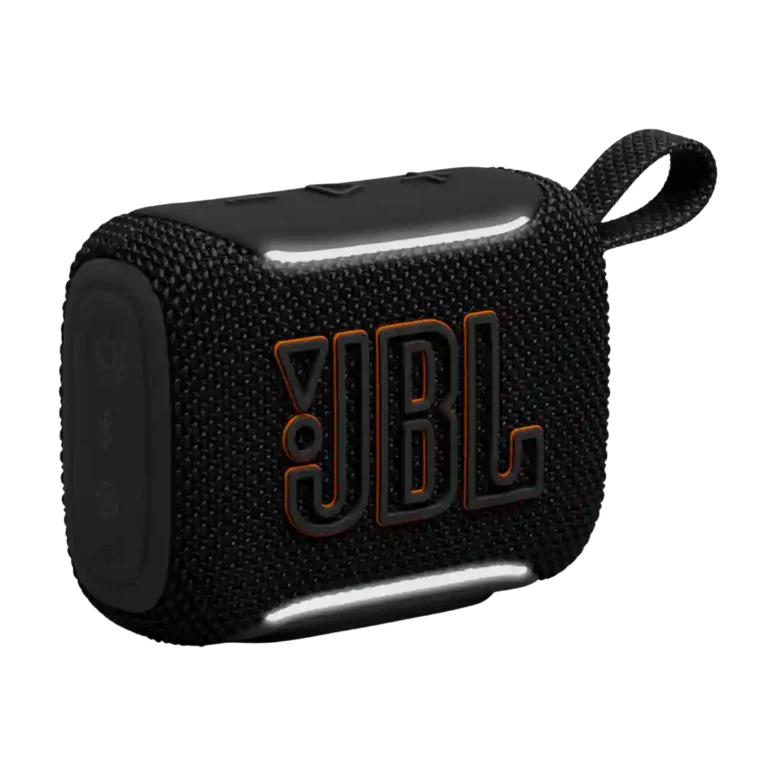
Choose it for unusually clear, punchy sound, pocketable IP68 durability, and effortless AirTouch stereo pairing. Skip it if you need deep bass, room-filling output, long battery life at high volume, or completely dark, app-free operation.
Travelers, students, desk listeners, shower users, and outdoor buyers who want strong sound in the smallest practical package will benefit most. It is especially appealing to anyone who may add a second Go 5 for effortless stereo.
It is a poor fit for buyers seeking deep sub-bass, large-room or party output from one unit, all-day high-volume battery life, a built-in speakerphone, or completely dark operation without relying on the app.
Reviewers consistently find the JBL Go 5 unusually capable for a palm-sized speaker. Its strongest advantages are clear, lively sound, punchy bass for the size, rugged IP68 construction, pocket-friendly portability, useful EQ control, and near-instant AirTouch stereo pairing. USB-C lossless playback and broad Auracast support make it feel more advanced than a typical budget mini speaker. The limits are equally consistent: one unit cannot deliver deep sub-bass or fill large spaces, and real-world battery life varies widely with volume and lighting. Playtime Boost adds runtime by noticeably thinning the sound. The fixed-color LEDs are polarizing, especially because status flashes may remain visible in dark rooms, and the missing charging cable frustrates many buyers. For first-time buyers, the overall package is compelling; Go 4 owners gain refinement rather than a transformation.
Compared with other Portable Bluetooth Speakers, this product is above average in Wired input, Audio format support, Backwards compatibility, near average in Design and aesthetics, Overall satisfaction, below average in Energy efficiency, Speakerphone quality, LED lighting effects.
| Attribute | This product | Category average | Difference |
|---|---|---|---|
| Energy efficiency | 1.9 | 3.6 | -1.7 |
| Wired input | 4.3 | 3.1 | +1.1 |
| Audio format support | 5.0 | 3.5 | +1.5 |
| Backwards compatibility | 4.0 | 2.7 | +1.3 |
| Smart features | 5.0 | 3.5 | +1.5 |
| Weight convenience | 4.8 | 3.8 | +1.0 |
| Bluetooth codec support | 4.3 | 3.1 | +1.2 |
| Speakerphone quality | 1.5 | 2.8 | -1.3 |
Choose JBL Go 4. It scores 4.3 vs 3.7 for Battery life (if portable), with a 4.1 overall score.
Choose JBL Xtreme 5. It scores 4.7 vs 4.3 for Loudness / maximum volume, with a 4.0 overall score.
Choose Sony ULT Field 5 Speaker. It scores 4.2 vs 2.7 for LED lighting effects, with a 4.0 overall score.
Choose KEF Muo. It scores 5.0 vs 2.0 for Microphone, with a 4.1 overall score.
Products reviewers directly compared with this model, grouped into quick takeaways.
Reviewers overwhelmingly praise its clear mids, crisp highs, punchy tuning, and surprising loudness. Deep sub-bass and large-room scale remain beyond what its tiny driver can deliver.
The common rating is about eight hours, or up to ten with Playtime Boost. Hands-on reports range from roughly four hours at demanding settings to around nine hours at moderate volume, and Boost noticeably reduces bass.
Reviews consistently treat its IP68 water and dust protection and drop-resistant build as major strengths. Users report successful shower, poolside, rain, dirt, and accidental-drop use.
Yes. AirTouch lets two Go 5 units form a true left-right pair by touching them together, and reviewers generally find the process fast and reliable.
Auracast can synchronize it with several current compatible JBL models, including the Go 4. True AirTouch stereo requires two Go 5 units, and older PartyBoost products are not fully supported.
No cable is included according to many supplied reviews, and this is a frequent customer complaint. Buyers need an existing compatible USB-C cable and power source.
The app can disable the main lighting themes, but several customers report that system or status flashes can still appear. This makes the speaker divisive for dark bedrooms and movie watching.
Most reviewers say the Go 5 is the better first purchase, with improved durability, EQ, connectivity, USB-C audio, and slightly stronger sound. Existing Go 4 owners generally do not need to upgrade unless those additions matter.
These are a few of the reviews included in our analysis.

![JBL Go 5 Review - The Best Tiny Speaker Just Got Smarter! [REVIEW]](https://servicedig.com/wp-content/uploads/2026/05/60062_thumb-150x150.webp)


Experience the JBL Go 5’s compact design and impressive sound quality in this detailed review of the best budget Bluetooth speaker.
Discover what’s new in the JBL Go 5 vs Go 4. From refreshed design to ambient lighting and improved battery life, is it worth the upgrade?
The JBL Go 5 is an excellent small-sized speaker that improves on just about everything that we loved about its previous incarnation.
The Go 5 is the smallest speaker in the JBL family, and arguably the cleverest. It remains one of the easiest recommendations
5s all around for JBL’s fifth-gen budget speaker
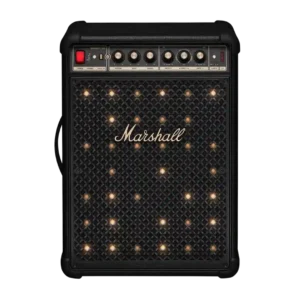
Best for powerful 360° sound, exceptional battery life, premium styling, and flexible mic/instrument inputs. Skip it if you want a light, inexpensive speaker or deep app-based control.
Pros: Stereo imaging accuracy, Multi-speaker pairing reliability
Cons: Remote control usability, Bluetooth codec support
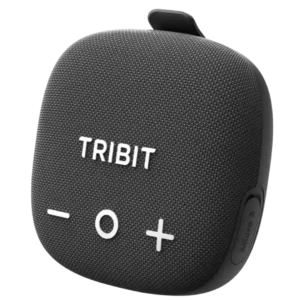
Choose the StormBox Micro 3 for rugged travel, magnetic mounting, long battery life, strong value, and surprisingly full sound. Skip it if you need premium codecs, aux input, refined detail,...
Pros: Stereo imaging accuracy, Setup simplicity
Cons: Wired input, Backwards compatibility
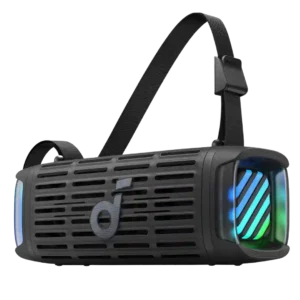
Good if you want a rugged, floating outdoor speaker with loud, bassy sound, useful app extras, and strong value. Skip it if you need refined stereo audio, wired input, reverse...
Pros: Price / value for money, On-device controls
Cons: Power bank function, Wired input
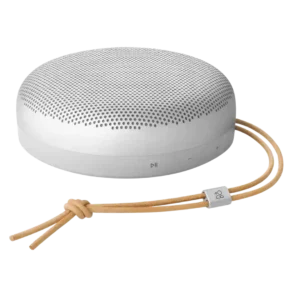
Choose the Beosound A1 3rd Gen if you want a compact luxury Bluetooth speaker with polished sound, long battery life, and premium build. Skip it if value, maximum volume, AirPlay/Wi-Fi,...
Pros: Multi-speaker pairing reliability, Handle or strap quality
Cons: Wi-Fi streaming reliability, AirPlay compatibility