Choose them for cool, all-day over-ear comfort, outstanding awareness, and spacious sound at a fair price. Skip them for loud commutes, deep bass, strong isolation, compact portability, or if shallow earcups and reported firmware glitches concern you.
Best for
Best for home workers, walkers, runners, parents, and over-ear fans who prioritize natural awareness, cool comfort, clear vocals, and spacious sound over isolation or heavy bass.
Not for
Skip them for airplanes, subways, loud commutes, bass-heavy listening, competitive gaming, or if you need ANC, an IP rating, a 3.5mm jack, console-ready compatibility, or guaranteed clearance around larger ears.
Verdict
The JLab JBuds Open succeed at a rare idea: breathable over-ear headphones that keep the outside world naturally audible. Most reviewers praise their low weight, long-session comfort, clear mids, broad soundstage, dependable Bluetooth, multipoint, USB-C audio, and useful app. They also deliver more bass than many open-ear earbuds and generally control leakage well at moderate volume. The tradeoffs are fundamental rather than minor. Ambient noise can overwhelm playback, maximum volume is limited, sub-bass is light, and there is no ANC, IP rating, LDAC, aptX, or 3.5mm input. Fit is also unusually personal because shallow cups let the driver housing touch some ears, while a smaller group reports random spatial-mode changes, channel dropouts, or phase problems. For the right listener, the value is excellent; for commuters, bass fans, and fit-sensitive buyers, it is risky.
Awareness is the defining strength: users can hear traffic, coworkers, family, conversations, and outdoor activity naturally while listening. Very loud surroundings can overpower the music, but the safety and openness are exceptional.
Google Fast Pair works quickly, and Android users report an easy setup with the JLab app. The Android experience is considered convenient and less intrusive than some competing apps.
Multipoint connectivity reliability: 4.9, based on 7 reviews
Multipoint is one of the strongest features, with reliable two-device connections and convenient automatic switching. Transfers can take a few seconds, but users generally find them seamless.
Instrument separation and imaging are standout strengths, especially with orchestral, acoustic, jazz, and vocal material. Reviewers frequently hear clear placement, fine detail, and room between parts.
USB-C is unusually useful here because it handles charging and wired digital playback, sometimes simultaneously. It reduces latency and provides a practical alternative when Bluetooth is inconvenient.
Pairing is generally fast, stable, and easy across phones and computers, with strong reported range. Bluetooth 6.0 and Fast Pair make everyday wireless use a clear strength.
Glasses and hat compatibility: 4.8, based on 2 reviews
Glasses wearers report hours of use without frame pressure, and one remote worker finds the fit comfortable over a baseball hat. Accessories on the head generally pair well with the lightweight clamp.
Most users find the headphones exceptionally light and barely noticeable during long sessions. A small minority calls them heavy or bulky, but the dominant experience is excellent weight comfort.
Most users praise the cool, breathable fit and wear the headphones for hours without fatigue or sweaty ears. Comfort is highly ear-shape dependent, because shallow cups can press the driver housing directly against some ears.
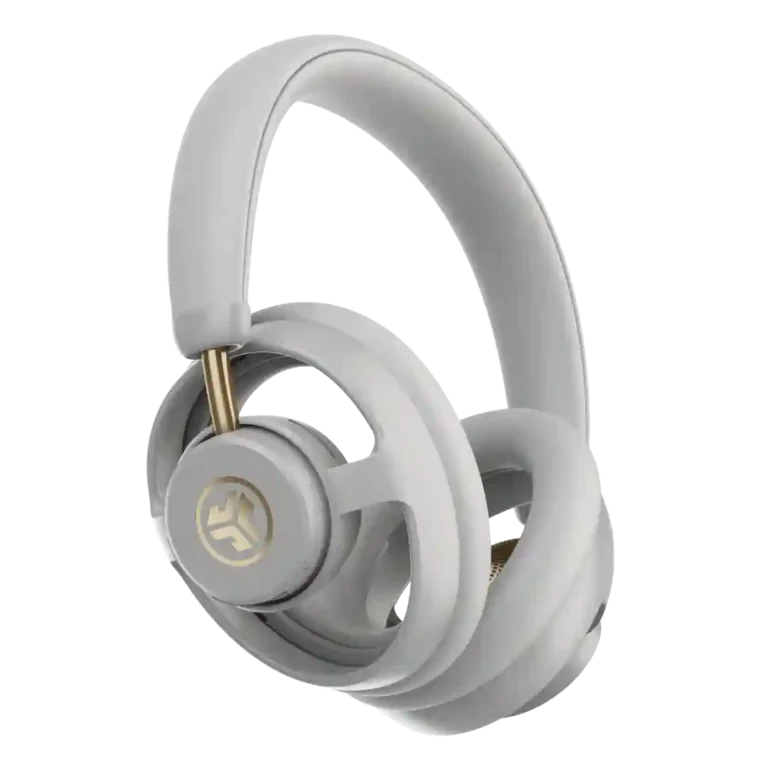
The removable grilles and sci-fi open frame look distinctive and earn plenty of praise, but the styling is undeniably divisive. Limited colors, visible bulk, and the unconventional shape will not suit everyone.
The open structure produces a broad, spacious presentation that suits orchestral, jazz, movies, and acoustic music. It is wider than most open earbuds, though not always as natural or expansive as traditional wired open-backs.
Vocals, dialogue, guitars, and acoustic instruments are consistently clear and well represented. The mid-forward balance is one of the most dependable parts of the sound.
Quick charging is a strong point, with short top-ups providing hours of playback and a full charge taking roughly two and a half hours. Several owners simply describe charging as very fast.
The frame and pad area remain quiet during head and jaw movement, with little creaking or groaning reported. Mechanical noise should not distract during listening.
The flexible joints feel reassuring rather than fragile, with no obvious sense that they will snap during normal adjustment. Long-term durability is less established.
An included soft sleeve or case is widely appreciated at this price and offers useful protection in a bag. Its partially open design leaves the headband and interior more exposed than a full hard case.
Most reviewers consider the headphones a strong value around $99 and especially compelling when discounted. Buyers who dislike the thin sound, shallow cups, or limited durability see the same price as difficult to justify.
Most users get dependable all-day or multi-day use, generally around the high teens to low twenties in hours. It trails long-lasting closed-back rivals, and one overnight user needed near-daily charging.
Microphone quality for calls: 4.3, based on 7 reviews
Call quality ranges from merely serviceable to excellent, with most users remaining clearly audible. Some voices sound boomy, distant, or slightly unclear, but open-ear conversation feels more natural.
The headphones stay secure during running, rollerblading, and ordinary movement, with clamp pressure helping during exercise. Very small heads may find the fit too loose.
The app offers a 10-band EQ, control remapping, listening modes, spatial audio, connection management, and a useful volume limiter. Most find it easy and functional, though the interface, upselling, and occasional software problems draw criticism.
Most buyers love the unusual combination of breathable over-ear comfort, awareness, spacious sound, and reasonable pricing. The product remains niche because fit, loud-environment performance, bass depth, and a small cluster of firmware defects produce sharp negative reactions.
The sound is generally clear, detailed, airy, and strong for the price, with excellent vocals and separation. Critics hear a thin, mid-heavy presentation with weak low-end body, limited loudness, or firmware-related echo.
A detailed 10-band custom EQ is unusually generous for the price and gives users meaningful control. Some reviewers still prefer the default tuning because manual changes can reduce bass or volume.
The customizable physical buttons are usually responsive, easy to locate, and preferable to touch controls. One owner found them extremely small and difficult to distinguish.
Microphone noise reduction: 4.0, based on 1 review
The noise-reducing microphone captures speech effectively in ordinary use. It helps keep voice intelligible, though detailed performance in very harsh noise is less certain.
Leakage is often impressively low at moderate volume, especially with the grilles installed. It becomes clearly audible as volume rises, so quiet offices and close seating still require caution.
Active noise cancellation: 3.9, based on 8 reviews
There is no traditional ANC; the open design intentionally lets outside sound through. Some listeners enjoy avoiding ANC pressure or processing, but anyone seeking silence or strong commuting isolation should look elsewhere.
Most reviewers find the lightweight frame solid, flexible, and free of creaks, though the plastics do not feel premium. A few owners criticize thin pleather, nonreplaceable wear parts, or an early grille failure.
Preset EQ profile quality: 3.8, based on 2 reviews
The default JLab Signature tuning works well for some listeners, while Balanced can lose punch and Bass Boost can become bloated. Presets are useful starting points rather than universally better options.
Spatial audio is highly effective for movies, creating a convincing theater-like space for some users. For music, opinions are mixed because it can add reverb, weaken bass, or sound overly processed.
Memory foam and Cloud Foam feel soft and comfortable for many users, but the pads are shallow and sometimes too thin to prevent ear contact with the driver housing. Padding quality is therefore strongly fit dependent.
Clamp pressure is secure and generally manageable, helping the headphones stay put during movement. Some reviewers find it tight during long indoor sessions, especially when combined with shallow cups.
Audio-video sync accuracy: 3.5, based on 2 reviews
Movie mode can trim latency and improve dialogue for video, but gaming still carries a small delay. It is fine for casual viewing, not a dedicated low-latency gaming solution.
Treble can sound crisp, detailed, and lively, especially with vocals and instruments. Other reviewers hear shrill cymbals, flat highs, or spikes, making upper-frequency quality inconsistent.
Bass is punchier and fuller than many open-ear products, and some listeners find it surprisingly satisfying. Deep sub-bass and hard impact remain limited, however, leaving bass-focused users divided or disappointed.
Software/setup simplicity: 3.3, based on 6 reviews
Pairing and app setup are usually quick and straightforward, especially with Fast Pair. Missing paper instructions and unresolved firmware behavior make the experience less consistent than the easy first setup suggests.
Multi-platform compatibility: 3.0, based on 3 reviews
Phones, tablets, computers, and USB-C wired sources work well, but console support is uneven. Casual gaming is possible, while direct PS5 or Xbox use may fail or require extra hardware.
Built-in DAC and hi-res playback: 2.5, based on 1 review
USB-C digital audio is supported, but it does not unlock higher-resolution playback or a clear fidelity upgrade. Buyers seeking a hi-res wired DAC experience will be underwhelmed.
Maximum volume is a recurring weakness, particularly on noisy streets, public transit, and bass-heavy tracks. Output is adequate in quieter settings, but many users wish for more headroom.
Noise isolation (passive): 2.3, based on 3 reviews
Passive isolation is intentionally weak because the cups are extremely open. That is useful for awareness, but traffic, chatter, and transit noise can overwhelm the audio.
Ear cup swivel/rotation range: 2.0, based on 1 review
The cups swivel, but they do not rotate a full 180 degrees and the frame does not fold inward. That limitation annoys users who prefer headphones to lie flat in a particular direction.
Frequency response accuracy: 2.0, based on 1 review
The tuning is noticeably mid-forward with limited extension at both ends. Rolled sub-bass and inconsistent treble make it less natural and less reference-like than audiophile open-backs.
Wireless codec support is limited to SBC and AAC, with no hi-res option. The basic codecs are adequate for casual listening but frustrate enthusiasts who hear reduced detail.
LDAC is not supported, and several enthusiasts specifically miss it. Those sensitive to Bluetooth compression report reduced cymbal definition compared with LDAC or wired playback.
Water/sweat resistance rating: 1.5, based on 2 reviews
There is no official IP rating, which makes sweat, rain, and outdoor workouts a risk. The breathable fit feels workout-friendly, but protection is not guaranteed.
There is no 3.5mm jack, so traditional analog sources need an adapter or a second headset. USB-C audio works, but several buyers still wanted a standard aux connection.
Several customers report random sound-mode changes, channel cutouts, or left/right phase errors, especially with spoken content. Resets and disabling spatial audio did not consistently solve the problem for those affected.
Replacement pads are not readily available, which is a serious weakness for comfort and longevity. Owners with shallow-cup discomfort cannot simply install thicker pads.
The removable grilles are a fun idea, but one owner could not twist the pads off without fearing damage. Clearer instructions and an easier release would improve the experience.
At high volume, one critical listener found the upper frequencies piercing and fatiguing. Turning the headphones up to overcome ambient noise can worsen both harshness and leakage.
Thin, proprietary, nonreplaceable pads raise a legitimate e-waste concern if they wear out. The product offers little repairability for its most failure-prone soft parts.
Direct Xbox One and Series compatibility is not supported according to an owner. Console users should expect adapters or another headset.
Compared With Category Average
Compared with other Open-Ear Headphones, this product is above average in Active noise cancellation, Voice assistant integration, Instrument separation, near average in Battery, Design and Aesthetics, below average in Water/sweat resistance rating, Maximum volume clarity, Volume output.
Summary
45 compared features
Above average0.4+ pts higher
15(33%)
Same as averagewithin 0.3 pts
15(33%)
Below average0.4+ pts lower
15(33%)
Largest category differences
Attribute
This product
Category average
Difference
Water/sweat resistance rating
1.5
4.3
-2.8
Maximum volume clarity
1.0
3.8
-2.8
Active noise cancellation
3.9
1.8
+2.1
Volume output
2.4
4.0
-1.6
Multi-platform compatibility
3.0
4.8
-1.8
LDAC
1.5
3.2
-1.7
Codec support
1.8
3.6
-1.7
Voice assistant integration
5.0
3.5
+1.5
Consider This Instead
If you want better Maximum volume clarity
Choose Shokz OpenFit 2+. It scores 4.5 vs 1.0 for Maximum volume clarity, with a 3.9 overall score.
Better: battery lifeSony's flagship lasts longer per charge.
1More Sonoflow Pro HQ51
Better: battery lifeThe 1More model offers dramatically longer battery life with ANC active.
FAQ
Do the JLab JBuds Open have noise cancellation?
No. They are intentionally very open, so outside sound passes through naturally; that is excellent for awareness but poor for silence, flights, subways, or loud commutes.
How do the JLab JBuds Open sound?
Most reviewers hear clear mids, strong detail, good separation, and a wide soundstage. Bass is better than many open-ear earbuds, but deep sub-bass, warmth, and maximum loudness are limited.
Are the JLab JBuds Open comfortable for all-day use?
For most users, yes: they are light, breathable, and much cooler than sealed over-ears. However, the cups are shallow, and the inner driver housing can press against some ears.
How long does the battery last?
Real-world reports generally fall around 18 to 24 hours, enough for a full day or several shorter days. Quick charging is useful, though endurance is below many closed-back competitors.
Do they leak sound?
Leakage is usually modest at moderate volume, especially with the grilles installed. It becomes easier for nearby people to hear as volume rises, particularly in quiet offices.
Can they be used wired or for gaming?
They support USB-C digital audio but have no 3.5mm jack. Movie mode can reduce latency, yet gaming still has slight delay, and direct PS5 or Xbox compatibility may require an adapter or another headset.
What does the JLab app add?
The app provides a 10-band EQ, presets, button remapping, music and movie modes, spatial audio, multipoint management, firmware updates, and a helpful safe-volume limiter.
Sample Expert Reviews We Analyzed
These are a few of the reviews included in our analysis.

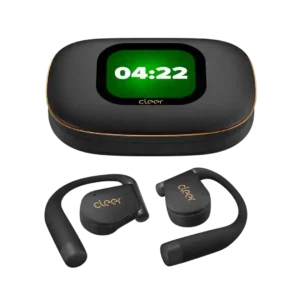
Best for all-day comfort, secure open-ear awareness, long battery life, and a genuinely useful touchscreen case. Skip it if deep bass, strong isolation, compact size, or consistently premium music quality...
Best for secure, comfortable open-ear workouts, strong battery life, and easier physical controls. Skip them if you need ANC, sealed-earbud sound, or the best value at full price.
Choose the Soundcore AeroClip if you want featherlight open-ear buds with strong comfort, secure fit, clear calls, and surprisingly full sound. Skip them if you need ANC, sealed-bud isolation, higher...
Best for open-ear comfort, secure runs, long battery life, and convenient wireless charging. Skip it if you need ANC, deep bass, LDAC, or earbuds that never shift under helmets, buffs,...
Pros: Clamping force comfort, Battery
Cons: Active noise cancellation, Noise isolation (passive)