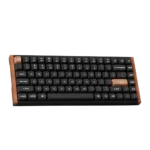
Keychron K2 HE Feature Scores
Explore all 51 feature scores for Keychron K2 HE, organized into pros and cons.
Scores by Feature
Summary
51 reviewed features-
Very positive 4.5-5.026 (51%)
-
Positive 3.5-4.413 (25%)
-
Neutral 2.5-3.411 (22%)
-
Negative 1.5-2.41 (2%)
Pros
Sort
-
Design aesthetics earned broad praise for wood accents, a premium office-friendly look, and a less-gamer visual identity.
-
Typing feel was overwhelmingly praised, often described as cloud-like, fluid, smooth, or among the best experiences reviewers had used.
-
Build quality was a consistent strength, with reviewers calling it solid, premium, rigid, and well made across editions.
-
Value for money was broadly positive because reviewers saw premium Hall effect features and design at a reasonable price, even if not cheap.
-
Switch feel was the standout attribute: reviewers repeatedly described the magnetic switches as smooth, stable, satisfying, and highly responsive.
-
Gaming performance was broadly positive, especially for responsiveness, rapid trigger, strafing, and clean repeated inputs, though pure esports comparisons were more guarded.
-
Customization was one of the strongest themes, with reviewers praising per-key actuation, remapping, lighting, macros, and Hall effect controls.
-
Rapid trigger support was one of the clearest strengths, repeatedly praised for instant reset, gaming movement, and fast repeat inputs.
-
Reviewers frequently liked the K2 HE's deeper, thocky, or satisfying sound, though one called it unadventurous rather than exciting.
-
Battery life was generally positive, ranging from several days to multiple weeks depending on RGB and wireless settings, with a few average assessments.
-
Software quality was mostly praised for a web-based Launcher that avoids bulky apps, though some reviewers found it less polished than competitors or dependent on USB/web access.
-
Connectivity was generally strong across Bluetooth, 2.4GHz, and wired use, though side-port design and occasional wake behavior created caveats.
-
Key stability was repeatedly praised, with reviewers noting little or no wobble from double-rail switches and stabilized larger keys.
-
Key responsiveness was a major strength, with reviewers repeatedly calling the board fast, highly responsive, or effortless to trigger.
-
Durability was inferred positively from sturdy construction, Hall effect longevity, and even an accidental drop test, with no major durability complaint.
-
Typing comfort was usually positive thanks to smooth switches and low fatigue, but height caused discomfort for some reviewers.
-
The Hall effect switches were repeatedly described as smooth and consistent, with only mild stiffness noted in one review.
-
Profile management was positive, with reviewers valuing locally stored profiles and separate typing/gaming setups.
-
Polling rate was considered adequate to good for most users at 1,000Hz, but not class-leading for top competitive gaming.
-
The 75% layout was praised for saving desk space while retaining essentials, though some users missed larger layouts.
-
Frame rigidity was praised in the reviews that discussed it, including no deck flex, rigid construction, and ultra-stable typing.
-
Compatibility was praised for Mac/Windows switching, Linux mentions, and cross-device use, with no major platform problem in scored evidence.
-
Advanced gaming features were praised as serious tools for competitive players, especially actuation tuning and rapid-trigger behaviors.
-
Keycap quality was mostly praised for PBT, OSA shape, and comfort, though a few reviews noted plain styling or material-saving concerns.
-
Macro customization was praised where discussed, especially because macros could be created in Launcher and retained across devices.
-
The size and form factor were generally viewed as a good 75% balance, but the compact layout and weight were not ideal for every user.
-
Materials quality came through in praise for aluminum, wood, concrete, PBT, and overall premium-feeling construction.
-
Stabilizer quality was mostly good, with several reviewers noting limited rattle or firm larger keys, but some still heard inconsistency.
-
Analog-style depth input was viewed as a useful advanced feature, especially for gamepad-like controls, though one reviewer saw it as more novel than essential.
-
Onboard memory was praised because mappings or settings stayed on the keyboard and transferred across devices.
-
Wrist rest quality was praised when reviewers tried Keychron's optional palm rest, though the need for one also reflected keyboard height.
-
Wireless performance was mixed: many reviewers had flawless Bluetooth/2.4GHz use, while others saw wake delay or 2.4GHz bugginess.
-
Sound dampening was praised for muted, premium, thocky sound from internal foam, silicone, and dampening layers.
-
RGB customization was praised for plentiful modes and settings, even when lighting visibility itself was not always ideal.
-
Noise level was generally acceptable to good, with reviewers describing it as quiet enough or not overly clicky, though not silent.
-
RGB lighting quality ranged from bright and attractive to partially blocked by opaque caps, making it version-dependent.
-
Switch replacement was possible, but the practical experience was constrained by limited compatible magnetic switch choices.
-
Latency evidence was mixed: several reviewers saw no noticeable lag, while one measured/characterized performance as not top-tier gaming latency.
-
Legend visibility depended on version: opaque Special Edition caps drew criticism, while font clarity and shine-through options were praised elsewhere.
Cons
Sort
-
Switch options were the most consistent limitation because compatibility is restricted to a small set of linear Gateron double-rail magnetic switches.
-
Hot-swap support was consistently treated as limited because the board only accepts compatible Hall effect double-rail switches.
-
Per-key lighting control was specifically criticized in one review for not supporting individual key color selection.
-
Backlight brightness split reviewers: some found it dim or redundant on opaque caps, while others praised brighter implementations.
-
Volume control was criticized mainly through the missing knob and reliance on remapping or function-row controls.
-
Media controls were a recurring weakness because reviewers wanted a knob or dedicated controls, despite remapping and function-row workarounds.
-
Portability was a weak-to-mixed area because weight and size made the board less travel-friendly despite compact dimensions.
-
Layout options were mixed: the 75% layout kept useful keys, but missing numpad, print screen, or full-size spacing bothered some users.
-
Reliability was mixed: some reviewers reported no issues or a reliable experience, while others noted wake or 2.4GHz input issues.
-
Key spacing was mixed, with smaller or tightly packed keys bothering some reviewers before they adjusted.
-
Cable impressions were mixed: the braided cable was praised, but several reviewers disliked the short length or side-port constraints.
-
Ergonomics were mixed: adjustable angles helped some reviewers, but keyboard height caused wrist strain for others.