If you want better cable length
Choose Ikea Varmblixt Smart Lamp. It scores 5.0 vs 3.5 for cable length, with a 4.4 overall score.
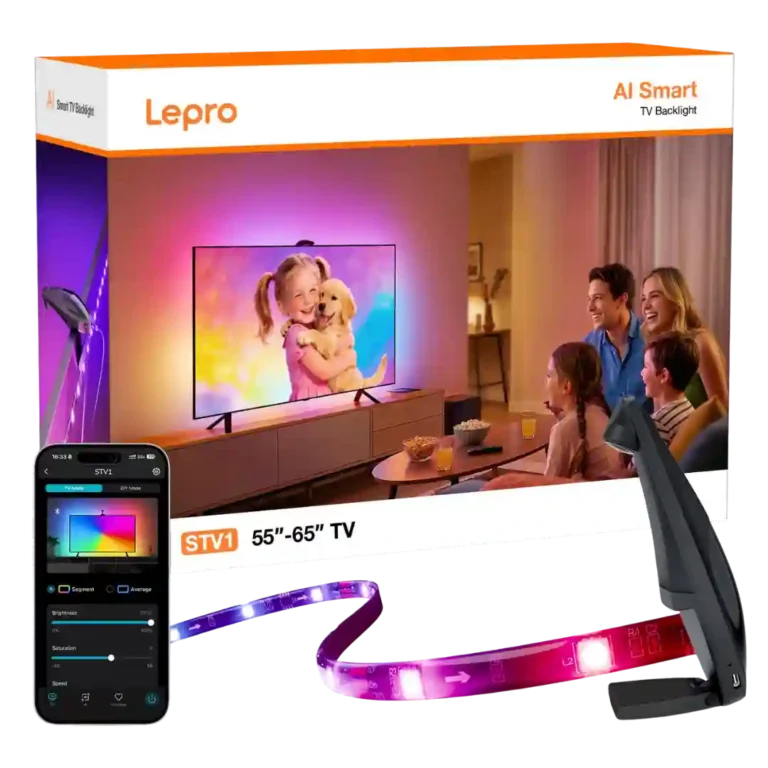
Choose it for fast, vibrant screen sync, strong brightness, and an app that is easy to control. Skip it if you have a dark wall, dislike a top-mounted camera, or expect the AI scenes to remain essential.
Best for movie, gaming, sports, and animation fans who want vivid reactive lighting without buying a separate HDMI sync box. It is especially well suited to dark rooms with a plain, light-colored wall.
Skip it if you strongly dislike a visible top-mounted camera, have a dark wall behind the TV, or need effortless pairing on a finicky 2.4 GHz network.
The Lepro STV1 succeeds because its core screen-sync experience is fast, bright, colorful, and convincingly immersive. Across movies, games, animation, and music, the RGBIC strip keeps multiple colors distinct, reacts with little visible lag, and produces a wide wall glow that can also ease harsh screen-to-room contrast. Installation is generally straightforward, the combined camera-controller reduces clutter, and the app earns unusually strong praise for simple control. The tradeoffs are mostly situational: light-colored walls produce the best results, the visible camera is less elegant than an HDMI-box system, one 2.4 GHz router needed repeated pairing attempts, and pure white can show slight tinting. AI-generated scenes are fun for parties and sports, but regular screen sync remains the feature most likely to justify the price.
Choose Ikea Varmblixt Smart Lamp. It scores 5.0 vs 3.5 for cable length, with a 4.4 overall score.
Products reviewers directly compared with this model, grouped into quick takeaways.
It is the most consistently praised feature. Reviewers found the colors quick enough to follow busy games, rapid cuts, and animation with little visible lag.
RGB colors are generally strong, vivid, and well matched to the screen. Pure white is less exact and may show slight pink or green tinting when viewed closely.
Most setups were described as simple and took roughly 15 minutes. Wall-mounted TVs may need to come down, and one 2.4 GHz router required several pairing attempts.
A dark room with a plain, light-colored wall produces the brightest and clearest glow. Dark walls can make the effect look noticeably muted.
They are fun for sports, holidays, and dance parties, and some generated themes worked surprisingly well. Several testers still preferred normal screen sync for everyday viewing.
The app was repeatedly praised as simple, responsive, and convenient for brightness, saturation, scenes, and behavior controls.
These are a few of the reviews included in our analysis.

In this Lepro STV1 review, GameRevolution takes a look at the new AI smart TV backlight for 2026. Is it worth buying?
The Lepro STV1 promises a smart, immersive lighting experience for your TV, but can it deliver? Find out in our review.
Lepro's lightstrip promises immersive entertainment without expensive hardware
Reactive backlighting is one of the best ways to enhance your Apple TV setup. It can also be an expensive...
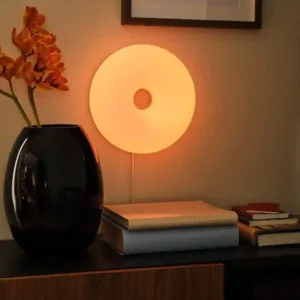
Best for sculptural, softly diffused mood lighting, flexible wall/table placement, and broad Matter integration. Skip it if you need strong task lighting, a compact cordless lamp, or friction-free pairing across...
Pros: lighting quality, minimum brightness
Cons: task lighting performance, beam spread
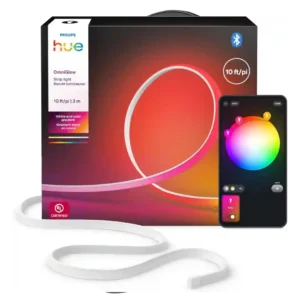
Choose OmniGlow for exceptionally bright, seamless Hue lighting that can serve as ambience or real room illumination. Skip it if you need dependable adhesive, discreet cabling, extendable runs, advanced pixel...
Pros: lighting quality, maximum brightness
Cons: cable management, fixture compatibility