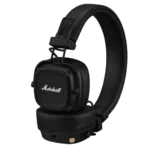
Marshall Major V Feature Scores
Explore all 68 feature scores for Marshall Major V, organized into pros and cons.
Scores by Feature
Summary
68 reviewed features-
Very positive 4.5-5.019 (28%)
-
Positive 3.5-4.431 (46%)
-
Neutral 2.5-3.49 (13%)
-
Negative 1.5-2.48 (12%)
-
Very negative below 1.51 (1%)
Pros
Sort
-
Battery life was the clearest consensus strength, with reviewers repeatedly praising the 100-hour class endurance and real-world longevity.
-
Portability and foldability were consistently praised because the headphones collapse very small and fit easily in bags.
-
Physical button controls were one of the strongest points, with reviewers repeatedly praising the joystick-style knob as intuitive and reliable.
-
Charging was mostly praised for fast, USB-C, and wireless charging, though several reviewers found wireless placement fiddly or unreliable.
-
The retro Marshall design was widely praised as distinctive, classic, stylish, and aligned with the brand's rock identity.
-
Low weight was a consistent strength, with reviewers calling the headphones light, barely noticeable, and easy to wear.
-
Ear cup padding was consistently praised as thick, soft, plush, or squishy enough to help the on-ear fit.
-
Bass impressions skewed positive for punch and warmth, though a few reviewers found the low end light or uneven depending on tuning.
-
Build quality was generally praised as rugged, tough, and durable, though not always premium-looking.
-
Overall recommendations were mixed-to-positive: many reviewers recommended the headphones for battery, design, and casual use, but with clear caveats.
-
Reviewers praised the distinctive vintage style and compact visual identity, though one found the look inconspicuous or barebones.
-
Midrange clarity was often praised for vocals and detail, but some reviewers heard recessed or deficient mids.
-
Most reviewers liked the lively Marshall-leaning sound, but several found it average, treble-heavy, distant, or not competitive for audiophiles.
-
Long-wear comfort was highly divided, with many praising light padding and hours-long comfort while others reported pressure, heat, or glasses discomfort.
-
The 3.5mm input was valued for wired listening and audio sharing, with several reviewers calling the sharing trick useful or cool.
-
Reviewers who focused on separation generally praised stereo placement, detail visibility, and the ability to follow individual sound elements.
-
Travel friendliness was mixed-to-positive: small size and battery helped, while no ANC and no case limited flights and loud travel.
-
Call quality was usually praised, with reviewers hearing loud, clear, understandable voice capture; one found it noisy but usable.
-
Multipoint generally worked well, though one reviewer noted playback must be paused on one device before switching.
-
Microphone noise reduction received positive comments for cleaning up office, cafe, and ambient noise around speech.
-
App opinions were mixed: support and customization were major upgrades, but some reviewers found the app buggy, basic, or limited.
-
EQ customization was useful and often praised, though some reviewers said its effect was subtle or insufficient.
-
Connectivity options were praised for wired listening, sharing audio, and useful device switching.
-
Durability-over-time comments were positive where reviewers expected the headphones to survive years of use or abuse.
-
Headband adjustment was praised for smooth sliding rails and flexible adjustability.
-
Spotify integration was praised by Spotify users as genuinely useful for starting or cycling music quickly.
-
Value was split: reviewers liked the battery, design, and sound for the price, but many felt ANC competitors offered more.
-
LE Audio readiness was treated as a forward-looking advantage for streaming, sync, and Auracast-related future use.
-
Reviewers noted that the headphones could play loudly without obvious strain and still had headroom.
-
Replaceable earpads were a plus in reviews that noted removable pads or replacement cups.
-
Marshall's guitar-riff feedback tones were described as a nice brand touch by reviewers who mentioned them.
-
Smart listening features were useful for quick Spotify, EQ, or assistant access, though one reviewer found the M button nonessential.
-
Reviewers who discussed sync reported no noticeable delay or expected LE Audio benefits for video use.
-
Auracast support was praised as rare and forward-looking, though some comments depended on future firmware or ecosystem adoption.
-
Bluetooth was described positively where reviewers referenced modern or useful wireless capabilities rather than just listing the version.
-
Wind handling was only discussed in microphone-test contexts and was generally positive alongside noisy-condition call performance.
-
One review praised the ear cups' 90-degree tilt as part of the flexible fit system.
-
Multi-platform use was positive where one reviewer reported seamless switching between phone and laptop.
-
Clamp force feedback was mixed, ranging from gentle or moderate to too tight or uncomfortable depending on head shape and use.
-
Preset EQ feedback was limited but positive when reviewers singled out balanced or useful presets.
-
USB-C charging was viewed positively, especially as a more reliable option than fiddly wireless charging.
-
Fit stability was mixed: some reviews praised secure fit, while others found head movement could shift or dislodge the headphones.
-
The detachable analog cable was praised for enabling the music-sharing trick with another pair of headphones.
-
The integrated mic array was praised in one review as working well for clear recordings.
-
One reviewer found normal listening volume more than sufficient, with extra output available if needed.
-
Repairability was viewed as a plus because reviewers noted battery replacement through Marshall's repair program.
-
Advanced software and feature impressions were mixed: battery preservation impressed, but feature depth lagged some competitors.
-
One review said Dolby Atmos playback still had kick despite the lack of noise cancelling.
-
Voice assistant use was positive in the review that tested Google Assistant and Siri.
-
Setup was easy out of the box in one review, but app responsiveness and connection reliability were criticized elsewhere.
Cons
Sort
-
Reviewers repeatedly flagged the absence of ANC as the Major V's biggest feature gap, especially for commuting, flights, and loud environments.
-
Carry protection was a consistent weakness because reviewers repeatedly complained that no case, pouch, or tote was included.
-
Reviewers treated the lack of IP or water resistance as a real limitation for rain, sweat, hikes, and outdoor use.
-
aptX support was criticized because reviewers specifically noted that aptX or aptX Adaptive was missing.
-
Launch feature set was criticized as limited, especially compared with competitors that include ANC, transparency, cases, or richer apps.
-
Codec support was mixed-to-weak: LC3/LE Audio helped, but reviewers criticized the lack of higher-quality codecs.
-
Android compatibility was weakened by missing higher-quality Android-friendly codecs such as aptX or LDAC.
-
Sound leakage was mixed-to-negative, with some office-safe results but several warnings about leakage at higher volumes.
-
Measured frequency-response commentary was negative, with one review saying the tuning deviated drastically from the preferred curve.
-
Included accessories were criticized as skimpy because reviewers expected more protection or extras for the price.
-
One reviewer disliked the way the metal hinges stick out when folded, making hinge design a minor caveat.
-
LDAC was criticized as a missing advantage versus a competing Android-focused headphone.
-
Premium feel was mixed: the design could look special, but some reviewers said the materials did not feel expensive.
-
Cable impressions were mixed: one reviewer liked the retro detail, while another disliked the tangling coiled cable.
-
Headband padding feedback was mixed, with one review praising full soft coverage and another calling it thin.
-
Passive isolation was mixed: the pads muffled some office chatter and ambient sound, but on-ear fit still let plenty through.
-
Treble was described as crisp and detailed by some reviewers, while others found the top end harsh, exaggerated, or clustered.
-
Soundstage ranged from surprisingly wide and dynamic to compact, intimate, or under-imaged depending on the reviewer.