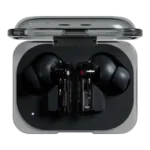
Nothing Ear (a) Earbuds Feature Scores
Explore all 50 feature scores for Nothing Ear (a) Earbuds, organized into pros and cons.
Scores by Feature
Summary
50 reviewed features-
Very positive 4.5-5.011 (22%)
-
Positive 3.5-4.429 (58%)
-
Neutral 2.5-3.45 (10%)
-
Negative 1.5-2.45 (10%)
Pros
Sort
-
Long-use comfort was one of the strongest consensus points, with reviewers repeatedly saying the earbuds stayed comfortable for commutes, work, and hours of wear.
-
Design was a standout strength, with reviewers consistently praising the transparent look, yellow option, and distinctive Nothing styling.
-
Value was a major strength, with many reviewers calling the Ear (a) unusually competitive or hard to beat, though one later review argued cheaper rivals now close the gap.
-
The Nothing X app was a major strength, repeatedly praised for intuitive design, customization, responsiveness, and clean organization.
-
Reviewers generally found the Ear (a) sound strong for the price, with several calling it excellent or impressive, though one lab-style review described it as only mediocre and a 2025 comparison found newer rivals can match or beat it.
-
Multipoint was widely valued and usually smooth, with app-based device management praised; one reviewer still noted occasional priority confusion.
-
Bass was usually praised as strong, fun, and adjustable, but a few reviewers found the default tuning bass-heavy or said it was not the strongest.
-
Stability was usually strong, with repeated reports of secure fit, though one reviewer’s left earbud worked loose.
-
Setup and everyday software use were praised as easy, fast, responsive, and intuitive.
-
ANC earned broad praise for the price, often described as effective or impressive, but it was not consistently top-tier and struggled more with mid/high frequencies.
-
Treble was usually described as clear, detailed, or expressive, though one reviewer connected the pronounced upper treble with an analytical sound.
-
The squeeze/pinch control system was generally praised as intuitive and effective, though a few reviewers found some combinations tricky.
-
Touch and pinch responsiveness was mostly positive, but advanced gestures could be finicky or create annoying feedback in some use.
-
Build quality was mostly positive, with strong fit-and-finish and hinge/material comments, though the plastic case raised scratch concerns elsewhere.
-
Battery life was generally solid to impressive, especially with ANC off, but ANC use and newer competition made it only midrange in some reviews.
-
LDAC was a clear positive for Android and hi-res playback, although one later reviewer avoided it because of the battery-life penalty.
-
Call quality was generally usable to good, with several reviewers reporting clear voices, though others heard compression, artificial tone, or obvious earbud processing.
-
Charging was mixed: fast charging was praised repeatedly, but the lack of wireless charging was a recurring tradeoff.
-
Instrument separation was praised for placement and vocal/instrument isolation, though one comparison framed its advantage as only slight.
-
Equalizer customization was useful and often praised, but reviewers also noted it is limited compared with the flagship Nothing Ear or competing 10-band EQs.
-
The case was one of the most mixed areas: many liked the smaller pocketable form, while others found it fiddly, unintuitive, or less refined.
-
Codec support was praised mainly because LDAC and hi-res support are unusual and valuable at this price.
-
Midrange comments were positive overall, with reviewers hearing open mids, clean dynamics, and pronounced upper-mid detail.
-
Maximum-volume clarity looked strong in the evidence, with reviewers reporting no clipping and plenty of detail at low listening levels.
-
Microphone noise reduction was a strength in the direct evidence, with reviewers praising background voice isolation and environmental filtering.
-
Multi-platform compatibility was positive, with reviewers saying the earbuds work well across devices and check broad feature boxes.
-
Portability was positive, with reviewers highlighting the smaller, lighter, pocket-friendly case design.
-
Weight comfort was praised where discussed, with reviewers emphasizing the lightweight feel and how easy they are to forget in the ear.
-
Several reviewers heard a wide or expansive presentation, but one later comparison found the soundstage less wide than stronger budget rivals.
-
Water and sweat resistance was viewed as sufficient for gym or running use, even if not the highest possible protection.
-
Bluetooth reliability was mixed: some reviewers reported sturdy connections and no interruptions, while one experienced stutters in busy downtown conditions.
-
Case hinge confidence was positive in the limited evidence, with reviewers noting a wider hinge and solid metal hinge feel.
-
Integrated microphones were viewed positively where directly discussed, especially with multiple microphones supporting call performance.
-
Volume output was mostly sufficient, with one reviewer noting loud output and another calling peak volume only average.
-
Ear tip fit was positive overall, with a tight seal and size changes resolving a fit issue for one reviewer.
-
Find My was liked where evaluated, with one reviewer specifically appreciating that the feature was included.
-
Soundstage depth had limited but positive evidence, with one reviewer hearing space and texture around vocals.
-
Low-latency support was useful for casual gaming, but one reviewer cautioned that Bluetooth latency still was not fully solved.
-
Passive isolation was mixed: some reviewers said the tips block outside noise well, while others still heard leakage or pressure from the remaining earbud.
-
Android compatibility evidence centered on LDAC delivering high-quality streaming to supported Android devices.
Cons
Sort
-
Smudge/scratch resistance was a weakness, with reviewers warning the clear case can scratch easily over time.
-
Sustainability evidence was negative overall: recycled content was mentioned, but reviewers criticized disposability and non-replaceable batteries.
-
Auracast support was a negative omission in the evidence, appearing as part of a broader future-proofing complaint.
-
Spatial audio was a clear omission in the available evidence, with one review listing no head-tracking spatial audio as a con.
-
Voice assistant integration had weak evidence: the available test showed the assistant failing to understand the product context.
-
Frequency-response accuracy was the weakest sound-related measurement, with one review saying the default tuning misses the preferred curve.
-
Preset EQ evidence was mixed, with one reviewer disliking extreme presets and another valuing the available preset/custom choices.
-
Ear tip size options were mixed: one reviewer appreciated the extra sizes, while another cited complaints about not enough assortment.
-
Sensor-related evidence was mixed: wearer recognition impressed in one review but ear detection misfired in another.
-
Transparency mode drew split reactions: some found it useful or above average, while others said it was merely acceptable or too weak for conversation.