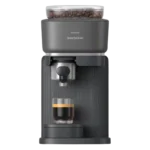
Philips Baristina Feature Scores
Explore all 32 feature scores for Philips Baristina, organized into pros and cons.
Scores by Feature
Summary
32 reviewed features-
Very positive 4.5-5.06 (19%)
-
Positive 3.5-4.45 (16%)
-
Neutral 2.5-3.410 (31%)
-
Negative 1.5-2.49 (28%)
-
Very negative below 1.52 (6%)
Pros
Sort
-
Its slim footprint and clean, modern styling win near-universal praise, especially in small kitchens. The main aesthetic drawback is the lightweight, plastic-heavy feel.
-
Speed is a standout strength across sources, with many reviewers describing espresso in roughly 30–60 seconds or under a minute with very little preparation.
-
Reviewers strongly like using fresh beans instead of capsules, citing less pod waste, lower ongoing coffee cost, and pod-like convenience without single-use capsules.
-
The puck-release button and exposed portafilter make daily grounds disposal exceptionally easy for most reviewers, though one technical tester found the button ineffective.
-
The automatic grind-tamp-brew swipe workflow is one of the clearest strengths, taking most technique out of the process. Sliding-mechanism and sensor failures are the main automation caveat.
-
Most reviewers find the grinder quieter than expected or perfectly acceptable for mornings, with only a few calling the machine noisy.
-
Most reviewers enjoy smooth, flavorful espresso with crema when the machine is working well. Technical critics and failed-unit owners describe lighter, watery, or under-extracted shots, especially with the fixed grind.
-
The compact tank and hopper are adequate for light daily use, and some owners go days between refills. Heavier users are more likely to notice the limited hopper or reservoir size.
-
Short-term ownership is often delightful: fast, simple, compact, and low-fuss. The experience turns sharply negative for owners whose units leak, jam, or stop brewing after a few months.
-
One expert praised the sturdy, fully recyclable packaging as compact, protective, and thoughtfully presented.
-
One reviewer considered the compact machine small enough to take camping, suggesting unusual travel potential for an espresso maker with an integrated grinder.
Cons
Sort
-
Leaks, spilled grounds, stuck portafilters, and faults in the sliding mechanism dominate design complaints. These problems are often tied to failures after a few months.
-
Durability is the biggest risk: many customers report leaks, broken grinders, stuck mechanisms, or total failure within months. A smaller group reports reliable use for a year or longer.
-
Plastic is one of the most criticized material choices. Reviewers often call the machine or portafilter cheap-feeling, and some specifically dislike plastic contacting hot coffee.
-
A few owners praise quick replacements and helpful phone support, but many report long waits, no response, unresolved claims, or difficult refund and warranty experiences.
-
Delivery condition is uneven: some machines arrive clean and well packed, while several buyers report opened, damaged, dirty, or apparently previously used units.
-
The simplicity promise largely rings true, but claims around “real espresso” and dependable performance draw sharp pushback from technical testers and owners whose machines failed.
-
Pressure is strong and crema-rich on healthy units, but many failed machines lose pressure and produce watery shots or leaks.
-
The machine body can stay cool, but a few reviewers describe drinks or leaking water as uncomfortably hot and raise burn concerns.
-
Automatic tamping is a major convenience on healthy units, yet several owners report wet pucks, failed compaction, or tamping and mechanism faults over time.
-
Fresh automatic grinding is convenient and can work well, but the fixed grind size is a major enthusiast limitation. Customer reports of clogging, weak dosing, or grinder failure are frequent.
-
Cord and plug placement gets minor but consistent criticism, with the rear cord or protruding plug making placement less tidy on crowded counters.
-
There is no dedicated hot-water outlet, so Americano drinkers must work around the machine rather than dispense clean hot water directly.
-
The pressurized basket helps create crema and forgive grind variation, but its integrated, non-removable design and plastic-heavy construction draw criticism.
-
The optional milk frother broadens the setup, but several reviewers dislike paying extra for it or finding key add-ons unavailable; others appreciate the matching accessory options.
-
Espresso or lungo volume and the intensity boost cover basic needs, but grind size and temperature are fixed and drink variety is narrow. That simplicity suits beginners more than tinkerers.
-
There is no built-in steam wand. The optional frother can make enjoyable, thick foam, but it costs extra and offers less milk-texture control than a steam wand.
-
The removable tray helps with some taller cups, but reviewers flag limited mug clearance and a drip tray that can miss drips or feel undersized.
-
Healthy units often deliver repeatable crema and balanced shots, but a sizeable group reports watery or inconsistent extraction when pressure, dosing, or the mechanism begins to fail.
-
Physical setup is usually straightforward, yet the missing paper manual or starter guide repeatedly sends buyers online. Several reviewers still found the controls intuitive enough to start quickly.
-
Value is polarized. Fans see savings versus cafés or pods and strong simplicity for the price; early failures make the same purchase feel wasteful, especially when support stalls.
-
Daily cleaning is generally simple, but long-term maintenance is clouded by leaks, clogs, hard-to-access grinder areas, and cases where cleaning or descaling does not resolve failures.