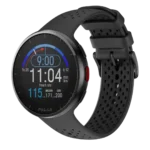
Polar Pacer Pro Feature Scores
Explore all 50 feature scores for Polar Pacer Pro, organized into pros and cons.
Scores by Feature
Summary
50 reviewed features-
Very positive 4.5-5.017 (34%)
-
Positive 3.5-4.418 (36%)
-
Neutral 2.5-3.48 (16%)
-
Negative 1.5-2.46 (12%)
-
Very negative below 1.51 (2%)
Pros
Sort
-
Comfort was one of the strongest points, with reviewers repeatedly praising its lightweight body, strap, and all-day or overnight wearability.
-
Coaching features were one of the clearest strengths, with FitSpark, training plans, workout guidance, and training-load advice repeatedly praised.
-
Value for money was one of the strongest themes: reviewers repeatedly said the watch brings higher-end Polar features to a much more attractive price.
-
Software smoothness was usually praised after Polar's processor update, though one reviewer still noticed slowdown or lag in places.
-
Recovery insights were consistently praised for connecting sleep, readiness, training load, and daily recommendations into usable guidance.
-
Button controls were mostly a strength because they were grippy, responsive, and useful during workouts, though a few reviewers needed adjustment or hit the wrong button.
-
Sleep tracking was one of the stronger areas overall, with multiple reviewers praising Nightly Recharge or alignment with Oura and Whoop, though one scientific sleep-stage test rated it only mediocre.
-
Workout variety was a strength, with reviewers describing the Pacer Pro as a multisport watch with a broad activity library rather than only a running watch.
-
GPS accuracy was mixed-to-positive: several reviewers found it fast, reliable, or excellent, while others saw wobble, offsets, or lower scientific GPS scores.
-
Running power support was broadly positive because wrist-based power appears at this price, though one reviewer still preferred STRYD for accuracy.
-
Customization options were a strength for sport profiles, data fields, workout screens, and zones.
-
Outdoor visibility was generally strong, with reviewers repeatedly saying the screen was readable outdoors and in bright light.
-
The Polar ecosystem was praised strongly, especially Polar Flow, third-party fitness connections, and recovery/training analysis depth.
-
Display quality was mixed-to-good, with improved readability and responsiveness offset by dullness, bezel size, and lack of OLED vibrancy.
-
Heart-rate results were mostly good for steady running and several reviewers saw close agreement with straps or other watches, but high-intensity sessions and cycling produced spikes, lag, or weaker results.
-
Fitness tracking accuracy was generally positive for workout metrics, but the walking/VO2-style testing drew criticism from one reviewer and mixed scientific testing lowered confidence.
-
Music controls were generally useful for controlling phone audio, though reviewers repeatedly noted they are not a substitute for onboard music.
-
Water resistance was positively viewed as suitable for swimming, showering, and bathing.
-
Band quality was praised for race-friendly ventilation and a strong buckle.
-
The user interface was described as simple, intuitive, and uncluttered by reviewers who liked its directness.
-
Navigation was useful but limited: reviewers liked turn-by-turn routes and back-to-start, while criticizing simple arrows, basic mapping, or clunky Komoot routing.
-
Build quality was generally positive for a slim sports watch, though one reviewer paired praise with typical Polar-specific caveats.
-
Durability was positively described through comfortable/durable design and expectations from its water resistance and military-standard testing.
-
Calorie and energy-source tracking was viewed as useful for training context, though one reviewer cautioned FuelWise output is still a guesstimate.
-
Automatic hill detection through Hill Splitter received direct praise from one reviewer who said it worked perfectly.
-
Safety features were positively reflected in overreaching warnings that helped the reviewer avoid risky training load.
-
Menu navigation was easy once the reviewer learned the physical buttons.
-
Reliability was praised by one reviewer who found the data accurate through extended daily use.
-
Score tracking was praised through ZDNet's frequent use of the Running Index report.
-
Charging speed was mixed, with one reviewer praising fast charging and another calling charging slow.
-
Reviewers split on broader health accuracy: ZDNet praised reliable all-day health and wellness data, while the scientific test review was much less impressed overall.
-
Wellness insights were useful when tied to breathing, recovery, and training advice, but one reviewer felt negative sleep feedback could create stress.
-
Materials quality was praised in relation to the Pro model's more premium aluminium bezel and buttons.
-
Fit was mixed: one reviewer had trouble with wrist fit, while others praised the snug or broadly wearable design.
-
Step counting evidence was mixed, with Wareable seeing counts in line with Oura while the scientific test found undercounting and gave it a middle score.
Cons
Sort
-
Onboard music storage was consistently absent and criticized as a limitation for a sports watch.
-
Smartwatch features were a repeated weakness; reviewers framed the Pacer Pro as a sports watch first, with limited apps, payments, assistants, and connected features.
-
Blood oxygen tracking was treated as a notable missing health sensor rather than a working feature.
-
Contactless payments were treated as a missing smartwatch feature.
-
ECG functionality was treated as a missing health feature compared with competing smartwatches.
-
Voice assistant capability was scored low because reviewers noted smart assistants were not included.
-
Charging convenience was a recurring weakness because reviewers disliked the new magnetic connector or found it less secure.
-
Bluetooth accessory compatibility drew criticism in one review after cycling power meters failed to pair reliably.
-
Third-party support was split: there is no on-watch app store, but Polar Flow can sync with key fitness platforms such as Strava, TrainingPeaks, and Komoot.
-
The operating system experience was functional but visually dated according to one reviewer.
-
Brightness impressions varied widely: some found it bright enough in darkness, while others found it dim or less vivid than AMOLED-style watches.
-
Battery life was one of the most common caveats, often landing around five days despite some positive week-long or GPS-use experiences.
-
Notification support was functional but uneven: some reviewers welcomed it, while others found it tucked away or forced into a dedicated menu.
-
Style and design were mixed: reviewers liked the light, attractive, sporty build but also criticized the bland, basic, or less stylish appearance.
-
Companion app quality was mixed: reviewers praised data depth and explanations but also called Polar Flow less intuitive or less polished than rivals.