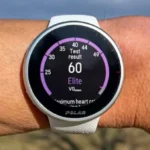
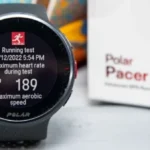
- Worse: running and fitness features Reviewer says the Pacer Pro does more to improve runs than similarly priced mainstream smartwatches.
Polar Pacer Pro Review
Bottom Line
Choose the Polar Pacer Pro if you want deep running, recovery, and multisport tools in a light watch. Skip it if you need rich smartwatch apps, payments, onboard music, AMOLED polish, or week-plus battery life.
Best for runners and multisport athletes who want Polar’s coaching, recovery, sleep, and training-load analysis in a light watch at a midrange price. It especially suits data-driven users who value Polar Flow more than smartwatch extras.
Not for users who want a full smartwatch experience with third-party apps, payments, voice assistants, onboard music, SpO2, ECG, or a bright AMOLED-style display. It is also not ideal if maximum battery life is the top priority.
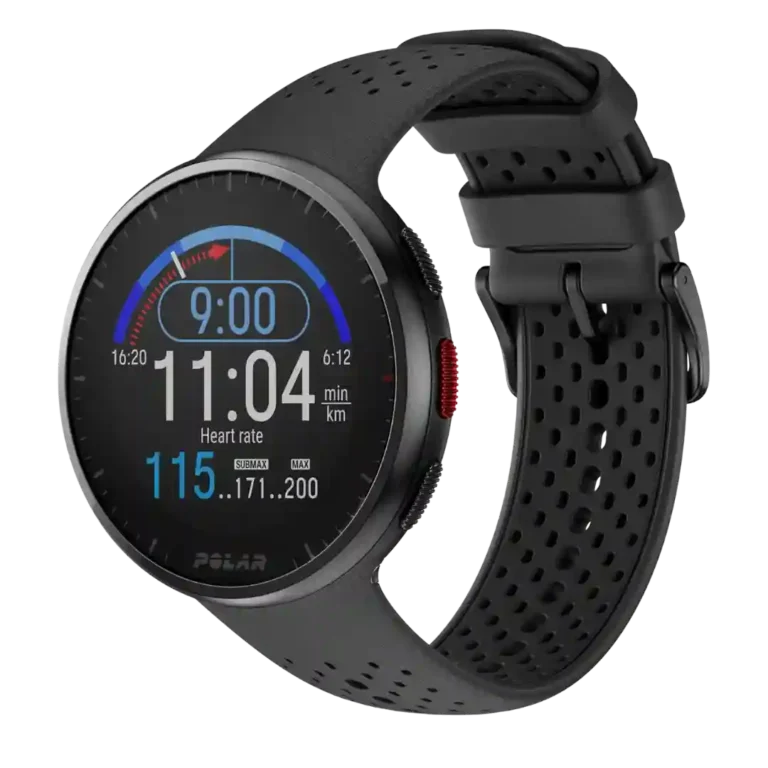
The Polar Pacer Pro comes across as a sports-first watch that brings Polar’s strongest training tools into a lighter, lower-priced package. Reviewers repeatedly praise the comfort, running metrics, FitSpark coaching, Training Load Pro, Nightly Recharge, and broad multisport coverage. The main tradeoff is that it behaves more like a dedicated training device than a modern smartwatch: notifications and music controls are basic, and apps, payments, voice assistants, SpO2, ECG, and onboard music are missing. Accuracy feedback is also context-dependent, with strong steady-run and sleep impressions in many reviews but weaker reports for GPS wobble, step counts, high-intensity heart rate, and scientific sleep-stage testing. Battery life is usable, not class-leading, typically closer to five to seven days.
Compared in Reviews
Products reviewers directly compared with this model, grouped into quick takeaways.
- Worse: features at same price Reviewer argues the Pacer Pro makes the Vantage M2 hard to justify at the same price.
Coros
- Worse: app and platform experience Reviewer praises Polar's app and platform while finding Coros's app underwhelming.
- Worse: performance tracking and activity platform Reviewer says Polar's performance tracking and activity platform are stronger than COROS for multisport use.
Feature Scorecards
Pros
-
Workout variety is broad, with multisport, triathlon, swimming, running, trail, indoor, and 130-profile support appearing across the reviews.
-
Comfort is one of the most consistent positives, with reviewers praising the light weight, all-day wearability, and comfortable strap.
-
Coaching is one of the clearest strengths, with FitSpark, guided plans, workout suggestions, and training analysis repeatedly praised.
-
Outdoor visibility is a strength, with reviewers repeatedly saying the screen is easy to read in bright sunlight and direct outdoor conditions.
-
Recovery insights are a major strength, with Nightly Recharge, Training Load Pro, and rest-day guidance repeatedly described as useful for adjusting training.
-
Software smoothness is improved over older Polar models, with reviewers noting less lag, no delay, and fast menu performance.
-
Band quality is mostly positive, especially the breathable/perforated strap and Shift adapter, though band removal can be a little fiddly.
-
Fitness tracking is generally strong, especially for running metrics and workout analysis, although some reviewers place caveats around heart-rate and GPS accuracy.
-
Water resistance is solid for swimming and showering, with several reviews noting 50-meter waterproof or water-resistance ratings.
-
Value is strong: reviewers repeatedly describe the Pacer Pro as feature-rich for the price and competitive against higher-end Polar models.
-
Reliability is generally good for core sports use, with reviewers citing accurate heart rate and GPS tracking, but not uniformly perfect across conditions.
-
Button controls are a strength: reviewers like the grippy physical buttons and reliable navigation, despite some adjustment from Garmin-style layouts.
-
Cross-platform support is solid, with iOS and Android notifications and several third-party fitness services supported through Polar Flow.
-
Durability is supported by MIL-STD-style protection, Gorilla Glass, water resistance, and reviewer expectations that it should hold up well.
-
The user interface is generally clear and intuitive, though its data-heavy and retro presentation may not appeal to casual users.
-
Build quality is viewed positively for a slim, lightweight sports watch, though the construction is more functional than premium.
-
Menu navigation is straightforward and button-driven, with reviewers calling the watch simple to use after learning the layout.
-
Most reviewers praise Polar's sleep tracking and Nightly Recharge as detailed and useful, though one scientific review found sleep-stage accuracy mediocre.
-
Bluetooth support works for phone sync and compatible sensors, though the evidence also notes limits such as Bluetooth-only sensor support.
-
Fit is generally good, with reviewers noting a snug fit, comfortable wrist presence, and sizing that works for many wrists, though not everyone loved it.
-
The operating system is functional and data-rich, with improved speed, though some reviewers describe the visual design as dated or utilitarian.
-
Music controls are supported from the phone and work during workouts, but reviewers repeatedly clarify that this is only control, not standalone playback.
-
Materials are midrange: reviewers cite a plastic or resin case with an aluminum bezel and durable screen protection rather than luxury materials.
-
Polar Flow is powerful and training-focused, but reviewers are split between praising its depth and criticizing the phone app as dense or less intuitive.
-
Customization is strong for sport profiles, data fields, exercise faces, heart-rate zones, and watch views, though one reviewer says the UI itself is only somewhat customizable.
-
Third-party fitness support is useful through Strava, Komoot, TrainingPeaks-style integrations, and Strava Live Segments, but it is not a full app-store experience.
-
Calorie and fuel insights are useful for training context, especially energy-source breakdowns and FuelWise, but one reviewer stresses the estimates are still a guesstimate.
-
Heart-rate performance is strongest for steady running and some controlled workouts, but reviewers also saw struggles with sudden spikes, cycling, weight training, or inconsistent wrist conditions.
-
Pairing and syncing are generally workable, but reviewers mention manual sync steps and back-button transfers that make it less seamless than some rivals.
-
Brightness and readability are mostly good outdoors, but some reviewers find the screen dull indoors or hard to see without high brightness.
-
Notifications are supported for phone alerts, texts, and calls, but reviewers often frame them as basic, tucked away, or limited compared with full smartwatches.
-
GPS feedback is split: several reviewers found quick locks and accurate run tracking, while others described wobble, average results, or noisy tracks.
-
Display quality is readable and improved, but reviewers also criticize dullness, thick bezels, and lack of AMOLED-style vibrancy.
-
Step tracking gets mixed but usable marks, with one review finding counts in line with Oura and another scientific test saying the watch undercounted steps.
-
Auto-detection evidence is limited to workout-context automation such as Hill Splitter detecting climbing, descending, and flat ground, rather than full automatic workout start detection.
-
Safety features are mostly navigation-based, such as Back to Start and turn-by-turn guidance, not emergency calling or incident detection.
-
Watch-face customization exists, but evidence focuses on basic digital or analog options rather than a rich watch-face marketplace.
Cons
-
Wellness insights focus on recovery, breathing, sleep, and daily tracking; reviewers value the depth, but note gaps such as stress and broader wellness tools.
-
Evidence is mixed: one review calls daily health tracking accurate and reliable, while a scientific test says some health and sports tracking results leave something to be desired.
-
Battery life is the most repeated tradeoff, usually landing around five to seven days with good GPS endurance but not rivaling longer-lasting watches.
-
Charging speed is mixed: one reviewer praises fast charging, while another says a full charge is slow at around two hours.
-
Style and design are mixed: reviewers like the slim sporty practicality, but several call the look basic, bland, or not especially exciting.
-
Smartwatch features are functional but limited, covering notifications, weather, and music controls while omitting apps, payments, assistants, and richer phone features.
-
Charging convenience is a weakness because reviewers complain about the new magnetic connector, weak magnets, and a less secure charging setup.
-
Call handling is minimal: reviewers mention calls appearing through phone notifications, but not rich call answering or voice interaction on the watch.
-
Size choice is limited: the evidence points to a single 45 mm body and one-size style watch rather than multiple case sizes.
-
The app ecosystem is limited for watch apps, since third-party app downloads are not supported, though Polar's training ecosystem is strong.
-
Stress support is limited: reviewers mention Serene breathing exercises, but also state there is no dedicated stress score or stress tracking.
-
Reviewers consistently note that the watch lacks SpO2 or blood oxygen tracking, so this is a clear missing health sensor rather than a strength.
-
Onboard music storage is consistently absent, with multiple reviewers saying the Pacer Pro cannot store music or tracks internally.
-
ECG is not available on the Pacer Pro, with reviewers calling out the missing ECG sensor compared with broader health-focused smartwatches.
-
There is no touchscreen, so touchscreen responsiveness is effectively absent; several reviewers say buttons are acceptable or preferable for workouts.
-
Contactless payment support is absent, and reviewers explicitly list payments among the smartwatch features not included.
-
Voice assistant support is absent, with reviewers explicitly noting that smart assistants are not part of the feature set.
Compared With Category Average
Compared with other Smart Watch, this product is below average in blood oxygen tracking, touchscreen responsiveness, onboard music storage.
| Attribute | This product | Category average | Difference |
|---|---|---|---|
| blood oxygen tracking | 1.0 | 3.6 | -2.6 |
| touchscreen responsiveness | 1.0 | 3.7 | -2.7 |
| onboard music storage | 1.0 | 2.9 | -1.9 |
| contactless payments | 1.0 | 2.9 | -1.9 |
| stress tracking | 2.0 | 3.8 | -1.8 |
| voice assistant quality | 1.0 | 2.7 | -1.7 |
| app ecosystem | 2.2 | 3.6 | -1.4 |
| ECG functionality | 1.0 | 2.3 | -1.3 |
FAQ
Is the Polar Pacer Pro good for runners?
Yes. Reviewers repeatedly describe it as a strong running watch with deep running metrics, guided workouts, Training Load Pro, FitSpark, running power, and recovery insights.
Is it also useful for triathlon or multisport training?
Yes. Multiple reviews say it works well beyond running, with multisport and triathlon support, swimming, cycling, route guidance, and broad sport-profile coverage.
How accurate are the GPS and heart-rate tracking?
The evidence is mixed. Many reviewers found GPS and heart-rate tracking accurate enough for runs, but others saw GPS wobble, noisy tracks, or heart-rate issues during high-intensity movement.
Does it work like a full smartwatch?
No. It supports notifications, weather, and phone music controls, but reviewers note missing apps, contactless payments, voice assistants, SpO2, ECG, and onboard music.
How long does the battery last?
Reviewers usually report around five to seven days in normal use, with strong GPS endurance around the advertised 35-hour range. The common caveat is that it does not match longer-lasting Garmin or Coros alternatives.
Is the Polar Flow app good?
Polar Flow is powerful for training analysis, reports, workouts, and recovery data. Reviewers also say it can feel dense, manual, or less intuitive than some competing companion apps.
Consider This Instead
If you want better touchscreen responsiveness
Choose Fitbit Sense 2. It scores 4.9 vs 1.0 for touchscreen responsiveness, with a 3.5 overall score.
If you want better contactless payments
Choose Apple Watch SE 3. It scores 4.8 vs 1.0 for contactless payments, with a 4.1 overall score.
If you want better onboard music storage
Choose Huawei Watch Fit 4. It scores 4.7 vs 1.0 for onboard music storage, with a 4.1 overall score.
If you want better blood oxygen tracking
Choose Apple Watch Series 11. It scores 4.5 vs 1.0 for blood oxygen tracking, with a 4.2 overall score.
Overall Top Smart Watch Alternatives
Good if you want the most rugged Apple Watch, brighter outdoor screen, better battery, LTE, and top apps. Skip it if you need Garmin-like mapping, recovery analytics, smaller sizing, or...
Pros: display quality, heart rate accuracy
Cons: cross-platform compatibility, recovery insights
Choose the Galaxy Watch 6 for a polished Android smartwatch with a bright screen, strong apps, and broad health tracking. Skip it if battery life, iPhone support, or full non-Samsung...
Pros: outdoor visibility, workout tracking variety
Cons: cross-platform compatibility, battery life
Good if you need a rugged Garmin with deep outdoor, tactical, GPS, training, and battery features. Skip it if you want a cheaper lifestyle watch or do not need the...
Pros: materials quality, durability
Cons: LTE connectivity, value for money
Good if you want premium golf maps, virtual caddie tools, health metrics, music, notifications, and long battery life in one watch. Skip it if you only need basic yardages or...
Pros: pairing reliability, brightness
Cons: software smoothness, user interface