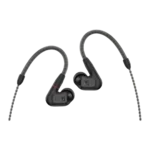
Sennheiser IE 200 Wired Earbuds Feature Scores
Explore all 28 feature scores for Sennheiser IE 200 Wired Earbuds, organized into pros and cons.
Scores by Feature
Summary
28 reviewed features-
Very positive 4.5-5.07 (25%)
-
Positive 3.5-4.412 (43%)
-
Neutral 2.5-3.45 (18%)
-
Negative 1.5-2.43 (11%)
-
Very negative below 1.51 (4%)
Pros
Sort
-
Comfort was one of the strongest points, with many reviewers wearing them for hours or even in bed without discomfort.
-
Reviewers broadly liked the IE 200's sound, describing it as clear, balanced, detailed, and enjoyable, though one reviewer found its technical performance only mid-tier.
-
Instrument separation was one of the clearest strengths, with reviewers repeatedly hearing distinct instruments, voices, and spatial placement.
-
Reviewers generally found the tuning balanced, clean, accurate, or target-aligned, though often with a mild V-shaped tilt rather than strict neutrality.
-
Stability was consistently strong when fitted properly, with reviewers noting secure, flush fit during runs, flights, or daily use.
-
Value was broadly positive because the IE 200 delivers strong sound for its price, but cable, tip, and accessory issues limited enthusiasm for some reviewers.
-
Treble was often described as clear, sweet, crisp, or well controlled, with a minority finding it bright, sibilant, swishy, or less extended than higher models.
-
Midrange clarity was generally strong, especially for vocals and instrument body, but a few reviewers heard low mids as thin or less vivid than pricier IE models.
-
Soundstage width earned strong praise for openness, breadth, and spacious imaging at the price, though one reviewer wanted a wider presentation.
-
Bass was usually praised as controlled, punchy, clean, and satisfying rather than bloated; some reviewers wanted more depth, slam, or bass quantity.
-
Passive isolation was good when seal and tip choice were right, especially with foam tips; it was not treated as a substitute for ANC.
-
The very low weight repeatedly contributed to comfort, with reviewers highlighting the tiny 4g earbuds and light feel.
-
Design impressions were mostly positive for the minimalist, sleek, discreet look, though some found the plastic shell plain.
-
The detachable cable was valued for repairability, but recessed or proprietary MMCX behavior made third-party replacement less convenient.
-
Ear tip options were well regarded, with reviewers appreciating multiple sizes and both silicone and foam choices.
-
Depth was more mixed than width: some heard impressive depth and immersion, while others found staging shallow, intimate, or flatter than premium models.
-
Eartips and fit were highly dependent on ear shape and tip choice, ranging from secure seals to awkward, collapsing, or gimmicky tip behavior.
-
One reviewer specifically praised clarity at high volume, saying the sound did not turn muddy even when pushed.
-
Build quality was mixed: reviewers praised parts of the construction, but plastic shells and cost-cutting were common caveats.
Cons
Sort
-
The lack of an integrated microphone was repeatedly cited as an inconvenience for calls and general on-the-go use.
-
Control usability was a repeated weakness because there are no in-line buttons for volume, playback, or track control.
-
One reviewer flagged the lack of water resistance as a clear limitation for how the earbuds should be used.
-
Call performance was weak because the earbuds lack a built-in microphone, leaving callers unable to hear through the buds.
-
Dongle dependence was a usability annoyance for modern phones without headphone jacks.
-
Cable quality divided reviewers sharply: some liked the braided, durable feel, while many criticized tangling, microphonics, cheap feel, or proprietary fit.
-
Included accessories were adequate but not complete, with reviewers wishing for adapters or better extras despite included tips and pouch.
-
Carry case feedback was mixed: the pouch was appreciated by some but criticized by others as cheap or not protective enough.
-
Volume and drive impressions were mixed: some found the IE 200 easy to drive, while others wanted more headroom or used higher source volume.