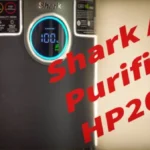
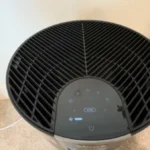
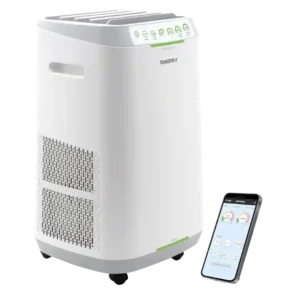
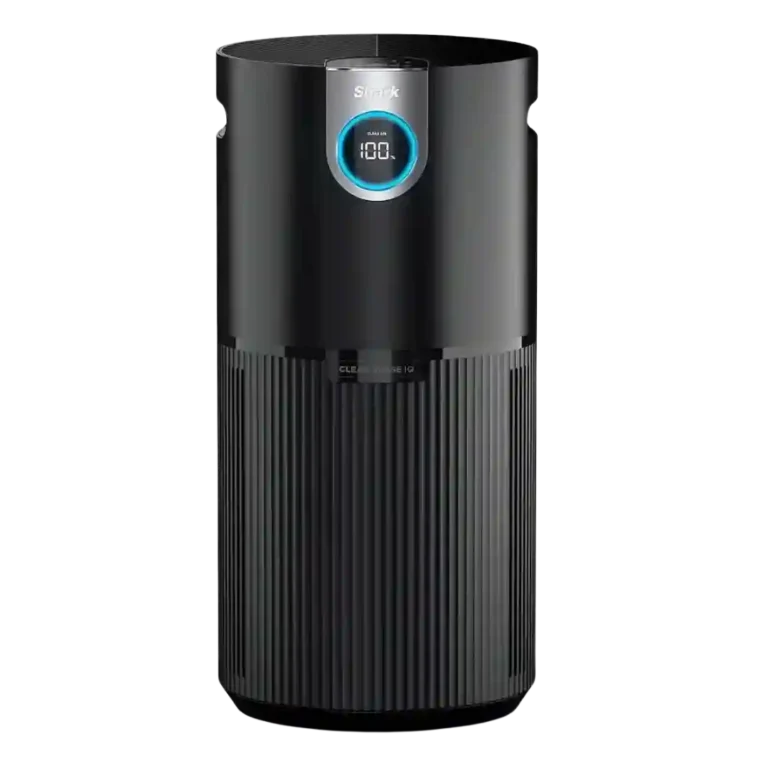
Shark MAX HP202 Air Purifier Review
Bottom Line
Choose the Shark MAX HP202 for quiet large-room cleaning, odor or smoke help, and live air-quality feedback. Skip it if sensor reliability, filter sourcing, or low long-term cost matters most.
Best for buyers who want visible air-quality feedback, quiet low-speed use, and help with cooking odors, smoke, pet dander, dust, or allergy triggers in larger living areas.
Not for buyers who need proven long-term sensor reliability, low replacement-filter costs, easy Shark-brand filter availability, or a purifier that stays unobtrusive at high speed.
The Shark MAX HP202 has a strong everyday-cleaning story in these reviews: owners repeatedly describe fresher air, quieter low-speed operation, useful live readouts, and fast reactions to cooking, smoke, pets, dust, and odors. Several buyers purchased additional units, and the expert-style videos also liked the easy controls, HEPA filtration, charcoal odor help, auto mode, and broad room coverage. The tradeoff is long-term trust. A noticeable minority report sensors stuck at 0%, unrealistic readings, auto mode cycling, reset problems after filter changes, expensive or hard-to-find filters, and units failing within weeks or months. It is compelling when it works, but the ownership risk is real.
Feature Scorecards
Summary
37 reviewed features- Very positive 4.5-5.0 46% 17 features
- Positive 3.5-4.4 27% 10 features
- Neutral 2.5-3.4 19% 7 features
- Negative 1.5-2.4 5% 2 features
- Very negative below 1.5 3% 1 feature
Pros
-
Set-up and daily operation were widely described as easy, with several users praising set-and-forget operation.
-
The live clean-air percentage and visible air-quality feedback were repeatedly praised when the sensor worked.
-
Reliability was polarized: some units worked for a year or more, while many others developed sensor or power failures.
-
Owners liked being able to move the unit between rooms and described it as lightweight.
-
Build impressions were positive where mentioned, including a customer who said the unit physically held up under an accidental fall.
-
One owner reported the unit worked fine immediately out of the box.
-
The color light indicator was liked because it made air quality status easy to understand.
-
One review praised broad sensing across dust, allergens, dander, and smoke.
-
Customers often reported allergy, breathing, asthma, or irritation relief, including homes with pets and dusty conditions.
-
Pet owners commonly credited the unit with helping dander, pet hair, and pet-related air quality.
-
Many owners felt it handled large rooms, multiple rooms, or separate levels, while a few found real-world coverage weaker than claimed.
-
Reviewers liked the clear digital readout, clean-air percentage, and easy-to-understand display.
-
Design comments were generally favorable, with owners calling it attractive, good-looking, and suitable for bedrooms or living spaces.
-
Most reviewers said the unit improved air quality, cleaned rooms quickly, or worked well, though a smaller group reported weak performance or failures.
-
Smoke removal was a repeated strength in cooking, cigarette, neighbor-smoke, and wildfire-smoke scenarios, though one wildfire review was disappointed.
-
Overall satisfaction leaned positive, with many repeat purchases and recommendations, offset by strong dissatisfaction from failed units.
-
Sleep mode was praised for dimming lights and making bedroom use easier.
-
Fan-speed control was useful, but higher speeds and speed changes could bring noticeable noise.
-
HEPA filtration was cited positively by reviewers who connected it with solid cleaning performance.
-
Dust removal was usually praised by pet owners and dusty-home reviewers, though one apartment reviewer found it weak unless run constantly.
-
The unit was sometimes praised as compact or space-saving, though one customer found it larger than expected.
-
Most reviewers found low or auto settings quiet, while high speed, cycling, or failing auto mode could become loud or annoying.
-
Auto mode was praised for reacting to cooking, smoke, and pollutants, but several owners disliked ramping, cycling, or failure to reach stable readings.
-
Odor reduction was often strong for cooking, smoke, pets, and skunk smell, but several pet-odor and apartment reviews were disappointed.
-
One expert-style review liked the charcoal-lined HEPA filter because it helped with odors.
-
One customer valued being able to clean part of the filter with a rag and avoid frequent filter buying.
-
Documentation was mixed: one owner praised the manual access, while another said troubleshooting directions did not resolve the failure.
Cons
-
Filter life evidence was mixed, ranging from long-lasting filters to complaints that the filter dropped quickly or lasted only two months.
-
Value was sharply split: happy owners called it worth the price, while failure, filter cost, or disappointing odor control made others call it overpriced.
-
Filter changes and basic upkeep were often easy, but reset problems and sensor cleaning complaints were recurring negatives.
-
Filter cost drew repeated complaints, though a few buyers found filters reasonable or saw savings from cleanable parts.
-
Smart-feature evidence was positive for useful controls and display features but negative where customers wanted remote control or lost sensor/filter-life functions.
-
Filter availability was mixed: one customer found filters readily available, while another could not find Shark-brand replacements.
-
Replacement evidence was mixed, with some easy warranty or company replacements and others frustrated by returns or unresolved requests.
-
Sensor feedback was the most divided area: many liked the live readings, but repeated customers reported stuck 0%, unrealistic 100%, or humidifier-triggered readings.
-
Durability was a major concern, with many customers reporting failures within weeks, months, or about a year.
-
Customer support evidence was negative, with one owner saying they could not contact anyone after the unit failed.
Compared With Category Average
Compared with other Air Purifiers, this product is above average in condition on arrival, reliability, real-time air quality monitoring, below average in air quality sensor accuracy, customer support, durability.
Summary
8 compared features- Above average 0.4+ pts higher 38% 3 features
- Same as average within 0.3 pts 0% 0 features
- Below average 0.4+ pts lower 63% 5 features
| Attribute | This product | Category average | Difference |
|---|---|---|---|
| air quality sensor accuracy | 1.8 | 3.7 | -2.0 |
| condition on arrival | 5.0 | 2.7 | +2.3 |
| reliability | 5.0 | 3.0 | +2.0 |
| customer support | 1.0 | 3.0 | -2.0 |
| durability | 1.6 | 3.3 | -1.7 |
| maintenance ease | 3.0 | 4.2 | -1.2 |
| value for money | 3.1 | 3.8 | -0.8 |
| real-time air quality monitoring | 5.0 | 3.9 | +1.1 |
FAQ
Is the Shark MAX HP202 quiet?
Usually on low or auto. Many reviewers called it very quiet, but high speed, speed cycling, and sensor-failure turbo behavior were common noise complaints.
Does it help with odors and smoke?
Often yes. Many reviews praised cooking, smoke, pet, skunk, and household odor reduction, though several buyers said pet or apartment odors were not handled well enough.
Is the air-quality sensor reliable?
Mixed. Some reviewers loved the display and auto response, but repeated customers reported stuck 0% readings, unrealistic 100% readings, or sensor trouble after weeks or months.
Is it good for allergies?
Many customers said it helped allergies, breathing, irritation, asthma concerns, or pet-related air quality. The evidence is mostly positive for allergy-focused households.
Are filters expensive?
Several reviewers complained about filter cost, fast filter-life drops, or Shark-brand filters being hard to find. A few found filters reasonable or liked cleanable maintenance.
Does auto mode work well?
It can work well for cooking, smoke, perfume, and daily changes in air quality. The main complaint is unstable ramping or cycling when sensor readings hover near thresholds.
Sample Expert Reviews We Analyzed
These are a few of the reviews included in our analysis.
- Review score
- 4.7
Consider This Instead
If you want better value for money
Choose Honeywell HPA125. It scores 4.9 vs 3.1 for value for money, with a 4.2 overall score.
If you want better air quality sensor accuracy
Choose Amazon Basics AC2224A. It scores 5.0 vs 1.8 for air quality sensor accuracy, with a 4.0 overall score.
If you want better maintenance ease
Choose Honeywell HPA5300. It scores 4.8 vs 3.0 for maintenance ease, with a 3.9 overall score.
If you want better customer support
Choose VOOPNU DH-JH12. It scores 5.0 vs 1.0 for customer support, with a 4.1 overall score.
Top Air Purifiers to Consider
Choose the H7124 if you want a quiet smart purifier for odors, dust, pets, and app control. Skip it if you need foolproof Wi-Fi, wall-facing intake, UV light, or strong...
Pros: particle removal effectiveness, pollen removal
Cons: UV-C light effectiveness, air dryness
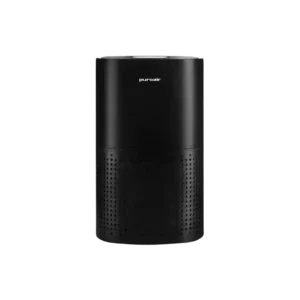
Choose this if you want strong odor, dust, smoke, and pet-air cleanup with washable filters. Skip it if turbo noise, Wi-Fi setup, or a high upfront price will bother you.
Pros: filter replacement cost, allergen reduction
Cons: Wi-Fi reliability
Best for quiet, smart large-room cleaning and strong odor control. Skip it if $99 filters, true-HEPA wording, or occasional sensor/fan reliability complaints are dealbreakers.
Pros: air purification performance, allergen reduction
Cons: reliability, filter replacement cost
Best for large rooms, strong particle cleanup, quiet everyday running, and easy rolling. Skip it if you need app control, compact placement, automatic restart after outages, or low filter costs.
Pros: ozone-free operation, particle removal effectiveness
Cons: filter replacement cost, app connectivity