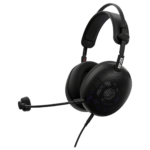
Sony Inzone H6 Air Feature Scores
Explore all 47 feature scores for Sony Inzone H6 Air, organized into pros and cons.
Scores by Feature
Summary
47 reviewed features-
Very positive 4.5-5.012 (26%)
-
Positive 3.5-4.423 (49%)
-
Neutral 2.5-3.49 (19%)
-
Negative 1.5-2.43 (6%)
Pros
Sort
-
Reviewers consistently praised the H6 Air's audio as unusually clear, natural, detailed, and excellent for both gaming and music.
-
The 199g-class weight was repeatedly singled out as a major comfort advantage and one of the lightest experiences reviewers had tested.
-
Long-session comfort was one of the strongest points, with reviewers repeatedly saying it stayed comfortable for hours.
-
The open-back design repeatedly earned praise for a wide, immersive soundstage that made games and music feel more spacious.
-
Clamp comfort was praised because the headset rests lightly with low side pressure rather than squeezing the head.
-
Earpad impressions were mostly positive for softness and plushness, though SoundGuys found the cloth texture a little rough.
-
Positional audio was a standout strength, with reviewers praising natural spatial cues, precise imaging, and easy footstep tracking.
-
Bass was generally praised as punchy, controlled, and stronger than expected for open-back headphones, though a few reviewers wanted more sub-bass rumble.
-
Reviewers liked the understated Sony styling, calling the headset sharper, streamlined, sleek, and good-looking.
-
The boom microphone was broadly well liked, often described as clear, natural, warm, or better than typical headset mics.
-
Build quality was mostly praised as sturdy, solid, and premium-feeling despite the low weight, though Wired found the plastic less sturdy.
-
Instrument separation was often strong, especially for music, but one reviewer found dense battle scenes required more effort to parse.
-
Midrange was described as clear, rich, and dialogue-friendly, with vocals and game dialogue staying easy to hear.
-
Headband adjustment was generally flexible and comfortable, but SoundGuys and Trusted Reviews noted precision and notch visibility issues.
-
Value was mixed-positive: reviewers called it pricey for wired gear but often justified the cost with comfort, audio quality, or studio-driver value.
-
Fit reliability was generally positive, with reviewers saying adjustment quirks did not hurt fit and that the headset fit comfortably without strong side pressure.
-
Setup was simple overall, with no account or app required for basic use, but software-stored settings had some restrictions.
-
Treble was mostly clear and crisp without harshness, though SoundGuys noted the upper treble could lack some brilliance.
-
Multi-platform compatibility was strong across PC, Mac, PlayStation, mobile, Xbox, and Switch use cases in reviewer testing.
-
The rotating earcups helped reduce pressure and added flexibility, with reviewers noting full swivel or rotation.
-
Control usability was mixed: the mute control drew praise, but the volume wheel and lack of mute cues drew criticism.
-
The wired design avoids battery-life anxiety entirely, which Wired treated as an immediate advantage.
-
SoundGuys' review and video both said the tuning followed its preference curve closely, with some sub-bass and upper-treble dips.
-
Voice pickup was generally intelligible and clear, but plosives and some annoyance kept it from being flawless.
-
One reviewer found the earpads snapped back into place cleanly after removal.
-
One reviewer specifically noted that the headset avoided noticeable sibilance even with the volume cranked.
-
Connectivity versatility was a tradeoff: wired simplicity and broad device support helped, but desk tethering and app limits reduced flexibility.
-
Android compatibility was mixed: one reviewer had no issues, while another lost app/EQ support on Android.
-
Portability was modest: folding flat helps stowage, but the wired open-back design limits travel usefulness.
-
USB-C support worked well as a connection option, though one reviewer wished Sony had also included USB-A compatibility.
-
The included DAC was appreciated for avoiding extra gear, but one reviewer found the USB box brought no meaningful console improvement.
-
The cable was considered usable but polarizing, with multiple reviewers calling it very long and one saying that length is useful for PC setups.
-
The detachable mic adds lifestyle flexibility because it can be removed for normal headphone-style use.
-
Replaceable earpads were present, though the reviewer mainly emphasized that the stock pads were good enough not to swap.
-
The rougher cloth pad material was credited with helping the headset stay put rather than slide around.
Cons
Sort
-
Passive isolation was the clearest weakness: reviewers said the open-back design lets background noise pass through and requires a quiet room.
-
Sound leakage was repeatedly flagged as a major open-back drawback, with reviewers saying sound clearly leaks in and out.
-
Sidetone was weakly received: reviewers either suggested turning it off or wanted more mic-control options than sidetone volume.
-
Included accessories were adequate but incomplete for some setups, with reviewers wishing for split 3.5mm or USB-A adapters.
-
One console test found the USB audio box and microphone behavior on PlayStation could be unreliable.
-
The app was repeatedly described as basic or underwhelming, with useful EQ/profile access but limited feature depth.
-
Preset quality was mixed in TechRadar's testing: the RPG profile stood out, but bass boost was described as unlistenable.
-
Xbox use has a software-settings limitation because the custom settings are unavailable when connecting through the controller.
-
Microphone noise handling was mixed: some reviews praised decent rejection, while others said it picked up environmental noise easily.
-
Spatial audio evidence was split: some surround modes and profiles helped immersion, while Sony's 360 mode was criticized by several reviewers.
-
The USB audio box was useful for saving settings, but one reviewer found it added little practical improvement on console.
-
EQ customization was useful but limited, with reviewers noting custom presets while also criticizing the lack of deeper band and Q-value control.