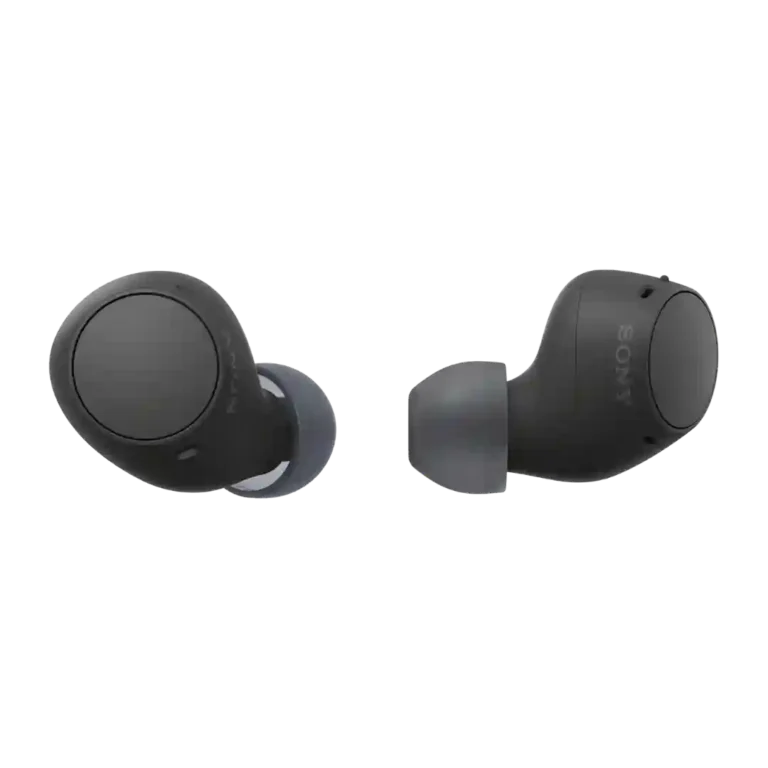
- Compared: frequency response and tonal balance The reviewer compared the C510 frequency response to Linkbuds S and WF-1000XM5.
- Compared: design resemblance PCMag noted the budget earbuds resemble Sony's flagship WF-1000XM5.
Sony WF-C510 Earbuds Review
Bottom Line
Choose the Sony WF-C510 if you want cheap, comfortable earbuds with clear sound, long in-bud battery life, strong passive isolation, and multipoint. Skip them if you need ANC, strong call noise reduction, premium case feel, or deeper bass.
Best for budget shoppers who want small, comfortable earbuds for music, podcasts, commuting, workouts, and easy multipoint use without paying for premium noise-cancelling features.
Not for buyers who need active noise cancellation, strong microphone noise reduction for frequent calls, deep bass emphasis, LDAC or aptX support, or a more premium charging case.
The Sony WF-C510 earns its budget appeal by putting the basics first: clear sound, excellent comfort, long earbud battery life, strong passive isolation, multipoint, and useful app EQ. Reviewers repeatedly treat it as a bargain, especially for small, everyday earbuds. The tradeoff is that Sony cuts visible corners. There is no ANC, LDAC, aptX, wireless charging, or wear detection, and the case often feels cheaper than the buds. Call quality is the least reliable area, especially around background noise. The result is a simple, strong-value earbud for music, podcasts, commuting, and casual use rather than a feature-packed or call-first pair.
Compared in Reviews
Products reviewers directly compared with this model, grouped into quick takeaways.
- Alternative: ANC and codec alternative Gadgets360 named OnePlus Buds 3 as a slightly pricier alternative with ANC and LHDC.
EarFun Air Pro 4
- Better: noise-cancelling option Trusted Reviews pointed to the EarFun Air Pro 4 for buyers prioritizing ANC.
- Worse: same-price cheap earbud competition TechRadar tested Earfun's model at the same price and picked the Sony.
- Better: advanced codecs and noise cancellation PCMag said the EarFun option adds codecs and noise cancellation for more money.
Feature Scorecards
Summary
46 reviewed features- Very positive 4.5-5.0 30% 14 features
- Positive 3.5-4.4 41% 19 features
- Neutral 2.5-3.4 15% 7 features
- Negative 1.5-2.4 11% 5 features
- Very negative below 1.5 2% 1 feature
Pros
-
Low weight contributes heavily to comfort; reviewers repeatedly highlight the roughly 4.6 g earbuds as light, slight, or easy to forget in the ear.
-
Multipoint connectivity is a recurring advantage, with several reviewers calling switching or reconnection seamless, reliable, or unusually good for the price.
-
Soundstage width gets positive notes from reviews that hear spaciousness, separation, or a more open presentation, especially with Sony processing or acoustic material.
-
Comfort is one of the strongest areas, with many reviewers saying the small, light buds are easy to wear for long sessions, though one had fit problems.
-
Maximum-volume clarity is a strength in several reviews, with repeated comments that the earbuds avoid distortion or peaking even when pushed.
-
Value for money is the strongest consensus point: reviewers repeatedly frame the WF-C510 as a bargain or standout budget pick despite tradeoffs.
-
Bluetooth connection reliability is praised where reviewers discuss reconnection and pairing, though one review notes minor jitters in busy stations.
-
Midrange clarity is a recurring strength, with vocals and instruments often described as clear, detailed, natural, and well separated from the bass.
-
Portability is a strength, with the tiny case and small buds repeatedly described as easy to pocket and carry.
-
In-ear stability is generally excellent, with repeated praise for secure fit during walking, running, cycling, workouts, and head movement; one review reports falling out.
-
Reviewers consistently describe the WF-C510 as strong for the price, with clear, balanced, enjoyable sound; the main dissent is that some find it merely serviceable rather than exciting.
-
Eartip fit is usually strong, with many reviewers praising seal and comfort, though one reviewer could not get any included tip size to fasten securely.
-
Instrument separation is praised in the strongest hi-fi-leaning reviews, though some note that instruments are not the sharpest at this price.
-
Android compatibility is positive where tested, especially Google Fast Pair and app-supported pairing that reviewers describe as uncomplicated or fast.
-
Battery life is widely praised for long earbud runtime, often around 10-11 hours, but the case's single extra charge creates some battery-life caveats.
-
Passive isolation is one of the clearest strengths; reviewers repeatedly say the seal blocks a surprising amount of ambient noise despite the lack of ANC.
-
The Sony app is mostly praised for EQ, setup, device control, and ease of use, but PC support and some interface choices draw criticism.
-
Touch-control evidence is limited to two reviews that describe the controls as responsive or easy, though most other reviews treat the controls as physical buttons.
-
EQ customization is a major value add for many reviewers, especially Sony's custom tools, though SoundGuys and TechRadar find the EQ limited or confusing.
-
Design sentiment is mostly positive for the compact size, clean look, matte colors, and small profile, though some reviews see the finish as clearly budget.
-
Treble is generally clear and crisp, especially for vocals and detail-focused music, though a few reviews note underemphasis, crunchiness, or limited brightness.
-
Multi-platform compatibility is supported by reviewers who praise iOS/Android parity or smooth phone-desktop use, but PC app support is a limitation.
-
Ear tip option evidence is limited but positive where reviewers connect the included choices or secure tips to small-ear comfort and practical fit.
-
The integrated microphone receives limited direct praise, with PCMag calling it decent, but broader call-quality evidence is more mixed.
-
Setup simplicity is mostly praised for easy pairing and app use, though control customization and app-volume behavior can feel unintuitive.
-
The IPX4 rating is viewed as useful for sweat, rain, running, gym use, and daily activity, but reviewers consistently warn it is not full waterproofing.
-
Charging is generally acceptable thanks to quick-charge support, but reviewers criticize slow case charging, no wireless charging, or limited case reserve.
-
Transparency or Ambient Sound mode is usually considered useful and natural for awareness, but some reviewers find it mild, situational, or not enough for easy conversations.
-
Case quality is mixed: reviewers like the small, pocketable case and some hinge resistance, but others call the plastic cheap or the case limited.
-
Volume output is context-dependent: many reviewers find it more than loud enough, while a few flag low default app volume or a less powerful maximum.
-
Spatial audio is present and sometimes enjoyed for added scale, but several reviewers treat 360 Reality Audio as mixed, limited, or gimmicky for music.
-
Bass impressions are mixed: several reviewers praise controlled, punchy or well-rounded bass, while others say bass is light, not skull-rattling, or weaker than pricier Sony buds.
-
Physical button usability is divisive: some reviewers prefer the tactile controls and find them easy, while others dislike pushing the buds into the ear or repeated presses.
Cons
-
Build quality is split: some reviews call the buds solid or well built, while others emphasize cheap plastic, budget feel, or cut corners.
-
Soundstage depth evidence is limited and mixed, with one reviewer enjoying grander tracks while another says the buds do not emphasize open staging or layering.
-
Video and gaming sync evidence is mixed: one reviewer found lip sync spot-on, while gaming-oriented comments note no low-latency mode or only limited gaming suitability.
-
Codec support is a common compromise: AAC and SBC are usually considered sufficient for streaming, but reviewers still flag the lack of higher-end codec options.
-
Frequency response evidence is limited and mixed, with SoundGuys describing a response that is not immediately off-putting but does require adjustment for some listeners.
-
Included accessories are a mild weakness: the missing USB-C cable is criticized by one reviewer but dismissed as a non-issue by another.
-
Call microphone quality is inconsistent: some hear clear voice pickup in quiet settings, but several reviews criticize noisy-call performance and background pickup.
-
Microphone noise reduction is a weak spot overall, with multiple reviewers saying background sounds leak through or aggressive gating can cut into the voice.
-
Preset EQ evidence is sparse and mixed, with PCMag finding the preset selection serviceable and SoundGuys calling the presets bland.
-
Sensor support is a weakness because wear detection is absent, forcing manual pause/play or allowing playback to continue after removal.
-
LDAC support is absent and repeatedly cited as a compromise, though some reviewers say the omission is acceptable for the budget tier.
-
The WF-C510 does not provide active noise cancellation; reviewers often accept that tradeoff at the price, but ANC-focused buyers are repeatedly told to look elsewhere.
-
aptX support is treated as absent and a limitation by the one reviewer who explicitly wanted higher-quality Bluetooth codec options.
Compared With Category Average
Compared with other Earbud Headphones, this product is below average in Active noise cancellation, LDAC, Preset EQ profile quality.
Summary
8 compared features- Above average 0.4+ pts higher 0% 0 features
- Same as average within 0.3 pts 0% 0 features
- Below average 0.4+ pts lower 100% 8 features
| Attribute | This product | Category average | Difference |
|---|---|---|---|
| Active noise cancellation | 1.5 | 4.0 | -2.5 |
| LDAC | 1.5 | 3.2 | -1.7 |
| Preset EQ profile quality | 2.0 | 3.8 | -1.8 |
| Sensors | 1.9 | 3.5 | -1.6 |
| Microphone noise reduction | 2.2 | 3.7 | -1.5 |
| aptX | 1.0 | 2.6 | -1.6 |
| Audio-video sync accuracy | 3.2 | 4.3 | -1.2 |
| Microphone quality for calls | 2.6 | 3.7 | -1.1 |
FAQ
Do the Sony WF-C510 earbuds have active noise cancellation?
No. Reviewers repeatedly note that they lack ANC, but many also say the snug in-ear seal provides surprisingly strong passive noise isolation.
How good is the sound quality?
Most reviewers praise the WF-C510 for clear, balanced, detailed sound at the price. Bass is more divisive, ranging from satisfying and punchy to too light for bass-heavy listeners.
Are they comfortable for long listening sessions?
Yes for most reviewers. The small, light design and secure tips are repeatedly praised, though one review struggled with fit and stability.
How long does the battery last?
Reviewers generally report strong earbud runtime around 10 to 11 hours. The main caveat is the case, which usually adds only one more full charge.
Is the microphone good for calls?
It is usable in quieter settings, but call quality is a recurring weak point. Several reviewers say background noise leaks through or noise gating can make voices harder to hear.
Does the app add useful features?
Yes. Reviews praise Sony's app for EQ, multipoint controls, ambient mode settings, and setup, although some find the EQ or control customization limited or confusing.
Are they good for workouts?
They are a practical workout option because reviewers praise the secure fit, light weight, and IPX4 splash resistance. They are not designed for swimming or heavy water exposure.
Consider This Instead
If you want better Active noise cancellation
Choose Bose QuietComfort Ultra Earbuds (2nd Gen). It scores 4.9 vs 1.5 for Active noise cancellation, with a 3.8 overall score.
If you want better LDAC
Choose JBL Tour Pro 3 Earbuds. It scores 4.7 vs 1.5 for LDAC, with a 4.2 overall score.
If you want better Sensors
Choose Sennheiser Momentum True Wireless 4 Earbuds. It scores 4.8 vs 1.9 for Sensors, with a 4.2 overall score.
If you want better Microphone noise reduction
Choose Nothing Ear (a) Earbuds. It scores 4.5 vs 2.2 for Microphone noise reduction, with a 3.9 overall score.
Overall Top Earbud Headphones Alternatives
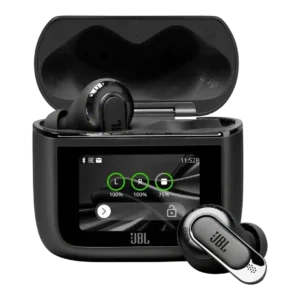
Choose the JBL Tour Pro 3 if you want feature-packed earbuds with strong sound, ANC, LDAC and a genuinely useful smart case. Skip them if you have smaller ears, want...
Pros: Codec support, Dongle
Cons: Sound leakage, Find My
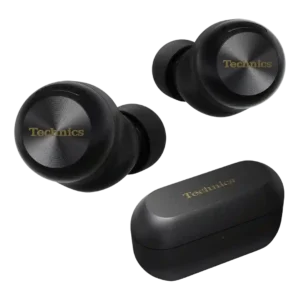
Choose the Technics EAH-AZ100 if sound quality, bass, ANC, battery life, and multipoint matter most. Skip them if you need flawless calls, Bose-level ANC, the most natural transparency, or a...
Pros: Volume output, Maximum volume clarity
Cons: aptX, Auracast support
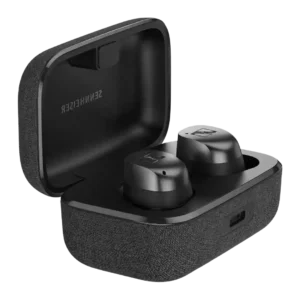
Choose these for excellent sound, deep app control, strong codec support, and a premium true-wireless package. Skip them if call quality, best-in-class ANC, iPhone integration, or a compact case matters...
Pros: Maximum volume clarity, Stability
Cons: Spatial audio, Microphone noise reduction
Choose the Sennheiser CX 80U for detailed, comfortable USB-C wired listening at a low price. Skip them if you need deep sub-bass, waterproofing, wireless features, volume buttons, or a cleaner...
Pros: Comfort during long use, USB-C
Cons: Microphone noise reduction, Water/sweat resistance rating