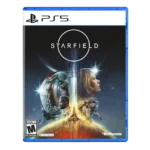
Starfield Feature Scores
Explore all 58 feature scores for Starfield, organized into pros and cons.
Scores by Feature
Summary
58 reviewed features-
Very positive 4.5-5.011 (19%)
-
Positive 3.5-4.417 (29%)
-
Neutral 2.5-3.413 (22%)
-
Negative 1.5-2.415 (26%)
-
Very negative below 1.52 (3%)
Pros
Sort
-
Overall fun is sharply split. Many players are hooked or having a blast, while others find the game boring, underwhelming, or only fun for a narrow sandbox audience.
-
Voice acting is often praised, sometimes even when the writing or facial presentation gets criticized.
-
Environmental detail is often praised, especially city detail, planet presentation, and the sense of visual scale.
-
Content volume is a major selling point, with reviewers pointing to many quests, systems, updates, and activities that can keep players busy for a long time.
-
Sandbox freedom is one of Starfield’s main attractions for the right player, with reviewers praising the ability to wander, build, survey, and pursue your own goals.
-
Polish is better than many expected for a Bethesda-scale RPG, though it does not eliminate bugs, crashes, or rough UI.
-
Visuals are usually a strength, with praise for gorgeous graphics and presentation, though some reviewers call the look dated or bland.
-
The soundtrack earns strong praise where discussed, with orchestral and sweeping music fitting the space setting well.
-
Crafting, outposts, mods, and ship-building depth stand out, but the same systems can feel under-explained or tedious when resource handling gets in the way.
-
Ship flight and space combat can be fun, especially after updates, but several reviewers say travel still feels limited or merely good enough.
-
Combat is one of the better-liked systems overall, often described as Bethesda’s strongest gunplay yet, though a few reviewers still find it basic or merely serviceable.
-
Character creation earns praise for depth, with reviewers liking how far customization and background setup can go.
-
Replay value is positive for players who like long RPGs, new game plus, and self-directed builds.
-
Skill trees earn praise for meaningful perks and challenge-based progression that gives builds structure.
-
Mods and Creations are a meaningful plus for some reviewers because they can improve rough edges and deepen the experience.
-
Companions and character arcs are a relative strength when reviewers spend time with them, though the broader cast is not universally loved.
-
Progression is a relative strength, with skill trees, outposts, and build growth giving players multiple ways to shape their playstyle.
-
The gifting comments are positive, but the reviews do not give a detailed family-suitability analysis.
-
Puzzle design receives limited but strong praise through the lockpicking minigame.
-
Sound design is a high point in the strongest audio-focused review, especially ship and ambient effects.
-
Fans of space RPGs and Mass Effect-style adventures may feel at home, but this is not framed as faithful to an existing Starfield franchise.
-
The core loop works best for players who enjoy Bethesda-style wandering, looting, and quest chaining, though it can take time to settle in.
-
Value depends on taste and edition. Fans can get a strong price-to-playtime ratio, while skeptics may find the full-price or DLC value harder to justify.
-
Difficulty earns limited praise where late missions test combat skill without feeling unfair.
-
Originality gets some credit for the space RPG ambition, though several reviews also call the formula familiar.
-
Frame rate impressions depend on platform. PS5 and PS5 Pro comments range from smoother performance to fluctuating modes that still need work.
-
Mission design is uneven: some missions and factions are memorable, while others feel short, repetitive, or underdeveloped.
-
Weapon balance is only lightly addressed, with one review saying the combat tools get the job done.
Cons
Sort
-
Menus and inventory are repeated pain points, with reviewers calling the UI clunky, slow, or shockingly poor for a game with so much item management.
-
Loading screens are one of the most consistent complaints. A few note short load times, but many say frequent transitions and menus make the universe feel chopped up.
-
Enemy and security behavior drew sharp complaints, especially where foes seemed easy to exploit or failed to react convincingly.
-
Fast travel is convenient but also one of the most repeated complaints, with many reviewers saying it fragments the space fantasy.
-
Exploration is the biggest fault line. Some players love the scale and city discovery, while many criticize empty planets, fast-travel dependency, and repeated points of interest.
-
Art direction splits opinion, with NASA-punk praised for a distinctive look in some places and dismissed as bland or ineffective in others.
-
General gameplay draws both praise and disappointment: it offers a huge Bethesda-style RPG framework, but some reviewers find the actual moment-to-moment play bland.
-
Companions are divisive. Some reviewers enjoy their stories and usefulness, while others complain about chatty behavior, getting stuck, or interrupting the flow.
-
Interface design is a regular drawback, especially with maps, menus, and navigation that feel awkward for a game this large.
-
Writing quality is one of the weaker areas for critical reviewers, especially in main-quest dialogue and characterizations.
-
Accessibility is a serious weak spot in the most critical take, with one reviewer saying the limited options leave some players shut out rather than merely inconvenienced.
-
Stability is inconsistent. Some players report only rare crashes, while others describe freezing, repeated restarts, or crashes serious enough to interrupt progress.
-
The economy and resource balance are recurring frustrations, especially around ship costs, resource pricing, inventory clutter, and limited trading fantasy.
-
Level design criticism focuses on repeated arenas and spaces that do not support the scope of the world.
-
Onboarding is a weak spot because important systems can be under-explained, leaving players to figure out menus, building, and progression on their own.
-
Tutorial quality is a complaint when players want more help; several reviews say the game leaves too much unexplained.
-
Platform-specific support is mixed: PS5 features and smoothness are praised, but the physical-disc/download and internet requirements frustrate some buyers.
-
Dialogue is polarizing: one reviewer calls conversation trees best-in-class, while others find the writing flat, generic, or dated.
-
The open-world structure disappoints reviewers who expected seamless discovery, with empty terrain and repeated outposts undercutting the sense of a living galaxy.
-
World-building is divisive: some admire the sci-fi scale, while others find the vision of humanity and space underwhelming.
-
Facial animation and conversation presentation feel dated to several reviewers, even when voice work is praised.
-
The learning curve is steep. Several reviewers say Starfield has many systems and does not explain enough up front.
-
DLC and expansion value is mixed. Some reviews like the added content, while others call specific expansions dull or worth waiting on sale for patches.
-
Pacing is uneven. Reviewers describe slow openings, rushed-feeling story beats, and stronger stretches once the game finally clicks.
-
Atmosphere is uneven. Some players miss the expected Bethesda charm, while others are pulled in by the large sci-fi setting.
-
The REV-8/vehicle addition helps planet traversal, but user reports also connect surface driving with freezes.
-
The main story is one of the most mixed areas. Some reviewers find it surprisingly interesting or a useful guide, while others call it weak, flat, or forgettable.
-
Bug frequency varies widely by version and platform, from almost no issues to repeated freezes, broken interactions, and crash-adjacent problems.
-
Performance varies by hardware and mode, from smooth PS5 impressions to inconsistent PS5 Pro behavior and demanding PC requirements.
-
Side quests and faction quests are among the most praised parts, even when the main story disappoints.