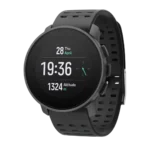
Suunto 9 Peak Pro Feature Scores
Explore all 50 feature scores for Suunto 9 Peak Pro, organized into pros and cons.
Scores by Feature
Summary
50 reviewed features-
Very positive 4.5-5.010 (20%)
-
Positive 3.5-4.413 (26%)
-
Neutral 2.5-3.417 (34%)
-
Negative 1.5-2.410 (20%)
Pros
Sort
-
Battery life was a major strength overall, with many reviewers seeing multi-day or multi-week endurance, though one review found it shorter than advertised and cold-sensitive.
-
Charging speed was consistently praised, with repeated mentions of fast charging and quick top-ups.
-
Style and design were among the strongest points, with reviewers repeatedly praising the sleek, minimalist, trail-to-town look.
-
Durability was a standout advantage, with reviewers citing hard falls, outdoor knocks, rough use, and MIL-style toughness.
-
GPS accuracy was broadly positive for land activities, often impressing reviewers despite the lack of multiband GNSS, though a few tests exposed weaker open-water or urban performance.
-
Workout variety was a clear strength, with reviewers repeatedly praising the huge number of sport modes and activity profiles.
-
Build quality was a consistent strength, with reviewers describing the watch as sturdy, premium, polished, and well built.
-
Software smoothness improved noticeably over older Suunto watches in many reviews, though a few still found swiping and workout saving laggy.
-
Water resistance and shallow-water capability were positives, with reviewers noting pool, ocean, and depth-gauge use, though this is not a full dive watch.
-
The companion app was one of the stronger platform areas, praised for maps, analytics, visuals, and data depth, though a few reviewers found it less polished or missed web access.
-
Button controls were usually praised for tactile clicks and simple navigation, though some reviewers wanted more buttons or found them hard with gloves.
-
Core fitness tracking generally worked well for sports data and running power, though reviewers still noted that the broader sports experience could be held back by software or sensor issues.
-
Customization was praised for sport profiles and activity screens, especially the ability to create custom activity modes from the app.
-
Materials quality was praised for the sapphire lens, titanium or steel bezel, and high-end physical feel.
-
Menu navigation could be straightforward once learned, with several reviewers praising simple button logic and easy access to basic functions.
-
The app ecosystem was a strength, with SuuntoPlus, partner apps, and the Suunto Store seen as meaningful platform advantages.
-
Music controls were useful for controlling phone playback, but they remained basic and dependent on carrying a phone.
-
Touchscreen responsiveness was generally good in several tests, including wet or gloved use, but at least one reviewer found the touch experience choppy.
-
Step counting received limited but strong praise, with one reviewer specifically calling the step counter excellent.
-
Outdoor visibility was mixed, with some praise in full sun or bright conditions and criticism when glare or viewing angle made the display harder to read.
-
Band quality was mixed, with some praising comfort or security while others disliked the clasp, tail retention, or uncomfortable feel.
-
Calorie tracking had limited evidence, but one reviewer found the steps-and-calories widget practically useful for daily movement goals.
-
The stress-related Resources widget was described as useful for understanding the balance between strain and recovery, but evidence was limited to one review.
Cons
Sort
-
Brightness was mixed-to-negative: the backlight and readability improved in some settings, but many reviewers still found the screen dim or muted.
-
Blood oxygen tracking was treated as a weak or inconsistent sensor feature, with reviewers reporting slow measurements, failed readings, or trouble on tattooed skin.
-
Notifications worked for basic viewing, but reviewers complained about distractions, clunky presentation, missing emoji support, truncation, and limited reply options.
-
Reviewers were split on broad health accuracy: some found the generated insights useful, while others questioned whether Resources and sensor-based health readings reflected reality.
-
The user interface divided reviewers: some adjusted after a learning curve, while others found the structure confusing or unintuitive next to competitors.
-
Display quality was the clearest recurring weakness, with reviewers criticizing the small screen, big bezel, muted look, and lower sharpness despite some acceptable readability.
-
Contactless payments were treated as a missing modern smartwatch feature, with reviewers pointing users elsewhere if they need pay apps.
-
Voice assistant support was only discussed as a missing convenience, making this a weak point for shoppers who want full smartwatch features.
-
Recovery insights were useful in concept but uneven in execution, with reviewers praising recommendations in some cases and criticizing the context or believability of the guidance in others.
-
Sleep tracking drew mixed reactions: one reviewer found sleep and wake timing mostly good, but several others reported missed wakeups, false sleep starts, or weaker performance than alternatives.
-
Smartwatch features were limited compared with mainstream smartwatches, especially for daily lifestyle use beyond sport tracking.
-
Heart rate accuracy was the most mixed tracking area, ranging from solid on steady workouts to delayed, spiky, or chest-strap-dependent during harder efforts.
-
Pairing reliability was a concern in the few reviews that discussed it, including isolated app connection trouble and broader syncing or pairing complaints.
-
Charging convenience was mixed: reviewers liked the magnetic dock when aligned, but several found it easy to bump loose or fail to seat correctly.
-
Fit had limited negative evidence, centered on needing a high and tight wrist position to prevent rubbing during mountain biking.
-
Onboard music storage was consistently criticized as absent, making the watch less convenient for phone-free workouts.
-
Watch face quality was limited, with reviewers noting few choices or praising custom faces only modestly.
-
Reliability was mixed, with one reviewer calling the watch reliable overall while another reported a complete open-water tracking failure.
-
Coaching and training tools were seen as useful but uneven: some appreciated guidance and workout planning, while others found the analysis insufficiently actionable.
-
Value for money split reviewers sharply: discounted pricing drew praise, but many felt the launch price was hard to justify against better-equipped Garmin, Coros, or Apple alternatives.
-
Cross-platform compatibility was mixed, with iOS compatibility present but message replies more limited than on Android.
-
Size options were context-dependent: compactness pleased some reviewers, but others wanted a larger display or felt the 43 mm case looked small.
-
Third-party app support was promising but constrained: reviewers liked partner depth yet criticized the one-app-per-workout limitation.
-
Navigation was useful for routes, breadcrumbs, turn prompts, and app planning, but reviewers repeatedly criticized the lack of full on-watch maps.
-
Wellness insights were useful for quick status checks and trends, though some reviewers questioned the accuracy or depth of Resources-style recovery data.
-
The operating system experience was mixed: some reviewers found the new system snappier, while others still reported lag, unintuitive software, or weak polish.
-
Comfort was highly divided: some found the watch light and wearable, while others reported digging, rubbing, or discomfort during motion.