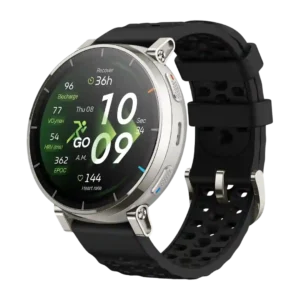
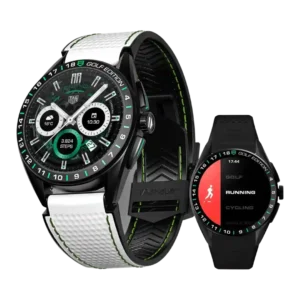
- More expensive: price and adventure features Forbes emphasizes that the Suunto costs meaningfully less than the Apple Watch Ultra.
- Worse: battery life GearJunkie says the Suunto's battery life beats the Apple Watch Ultra's by a wide margin.
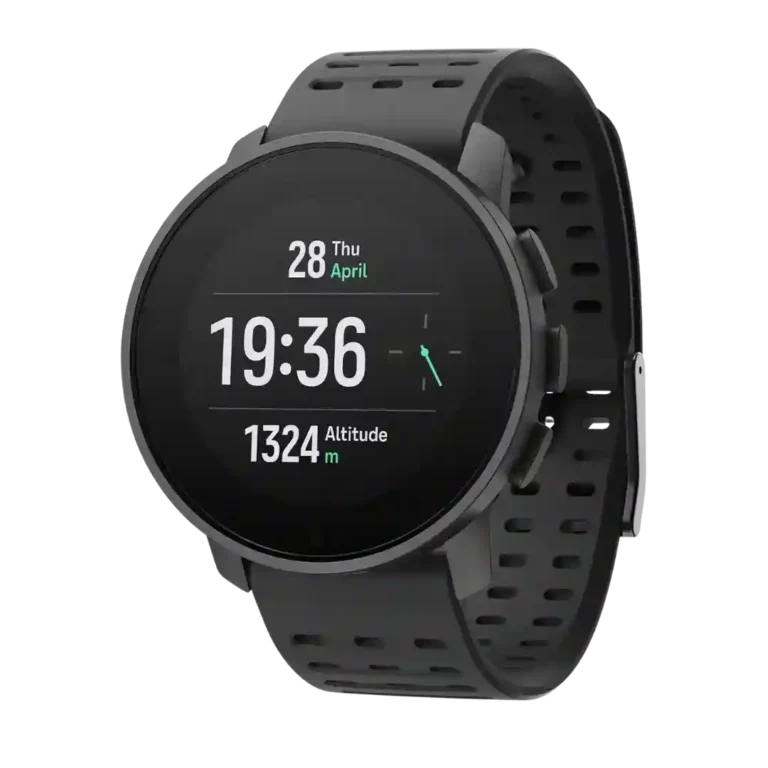
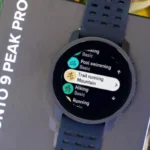
Suunto 9 Peak Pro Review
Bottom Line
Choose the Suunto 9 Peak Pro for long battery life, rugged style, strong land GPS and deep sport modes. Skip it if you want maps, onboard music, payments, a bright display, or reliable wrist HR.
Best for outdoor-focused runners, hikers and multisport users who prioritize battery life, rugged build, Suunto navigation tools and broad activity tracking over lifestyle smartwatch features.
Not for buyers who want a bright modern display, color maps, phone-free music, contactless payments, cellular features or highly reliable wrist-based heart-rate data for intense workouts.
The Suunto 9 Peak Pro comes across as a rugged, stylish multisport watch whose strongest arguments are battery life, durable materials, land-based GPS performance and a huge workout catalog. Reviewers repeatedly liked its premium trail-to-town design, fast charging, SuuntoPlus ecosystem and outdoor-navigation tools. The tradeoff is that the watch feels more like a focused sport instrument than a full smartwatch: there are no maps, onboard music or payments, and the display is often described as small, muted or dim. Heart-rate and sleep tracking also divide reviewers, with several recommending an external chest strap for serious training. Its value depends heavily on price: discounted, it looks compelling; at launch pricing, Garmin, Coros and Polar comparisons are harder on it.
Compared in Reviews
Products reviewers directly compared with this model, grouped into quick takeaways.
- Better: feature set DesFit argues the Suunto's feature set trails similarly priced Garmin alternatives.
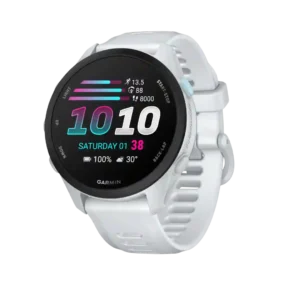
- Better: GPS accuracy The reviewer says Suunto's GPS does not match the Forerunner 955's multiband accuracy.
- Alternative: recommendation and accuracy The reviewer recommends Garmin Instinct or Apple Watch over the Suunto for their priorities.
Feature Scorecards
Pros
-
Charging speed is a clear positive, with repeated praise for one-hour full charging or short top-ups that provide hours of training time.
-
Durability is a major strength, supported by sapphire glass, MIL-STD testing, waterproofing, and real-world reports of surviving rough use.
-
Workout tracking variety is excellent, with roughly 90 to 95 sport modes and niche activities repeatedly praised across reviews.
-
Battery life is one of the product's strongest areas overall, with many reviewers reporting weeks of use or long GPS runtime, though cold and heavy use reduced it for some.
-
Materials quality is a consistent positive, especially sapphire crystal, titanium or stainless-steel bezels, and the premium case feel.
-
Build quality is consistently praised, with reviewers describing the watch as sturdy, premium, well built, and suitable for outdoor use.
-
Style and design are widely praised, with reviewers highlighting the sleek, minimalist, trail-to-town look and premium traditional-watch feel.
-
Reviewers see Suunto's app ecosystem as a real strength, especially SuuntoPlus, the Suunto Store, and broad partner integrations, though it is not as mature as Garmin's platform.
-
Water resistance and shallow-water capability are strong, with 10ATM waterproofing plus snorkeling, mermaiding, and 10-meter depth tracking discussed repeatedly.
-
Step counting receives limited but positive evidence, with reviewers calling it excellent or noting step tracking in activity summaries.
-
Cross-platform compatibility is supported through Android and Apple smartphone pairing, with Android receiving some extra quick-reply support.
-
GPS accuracy is broadly positive on land, with multiple reviewers calling tracks accurate or surprisingly good despite the lack of multiband GPS; open-water and city edge cases are weaker.
-
Fitness tracking accuracy is generally good for distance, elevation, and workout metrics, though it is partly constrained by heart-rate limitations.
-
Third-party app support is a notable strength through SuuntoPlus, Strava, TrainingPeaks, Komoot, partner APIs, and app-store-like tools.
-
Customization is strong for sport profiles, activity screens, routes, and some settings, but watch-face customization remains limited.
-
The operating system experience improved over older Suunto watches, mainly through faster response and a refreshed interface.
-
Bluetooth support is useful for phone pairing, notifications, and sensors, with generally positive evidence but limited detail beyond basic connectivity.
-
Button controls are generally tactile and satisfying, though a few reviewers disliked the three-button navigation model or glove usability.
-
Software smoothness is improved over older Suunto watches and praised by several reviewers, though others still experienced lag, sluggish touch response, or slow saves.
-
Touchscreen responsiveness is mixed: some reviewers found it excellent, wet/glove-friendly, or responsive, while others described lag or nonresponse.
-
Calorie tracking appears as part of the daily steps and activity widgets, and reviewers found the combined movement-and-calorie view useful for quick status checks.
-
Stress tracking exists through daily stress/resource tools and can be useful, but evidence is lighter than for battery, GPS, or sports tracking.
-
Music controls are present for controlling phone audio, but reviewers repeatedly clarified that the watch does not provide full onboard music.
-
Coaching features are useful for workout targets, SuuntoPlus Guides, recovery/load tools, and running power, but some reviewers found the insights less actionable than rivals.
-
Wellness insights include resources, fitness level, VO2 Max, training status, sleep trends, and related dashboards, but accuracy and interpretation vary.
-
The companion app earns praise for maps, stats, graphs, and visualizations, but several reviewers called its analytics, navigation, or presentation less polished than competitors.
-
Menu navigation is mixed: some found it intuitive and easy, while others described buried features, learning curves, or awkward button logic.
-
Wi-Fi connectivity receives only sparse evidence, with one review mentioning Bluetooth/Wi-Fi-style connectivity in a generally positive way.
-
Comfort is polarized: some reviewers barely noticed the watch, while others found the shape, band, or mountain-bike use uncomfortable.
-
Reliability is supported by durable hardware and stable land-based tracking in some reviews, but connectivity and sensor issues prevent a perfect score.
-
Smartphone notifications are supported for texts and app alerts, but reviewers noted limitations such as clunky presentation, no rich replies on iOS, or increased phone reliance.
Cons
-
Safety features are modest but useful, centered on compass, barometer, weather/storm-related tools, and SuuntoPlus Safe rather than cellular emergency features.
-
Recovery insights are available through training/recovery widgets, resources, load, and recovery time, but reviewers disagreed on how actionable or accurate they felt.
-
Value for money is highly context-dependent; later sale pricing earned praise, but at launch reviewers often judged it weak against Garmin, Coros, or Polar.
-
Band feedback is split: some reviewers found the silicone strap comfortable, while others criticized the clasp, strap tail, or pressure during movement.
-
Blood oxygen tracking is present through SpO2 readings, but evidence is mixed because some reviewers only noted availability while others found readings slow or sensor-dependent.
-
Charging convenience is mixed: the magnetic charger is easy when aligned, but several reviewers said it can disconnect or sit imperfectly.
-
Outdoor visibility is context-dependent: full sun and bright light can be workable, but dimness, glare, or small screen size remains a concern.
-
Sleep tracking accuracy is inconsistent: one reviewer found sleep/wake timing good, but several others reported inaccurate sleep starts, wake times, or comparison gaps.
-
Pairing reliability is inconsistent, with some reviewers reporting connection or sync issues, while one later review found connectivity good.
-
The user interface divides reviewers: the redesign is cleaner for some, but many still found it unintuitive, laggy, or harder to learn than Garmin, Polar, or Coros.
-
Fit depends heavily on wrist, activity, and strap tightness; some found it compact while others had to position it tightly or high on the wrist.
-
Brightness is a recurring weakness: some found it acceptable, but many said the screen or backlight was dim compared with competing watches.
-
Display quality is one of the most repeated drawbacks, with criticism of the small display, thick bezel, muted colors, and low perceived sharpness.
-
Heart rate accuracy is mixed to weak: some steady workouts were fine, but many reviewers recommended a chest strap for serious training or noted lag and missed readings.
-
Smartwatch features are limited compared with mainstream smartwatches, especially because payments, full replies, offline music, and broader daily-use features are missing.
-
Health tracking accuracy is not a leading strength, with reviewers questioning resource estimates or broader sensor accuracy.
-
Watch face quality is limited, with reviewers noting only eight options or a small selection compared with competitors.
-
Size options are limited because reviewers identify a single 43mm case size, even though colors and materials vary.
-
Onboard music storage is consistently missing, making this a weak point for users who want phone-free audio.
-
Contactless payments are effectively absent, and reviewers explicitly listed pay apps or contactless pay as missing conveniences.
-
Voice assistant support is not a strength; the one direct review mention groups it among conveniences users should look elsewhere for.
Compared With Category Average
Compared with other Smart Watch, this product is below average in display quality, contactless payments, watch face quality.
| Attribute | This product | Category average | Difference |
|---|---|---|---|
| display quality | 2.7 | 4.3 | -1.5 |
| contactless payments | 1.2 | 2.9 | -1.7 |
| watch face quality | 2.3 | 3.9 | -1.6 |
| onboard music storage | 1.4 | 2.9 | -1.5 |
| voice assistant quality | 1.1 | 2.7 | -1.6 |
| health tracking accuracy | 2.3 | 3.9 | -1.6 |
| brightness | 2.8 | 4.2 | -1.4 |
| heart rate accuracy | 2.7 | 3.9 | -1.1 |
FAQ
Is the Suunto 9 Peak Pro good for long outdoor activities?
Yes. Reviewers repeatedly praised the long battery life, rugged materials, GPS performance and outdoor sport modes, making it a strong option for long runs, hikes and adventure use.
Does the Suunto 9 Peak Pro have maps?
No. Reviews describe breadcrumb routes and turn-by-turn guidance, but they repeatedly note the lack of full on-watch maps.
How accurate is the GPS?
Land-based GPS is generally rated good to very good, even without multiband. Reviewers were less positive about open-water tracking and some difficult city or tree-cover scenarios.
Is the heart-rate sensor reliable?
It can be usable in some steady workouts, but many reviewers found wrist HR mixed or slow to respond and suggested pairing an external chest strap for better accuracy.
Can it replace a daily smartwatch?
Only if your smartwatch needs are basic. It supports notifications and phone music controls, but reviewers note no onboard music, no contactless payments, limited replies and a less polished smartwatch experience.
Is the display a problem?
For many reviewers, yes. The display is often described as small, muted, dim or less sharp than competitors, though some found it acceptable outdoors or in bright light.
Is it worth the money?
It depends on price and priorities. Reviewers liked it more at discounted prices, but at launch pricing several felt Garmin, Coros or Polar offered stronger feature sets.
Consider This Instead
If you want better contactless payments
Choose Apple Watch SE 3. It scores 4.8 vs 1.2 for contactless payments, with a 4.1 overall score.
If you want better onboard music storage
Choose Huawei Watch Fit 4. It scores 4.7 vs 1.4 for onboard music storage, with a 4.1 overall score.
If you want better display quality
Choose Apple Watch Ultra 2. It scores 5.0 vs 2.7 for display quality, with a 4.3 overall score.
If you want better size options
Choose Garmin Approach S70. It scores 4.7 vs 2.0 for size options, with a 4.3 overall score.
Overall Top Smart Watch Alternatives
Good if you want the most rugged Apple Watch, brighter outdoor screen, better battery, LTE, and top apps. Skip it if you need Garmin-like mapping, recovery analytics, smaller sizing, or...
Pros: display quality, heart rate accuracy
Cons: cross-platform compatibility, recovery insights
Choose the Galaxy Watch 6 for a polished Android smartwatch with a bright screen, strong apps, and broad health tracking. Skip it if battery life, iPhone support, or full non-Samsung...
Pros: outdoor visibility, workout tracking variety
Cons: cross-platform compatibility, battery life
Good if you need a rugged Garmin with deep outdoor, tactical, GPS, training, and battery features. Skip it if you want a cheaper lifestyle watch or do not need the...
Pros: materials quality, durability
Cons: LTE connectivity, value for money
Good if you want premium golf maps, virtual caddie tools, health metrics, music, notifications, and long battery life in one watch. Skip it if you only need basic yardages or...
Pros: pairing reliability, brightness
Cons: software smoothness, user interface